Peace & Power Ukraine

Peace & Power Ukraine
Podcast Description
Welcome to ‘Peace & Power,’ Where we discuss how America uses its diplomatic, military, and other instruments of national power to seek and preserve peace.
Podcast Insights
Content Themes
The podcast focuses on topics related to U.S. diplomatic strategies, military involvement, and cultural engagement, with episodes exploring the intersections of faith and policy, historical figures in government, and the role of communication in peace-building like the discussions with Eric Patterson on religious liberty advocacy.
Welcome to ‘Peace & Power,’ where we discuss how America uses its diplomatic, military, and other instruments of national power to seek and preserve peace.
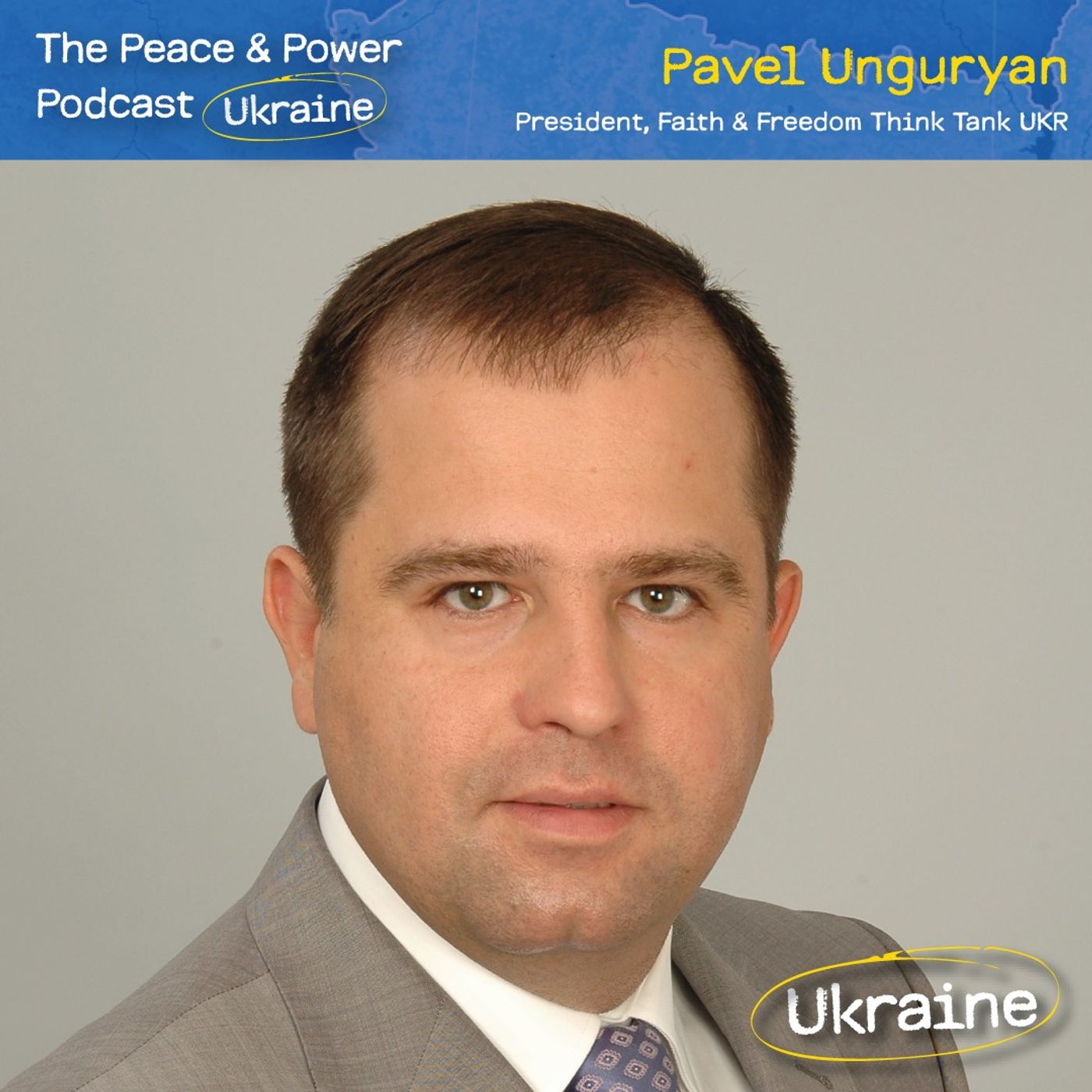
Pavlo Unguryan, President of the Faith and Freedom Center and former member of Ukraine’s parliament, returns to Peace and Power for a wide-ranging conversation with host Gary Marx about the war, Russia’s ambitions and Ukraine’s place in the broader security of Europe.
Unguryan discusses the strategic importance of Odesa and Ukraine’s Black Sea and Danube ports, the connection between Ukrainian agriculture and global food security, and the continuing threat Russian attacks pose to the region.
The conversation also examines Russia’s broader ambitions in Europe, the security of NATO countries, Ukraine’s evolving drone capabilities and efforts to increase economic pressure on Moscow. Unguryan reflects on his relationships with American lawmakers, and the role U.S. political and religious leaders have played in supporting Ukraine.
Finally, Unguryan discusses the launch of the new Faith and Freedom Center in Kyiv and its focus on national security, economic development, international partnerships and the values of faith, family and freedom.
00:00 — Russia’s Ambitions & Introducing Pavlo Unguryan
01:21 — Ukraine, Odesa & Global Food Security
05:18 — Why Odesa’s Ports Matter
06:15 — Russia’s Attacks Near NATO Territory
09:28 — Has Europe Awakened to the Russian Threat?
11:43 — Russia’s Imperial Ambitions
13:28 — Ukraine, Israel & the Wider Conflict
17:12 — U.S. Support & New Pressure on Russia
18:09 — Building Support for Ukraine in Washington
20:26 — Sanctions & U.S.-Ukraine Relations
22:10 — Pressure, Drones & “Peace Through Strength”
24:05 — Launching the Faith and Freedom Center
25:31 — Ukraine’s National Prayer Breakfast
28:09 — Faith and Freedom’s Mission
30:45 — Closing Thoughts
Watch Full-Length Interviews: https://www.youtube.com/@PeacePower_FNW
Follow us on social media:
X: @PeaceAndPower_
Instagram: peaceandpower_pod
LinkedIn: Peace & Power Podcast
TikTok: peace.power.podcast
Find more at Washington Signal
Your source for policy, national security, and investigative journalism.
https://washingtonsignal.com/
Disclaimer
This podcast’s information is provided for general reference and was obtained from publicly accessible sources. The Podcast Collaborative neither produces nor verifies the content, accuracy, or suitability of this podcast. Views and opinions belong solely to the podcast creators and guests.
For a complete disclaimer, please see our Full Disclaimer on the archive page. The Podcast Collaborative bears no responsibility for the podcast’s themes, language, or overall content. Listener discretion is advised. Read our Terms of Use and Privacy Policy for more details.