Queering Internal Family Systems

Queering Internal Family Systems
Podcast Description
A new podcast by two Internal Family Systems (IFS) psychotherapists, Alessio Rizzo and Jude Carn uses the lenses of queering, neuroqueering, queerness and neurodiversity to make IFS more accessible to marginalised identities and to support therapists in being better allies, supporters and advocates for their diverse clients.
Podcast Insights
Content Themes
The podcast delves into themes surrounding queering, neuroqueering, and neurodiversity within the context of IFS therapy, with episodes that explore topics like the distinction between neurodiversity and IFS parts, and the importance of understanding diverse identities and experiences to support marginalized clients better.
A new podcast by two Internal Family Systems (IFS) psychotherapists, Alessio Rizzo (he/they) and Jude Carn (she/they) uses the lenses of queering, neuroqueering, queerness and neurodiversity to make IFS more accessible to these marginalised identities and to support therapists in being better allies, supporters and advocates for their diverse clients.
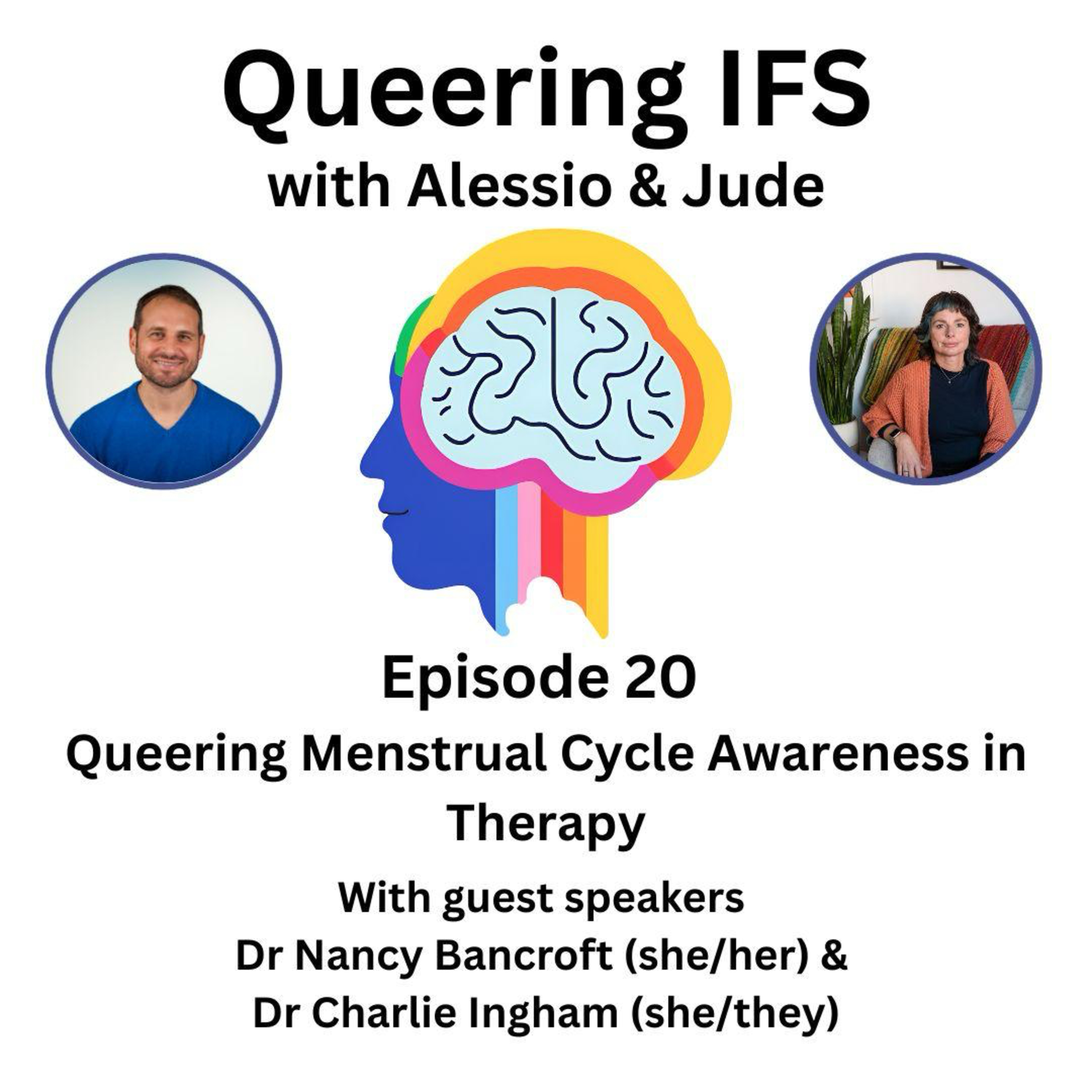
Queering Menstrual Cycle Awareness in Therapy, with Dr Charlie Ingham and Nancy Bancroft
What happens when you bring the cyclical body into the therapy room, without the binaries, the ”divine feminine”, or the blue liquid?
In this episode, Jude and Alessio are joined by clinical psychologists and IFS therapists Dr Charlie Ingham (she/they) and Dr Nancy Bancroft (she/her), who are about to run a training on menstrual cycle awareness for therapists. Together they explore how knowing your cycle can bring more Self-energy, more clarity and more compassion to your inner system, and how to talk about it in a way that includes everyone for whom it's relevant: women, trans and non-binary people with periods, intersex people, and anyone curious about the cycles moving through their body.
In this episode:
- Hormonal literacy, not gender: moving menstrual cycle awareness away from gender essentialism and patronising, feminised language
- Why therapists might hesitate, and the history of female bodies being dismissed as ”hormonal” and left out of research
- A biology lesson: circadian and infradian rhythms, oestrogen and progesterone, and why we are all cyclical beings
- Multiplicity of cycles and multiplicity of parts: what menstrual cycle awareness and IFS have in common
- Premenstrual pain, anger and exhaustion as communication, and as trailheads to what still needs healing
- Neurodivergence, PMDD and misdiagnosis
- Capitalism, patriarchy and colonialism in the models therapists were trained in
- Ancient wisdom that has been lost, not newly discovered
- How to invite clients into cycle tracking without invalidating their experience
A starting point from Charlie: before you begin tracking, drop in and notice which parts show up when you think about this.
Guests
Dr Charlie Ingham (she/they): Instagram @drcharlieingham
Dr Nancy Bancroft (she/her): Instagram @thebodyinmind
Website and booking: https://www.eventbrite.com/e/menstrual-cycle-awareness-in-therapy-integrating-science-cyclical-wisdom-tickets-1994237943372
Resources mentioned
- Her Blood Is Gold by Dr Lara Owen
- Wild Power by Alexandra Pope and Sjanie Hugo Wurlitzer
- Red School and The Menstruality Podcast
If you enjoyed this episode, have a listen to our back catalogue, and like, subscribe and share with a friend.
Disclaimer
This podcast is hosted by qualified therapists who share personal reflections and professional insights into therapy and mental health. The views expressed are those of the individual speakers or guests and are personal to them.
While we talk about therapy, this podcast is not therapy. It's for information, reflection, and conversation only, and should never be considered a substitute for professional mental health support, diagnosis, or treatment. Listening to this podcast does not create a therapist-client relationship.
Some episodes may touch on sensitive topics, so please take care while listening. If you're struggling, we encourage you to reach out to a qualified therapist or mental health professional in your area.
Guest opinions are their own and don't necessarily reflect those of the hosts.
Contacts
Alessio Rizzo (He/They) is a Certified IFS psychotherapist, IFS Trainer with the IFS Institute, and Approved Clinical Consultant (ACC): www.therapywithalessio.com
Jude Carn (She/They) is a Certified IFS psychotherapist and Approved Clinical Consultant (ACC): www.anchoredinself.co.uk | Instagram @anchored_in_self
Sound editing by Forbes Coleman
Disclaimer
This podcast’s information is provided for general reference and was obtained from publicly accessible sources. The Podcast Collaborative neither produces nor verifies the content, accuracy, or suitability of this podcast. Views and opinions belong solely to the podcast creators and guests.
For a complete disclaimer, please see our Full Disclaimer on the archive page. The Podcast Collaborative bears no responsibility for the podcast’s themes, language, or overall content. Listener discretion is advised. Read our Terms of Use and Privacy Policy for more details.