The True Representation Movement Podcast

The True Representation Movement Podcast
Podcast Description
This is the official Podcast of The True Representation Movement. The True Representation Movement is an initiative designed to elect representatives to the U.S. House of Representatives who commit to voting on all bills strictly according to the will of the people. This will is determined by 500 anonymous working-class voters, proportionally representing minority communities, who participate in the process.
For more, please go to: https://jointrm.com/
Podcast Insights
Content Themes
The podcast covers themes related to democratic representation, electoral strategies, and political philosophy. Specific topics include modern technologies in democracy, direct versus representative democracy, and the impact of media on political engagement, with episodes featuring conversations about ancient Greek democracy and its relevance today and the role of the free press in elections.
This is the official Podcast of The True Representation Movement. The True Representation Movement is an initiative designed to elect representatives to the U.S. House of Representatives who commit to voting on all bills strictly according to the will of the people.
For more, please go to: https://jointrm.com/
The TRM Podcast is part of The Democracy Group, a network of podcasts that examines what’s broken in our democracy and how we can work together to fix it.
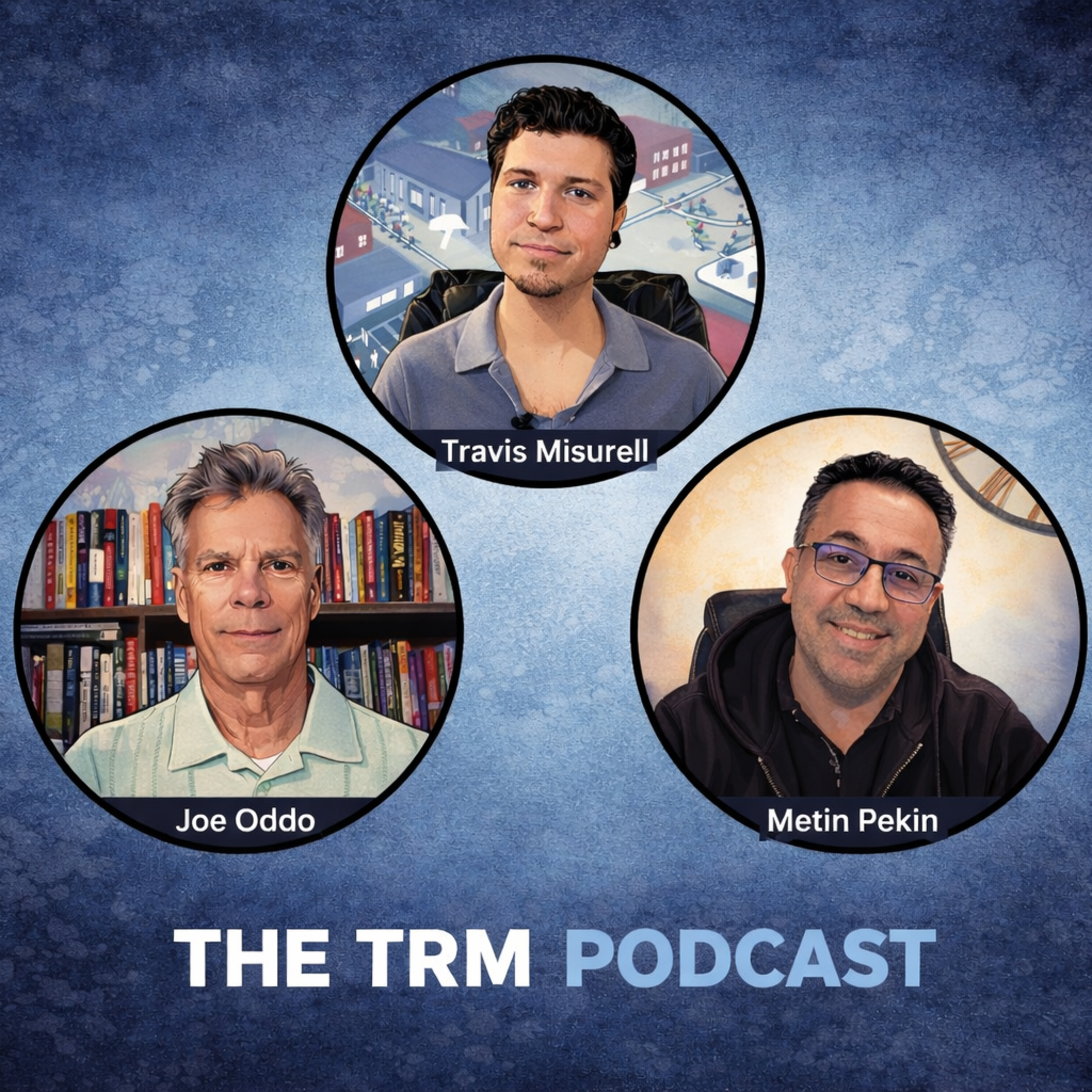
In this special episode, we bring together Metin Pekin, Travis Misurell, and Joe Oddo to confront a growing reality: Modern democracy is not just underperforming: It is structurally misaligned with the people it is meant to serve. The conversation moves past personalities and election cycles to focus on deeper systemic failures, especially the role of political parties as gatekeepers that filter candidates, shape incentives, and trap voters in a perpetual lesser-of-two-evils choice. Drawing on history, lived political experience, and current events, the panel argues that this structure weakens accountability and turns citizens into spectators rather than participants.
From diagnosis, the discussion shifts to construction. Travis outlines a vision for new civic infrastructure that reconnects citizens directly with candidates, surfaces real-time public sentiment, and reduces the fragmentation that prevents alternative movements from gaining traction. Joe, running for Congress as an independent, brings this into practice—proposing a model where representatives act as direct conduits of citizen input, effectively transforming voters into an ongoing decision-making force rather than a passive electorate. Metin reinforces the structural lens, arguing that without changing the underlying system, especially the dominance of parties, no meaningful reform can take hold.
Across perspectives, a shared insight emerges: the paradox of our time is that people are more informed and more dissatisfied than ever, yet remain politically ineffective. Media dynamics, cultural habits, and entrenched incentives all reinforce this gap, absorbing dissent without translating it into change. This episode pushes beyond critique to a harder question: If the current system neutralizes opposition by design, what new structures are required to restore real representation and make democracy actually function?
Disclaimer
This podcast’s information is provided for general reference and was obtained from publicly accessible sources. The Podcast Collaborative neither produces nor verifies the content, accuracy, or suitability of this podcast. Views and opinions belong solely to the podcast creators and guests.
For a complete disclaimer, please see our Full Disclaimer on the archive page. The Podcast Collaborative bears no responsibility for the podcast’s themes, language, or overall content. Listener discretion is advised. Read our Terms of Use and Privacy Policy for more details.