The Smoke Trail

The Smoke Trail
Podcast Description
The Smoke Trail, hosted by Smoke Wallin, is a journey into awakening consciousness, weaving authentic stories and deep discussions with inspiring guests to unlock high performance and perfect health. Each episode delves into spirituality, leadership, and transformation, offering tools to transcend trauma and find your bliss along the way. It’s a reflective space for achieving peak potential and inner peace in a distraction-filled world.
Podcast Insights
Content Themes
The podcast covers a broad range of topics related to spirituality, leadership, and personal transformation. Episodes include discussions on trauma recovery, leadership insights, and practical tools for self-awareness, such as meditation practices and emotional grit. For example, Episode 2 featured executive coach Sarah Fruehling discussing the impact of trauma on leadership, while Episode 3 showcased Jack Maxwell's journey from self-doubt to resilience amid cancer recovery.
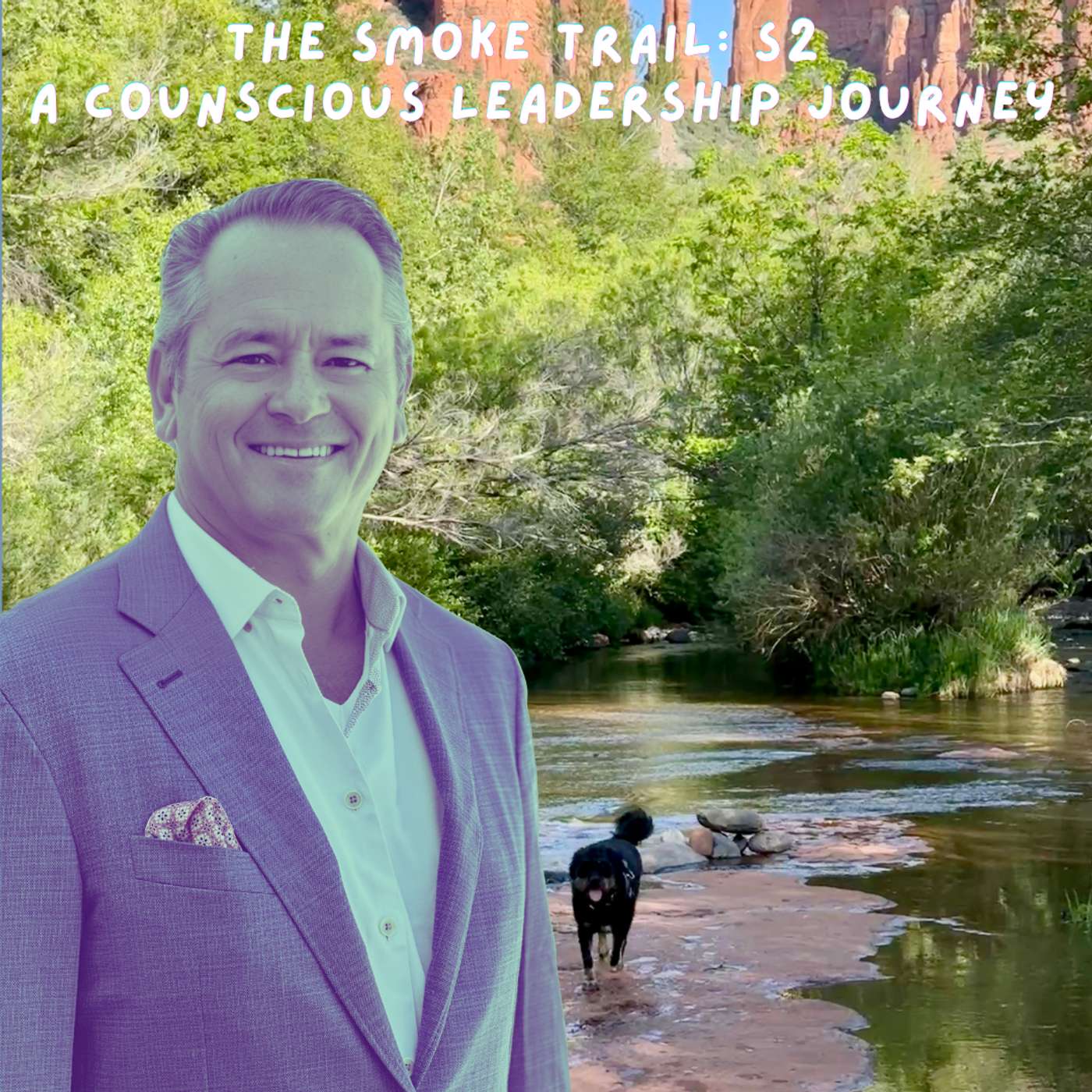
The Smoke Trail, hosted by Smoke Wallin, is a journey into awakening consciousness, weaving authentic stories and deep discussions with inspiring guests to unlock high performance and perfect health. Each episode delves into spirituality, leadership, and transformation, offering tools to transcend trauma and find your bliss along the way. It’s a reflective space for achieving peak potential and inner peace in a distraction-filled world.
THE SMOKE TRAIL | SEASON 2 | EPISODE 53
Love at First Sound
Anitra Carr on the Voice, the Door Held Open, and Heartache Sky
Metadata
Episode: S2E53
Title: Love at First Sound
Subtitle: Anitra Carr on the Voice, the Door Held Open, and Heartache Sky
Guest: Anitra Carr, singer-songwriter, Siren Song Productions (Sedona, Arizona)
Runtime: 1:05:44
Recorded: In person, Sedona, September 2026
Release: September 2026, alongside the single Heartache Sky (out September 25, 2026)
Guest links: anitracarr.com, and the full list under Where to Find Anitra below
Episode Hook
After fifty-two episodes, Smoke’s guest is the person who has had the closest seat to every story he tells on this show: his wife, Anitra Carr. Singer-songwriter, stepmother to his four children, coach and spiritual guide, and the girl from the Bronx who became the girl from Sedona by way of Colorado, Indiana, and California.
They start in a first-grade church pew where a nun with a guitar called her up to sing, run through a Broadway cattle call for Annie, a ballet injury that turned into a commercial career, and a Denver band that won the town. Then the harder ground: her mother’s death, the years of numbing and then healing that followed, and a list written on a sailboat a month before Smoke walked into her restaurant and fumbled with the piano player’s microphone.
From there the conversation turns to the trail they walked together: Whistler, the burning of the forgiveness letters, the books she handed him, and how a Catholic schoolgirl found Deepak Chopra through Oprah. It closes on her new single, Heartache Sky, released with the harvest moon, a lightning round she did not see coming, a live pass through the Johari Window, and the one thing she wants every listener to hear: it is never too late.
In This Episode
• Sister Eileen’s guitar, a park bench where the older kids made her sing for her curfew, and a church that was the only quiet place in her childhood
• Six hundred girls at an open call for Annie on Broadway, and the singing partner who got the part
• Ballet at Carnegie Hall, an injury, an agent, a Milton Bradley commercial, and the down payment that moved her family out of the Bronx
• The Ryan Tracy Band, a Denver restaurant, and the ten months that changed everything
• How she healed after her mother died, told plainly, including what she used to stop hurting
• A sailing trip, a life coach, and the list of twenty-five things that brought Smoke a month later
• Splendido, the piano player, the sound equipment, and the voice of an angel
• The dinner where she told her father she was finally okay, two weeks before they met
• Whistler: the intentions each of them wrote, and what the teacher said to Smoke
• Burning the letters on her birthday, and the two books she gave him that day
• Oprah, Deepak Chopra, The Seven Spiritual Laws of Success, and a Buddhist practice that still holds
• A neighbor’s gift of meditation at thirty, and the twenty-year wait for Smoke to read A New Earth
• What a heartache sky is, why the cover is a moon and not a sun, and a release timed to the harvest moon
• Dignity, Forevermore, and the album that grew out of two quiet years of writing
• A lightning round on free will, evil, synchronicity, intuition, death, and true happiness
• Her practice, her non-negotiables, and the meditation that needs no cushion
• The Johari Window, applied live to a marriage
• Where songs come from, and why you jump on an idea before it lands on someone else
• Unconditional love on the Hawkins scale, currency as flow, the guitar in the closet, and what success looks like
Key Moments
00:28 Welcome
Smoke introduces a guest some listeners know as a singer-songwriter, some as stepmother to his four children, and some as the girl from the Bronx who kept moving west. He explains why he brought notes to interview his own wife: he does not want to assume what he knows, and he expects to learn something.
“Some of you know her as the girl from The Bronx, the girl from Colorado Mountains, the girl from Indiana, girl from California, now the girl from Sedona.” Smoke
02:36 Sister Eileen’s Guitar
First grade, a nun with a guitar, and a little girl belting from the pew until she was called up to sing beside her. Church became the one quiet place in a loud childhood. Later the older kids on a park bench made her sing before she could go home, and curfew was not negotiable.
“I was singing for my life.” Anitra
03:43 Six Hundred Girls and Annie
Just shy of thirteen and small for her age, she went with her cousins to an open cattle call for Annie on Broadway. Six hundred girls, a callback of seventy, then another and another. Her singing partner in the final group got the part.
“the gal that got chosen, Alison Smith, she was my singing partner.” Anitra
05:31 Ballet, an Injury, and Bargain Hunter
A ballet company with classes in the Carnegie Hall building, then an injury, then a friend’s advice to get an agent. Catalog work, a J.C. Penney shoot, and a Milton Bradley commercial for a game called Bargain Hunter. The money was not a fortune, but it was a down payment.
“That’s helped my family move out of The Bronx.” Anitra
09:01 The Restaurant, the Band, and Her Mother
Smoke skips ahead and she stops him. She and her first husband ran a Denver restaurant from 1995 to 2000. In those years her mother was diagnosed and died within ten months, a year after she lost a brother-in-law who was one of her closest friends. She sold the restaurant, moved back to Vail, and the band gave her an ultimatum.
“life’s really short. What are you doing?” Anitra
10:28 How She Healed
Asked how she got through it, she answers without varnish: everything went numb, she was drinking heavily, and medicine work was one of the tools that brought her back toward love, peace, and forgiveness. Smoke adds what he has learned since about intention. She is candid that at the time she only wanted to stop hurting.
“I just wanted to not hurt.” Anitra
13:08 The List
A last-minute spot on a sailing trip, a friend who was a life coach, and a question repeated until she answered it: what would it take? She wrote twenty-five things describing a companion she swore she would never look for. A month later Sm…

Disclaimer
This podcast’s information is provided for general reference and was obtained from publicly accessible sources. The Podcast Collaborative neither produces nor verifies the content, accuracy, or suitability of this podcast. Views and opinions belong solely to the podcast creators and guests.
For a complete disclaimer, please see our Full Disclaimer on the archive page. The Podcast Collaborative bears no responsibility for the podcast’s themes, language, or overall content. Listener discretion is advised. Read our Terms of Use and Privacy Policy for more details.