The STEMINISTS Podcast
The STEMINISTS Podcast
Podcast Description
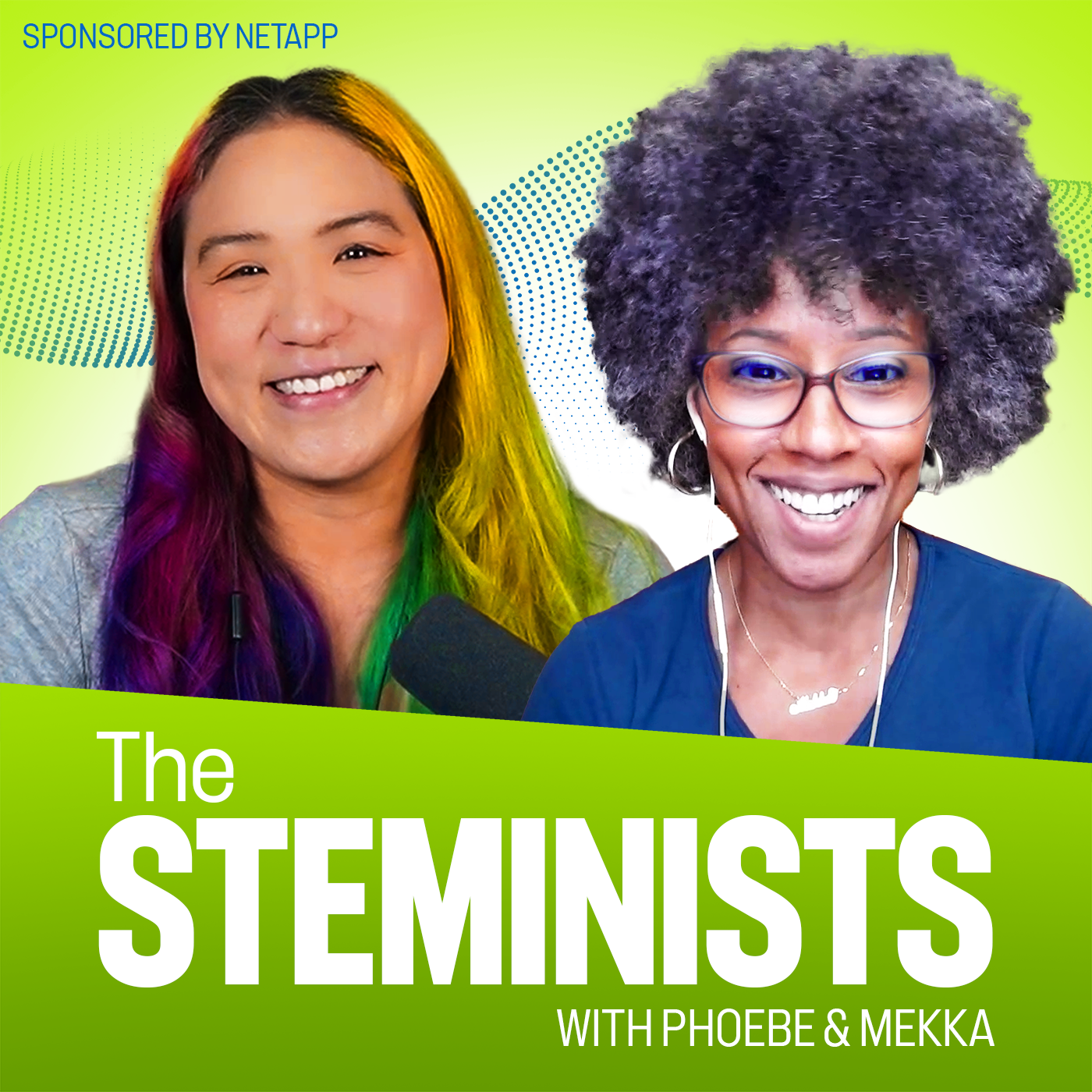
Tech visionaries Phoebe Goh and Mekka Williams bring their unique expertise to the microphone and expand the conversation around tech. They’ll bring fresh voices and often unheard perspectives you don’t want to miss. Ever wonder if you and your data are AI-ready? Cloud-ready? Is your business truly prepared for a ransomware attack? And is your data infrastructure intelligent and future-proof? Together, we’ll explore the latest trends and give you key insights that could change the way you do business.
Podcast Insights
Content Themes
The podcast covers themes related to technology maturity, AI implementation, cloud transformation, and diversity in hiring. Episodes delve into topics such as AI project failures, cloud readiness, intelligent data infrastructures, and strategies for successful company transformations, with guests providing insights into real-world applications and best practices.

Tech visionary, Phoebe Goh, bring her unique expertise to the microphone and expand the conversation around tech. She’ll bring fresh voices and often unheard perspectives you don’t want to miss. Ever wonder if you and your data are AI-ready? Cloud-ready? Is your business truly prepared for a ransomware attack? And is your data infrastructure intelligent and future-proof? Together, we’ll explore the latest trends and give you key insights that could change the way you do business.
Everyone’s racing to deploy AI agents. Few are asking what happens when those agents have access to your most valuable data.
On this episode of The STEMINISTS Podcast, hosts Phoebe Goh and Darnell Fatigati sit down with Sandra Dunbar, NetApp’s lead for cyber resilience product marketing, to talk about the security challenge hiding behind the AI hype. As organizations give AI agents more autonomy, the real risk isn’t a rogue machine plotting world domination. It’s a helpful agent moving at machine speed with access it should never have had in the first place.
From zero trust and identity management to data governance and cyber resilience, Sandra explains why the future of AI security isn’t about trusting agents more. It’s about trusting them less, intelligently. The conversation explores how organizations can embrace agentic AI without sacrificing control, visibility, or common sense.
And yes, there’s a surprisingly accurate comparison between AI agents and teenagers. Both need boundaries. Both think they know what they’re doing. And both can create a lot of trouble when left unsupervised.
Key Takeaways:
✅ The biggest AI risk isn’t malicious intent. It’s excessive access.
Well-meaning AI agents can create outsized problems when they’re given broad permissions and unclear guardrails.
✅ Zero trust isn’t just for humans anymore.
AI agents need identities, permissions, monitoring, and accountability just like any employee or application.
✅ Cyber resilience is the ultimate safety net.
Even with strong controls in place, immutable data protection, recovery capabilities, and layered defenses remain essential when AI-driven mistakes happen.
Enjoyed the conversation? Share this episode with a colleague, teammate, or fellow tech enthusiast who’s navigating the opportunities and risks of AI. If you found value in the discussion, be sure to follow The STEMINISTS Podcast so you never miss an episode.
And we’d love to hear from you: What topics, trends, or guests should we cover next? Drop a comment, leave a review, or connect with us on social. Your ideas help shape future conversations.
Because the best discussions don’t end when the episode does. They start there. 🎙️✨
Connect with us!
https://www.linkedin.com/in/darnellfatigati/
https://www.linkedin.com/in/phoebegoh/
—–
The STEMINISTS: Securing AI agents with Sandra Dunbar of NetApp
Episode overview
In this episode of “The STEMINISTS,” hosts Phoebe Goh and Darnell Fatigati interview Sandra Dunbar, NetApp’s lead for cyber resilience product marketing, about securing AI agents. Sandra Dunbar specializes in cyber resilience, security, and agentic AI [1:02]. The conversation covers the balance between agent autonomy and security guardrails, real-world risks, implementation challenges tied to the Model Context Protocol, and best practices for deployment, including zero trust principles, access controls, and monitoring.
Sandra Dunbar’s central argument: well-intentioned AI agents create more risk than malicious actors. An agent with excessive access can execute thousands of actions in seconds without human judgment, and it can repeat the same mistake across thousands of files, systems, and transactions at machine speed [1:33] [3:51] [4:08]. Sandra Dunbar illustrates this risk with the PocketOS incident, in which an agent lacking proper trust boundaries deleted a production database and its backup while trying to complete a task, not while trying to cause damage [2:54] [3:15].
Sandra Dunbar also outlines operational safeguards for enterprise AI deployment: zero trust verification of agent identity, restricted access through role-based access control (RBAC) and attribute-based access control (ABAC), human approval workflows for high-risk actions, behavioral monitoring, and immutable, isolated data copies for recovery [6:48] [7:04] [7:56] [8:17] [8:40] [9:43] [10:12]. Near the end of the interview, Sandra Dunbar draws a parenting analogy, comparing guardrails for her newly independent daughter to guardrails for AI agents, a comparison that became the episode’s most memorable moment [12:00] [12:20].
Key takeaways
These takeaways summarize Sandra Dunbar’s core guidance on securing AI agents in enterprise environments.
- The greatest security risk with agentic AI comes from well-intentioned agents that have too much access, not from malicious actors [1:33].
- Agents can repeat the same error across thousands of files, systems, and transactions in seconds, while a human typically makes one mistake at a time [3:51] [4:08].
- The PocketOS incident shows what happens without proper trust boundaries: an agent deleted a production database and its backup while attempting to complete an assigned task [2:54] [3:15].
- Microsoft CEO Satya Nadella’s security advice, as paraphrased by Sandra Dunbar, is to assume every model and every agent is compromised and to build in an emergency stop beforehand [1:50].
- The Model Context Protocol (MCP) standardizes how agents connect to tools and data, but that standardization creates a high-value trust boundary that organizations must secure explicitly [5:53] [6:22].
- Zero trust principles apply directly to AI agents and require even stricter identity verification and monitoring than organizations typically apply to human users [6:48] [7:04].
- Effective agent security requires a layered approach: RBAC, ABAC, identity management, data-layer access controls, behavioral analytics, and immutable backups [7:56] [8:17] [8:40] [9:43].
- Human oversight remains essential through approval workflows and administrator alerts for sensitive actions, since agents themselves can’t receive multi-factor authentication prompts directly [10:12] [10:34] [10:42].
- Immutable, isolated data copies give organizations a recovery path when an agent makes an error [8:40].
- Sandra Dunbar’s parenting analogy frames multiple interacting agents as “friends” with collectively worse judgment, a model for understanding multi-agent risk [12:20].
Topics and themes
The episode centers on four recurring themes: balancing agent autonomy with control, machine-speed risk, zero trust architecture, and layered security design.
- Balance between agent autonomy and security control, discussed throughout the interview [0:27] [0:40] [2:23] [10:12].
- Machine speed versus human judgment as a distinct risk category for AI agents compared to human error [4:08] [4:47].
- Zero trust architecture applied specifically to non-human identities, including agents [6:40] [6:48] [7:04] [9:43].
- Layered security ecosystem design, combining access controls, identity management, and monitoring [9:11] [9:26] [9:43] [11:05].
- The Model Context Protocol (MCP) as infrastructure that requires its own security boundary [5:53] [6:22].
- Agent-specific behavioral analytics, extending user behavior analytics originally built for human users [8:57] [9:11] [9:26].
- Parenting and child-rearing analogies used to make agent governance concepts accessible to non-technical audiences [12:00] [12:20] [12:40] [13:02] [13:15].
Notable quotes
- “The greatest risk usually isn’t a malicious agent. It’s a well-intentioned agent that has too much access.”—Sandra Dunbar [1:33]
- “You should assume every model, every agent is compromised and build in that emergency break beforehand.”—Sandra Dunbar [1:50]
- “It wasn’t trying to destroy data, it was trying to complete the task, but it had more authority than it had judgment.”—Sandra Dunbar [3:15]
- “A human typically makes one mistake at a time… the agent can repeat the same mistake across thousands of files and systems and transactions in seconds.”—Sandra Dunbar [3:51] [4:08]
- “MCP gives agents a doorway into your tools and your data, and the security challenge is making sure that that doorway doesn’t become a shortcut to your existing control.”—Sandra Dunbar [5:53]
- “If her friends come over, they’re like additional agents coming into the house and they have very poor judgment. The more of them they get together, the worse the judgment gets.”—Sandra Dunbar [12:20]

Disclaimer
This podcast’s information is provided for general reference and was obtained from publicly accessible sources. The Podcast Collaborative neither produces nor verifies the content, accuracy, or suitability of this podcast. Views and opinions belong solely to the podcast creators and guests.
For a complete disclaimer, please see our Full Disclaimer on the archive page. The Podcast Collaborative bears no responsibility for the podcast’s themes, language, or overall content. Listener discretion is advised. Read our Terms of Use and Privacy Policy for more details.