Second Opinion
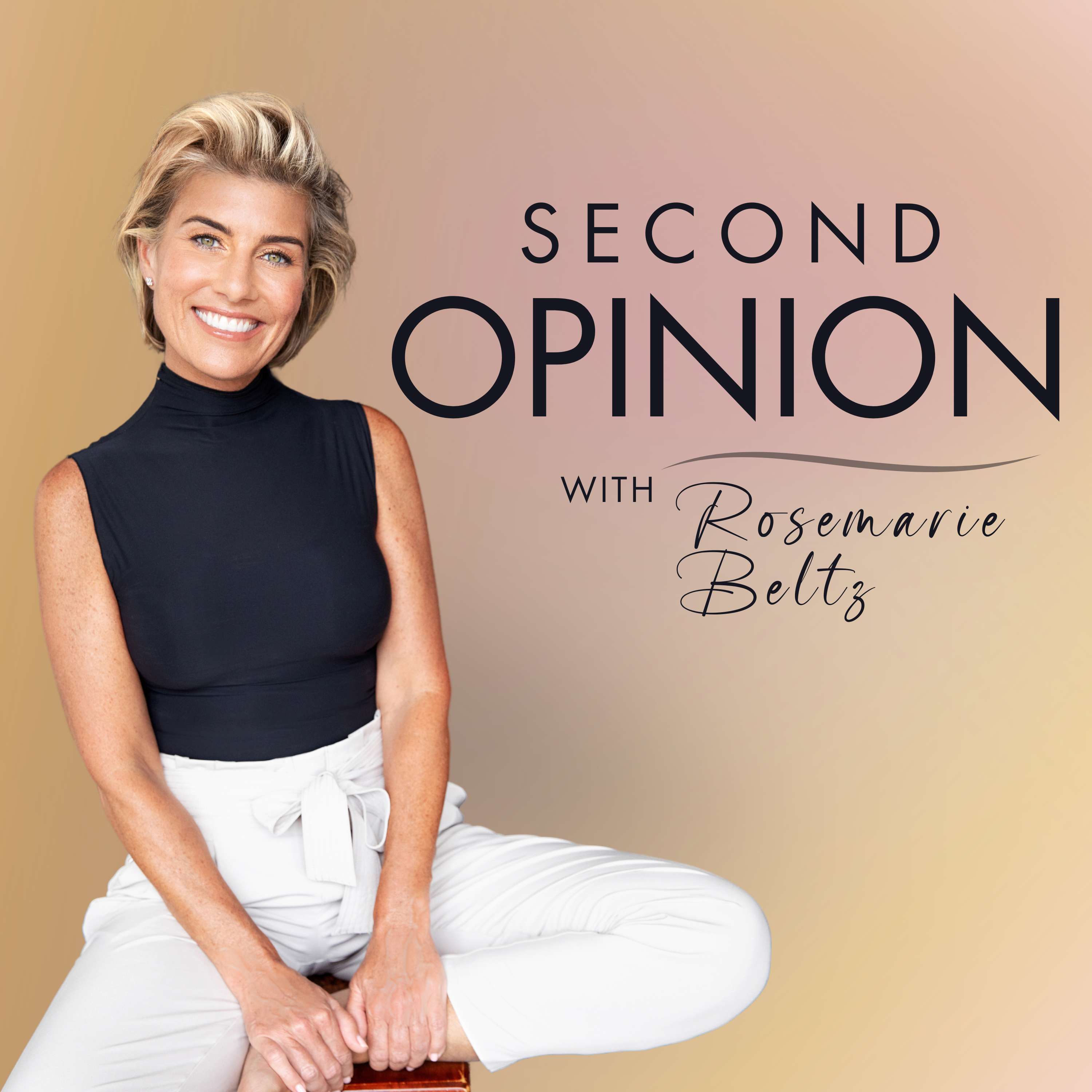
Second Opinion
Podcast Description
Get the clarity you need on the hottest topics in health and wellness with Second Opinion. Hosted by Rosemarie Beltz, this podcast brings you fresh perspectives from experts, innovators, and disruptors tackling life-changing issues. Each episode unpacks the latest research, debunks the hype, and delivers insights to help you make informed decisions. If you're ready for engaging, enlightening, and occasionally unexpected takes on health and wellness, tune in and discover your second opinion.
Podcast Insights
Content Themes
The podcast focuses on pivotal health issues such as heart health, sleep disturbances, midlife empowerment, and aging. Episodes include in-depth discussions like The Hidden Heart Risks of Midlife & Menopause unpacking research on heart disease in women, and The Midlife Sleep Struggle addressing insomnia and sleep apnea.
What if midlife isn’t the beginning of getting old—but the beginning of something we haven’t quite figured out yet?
Welcome to Second Opinion, where science and story meets real life in midlife.
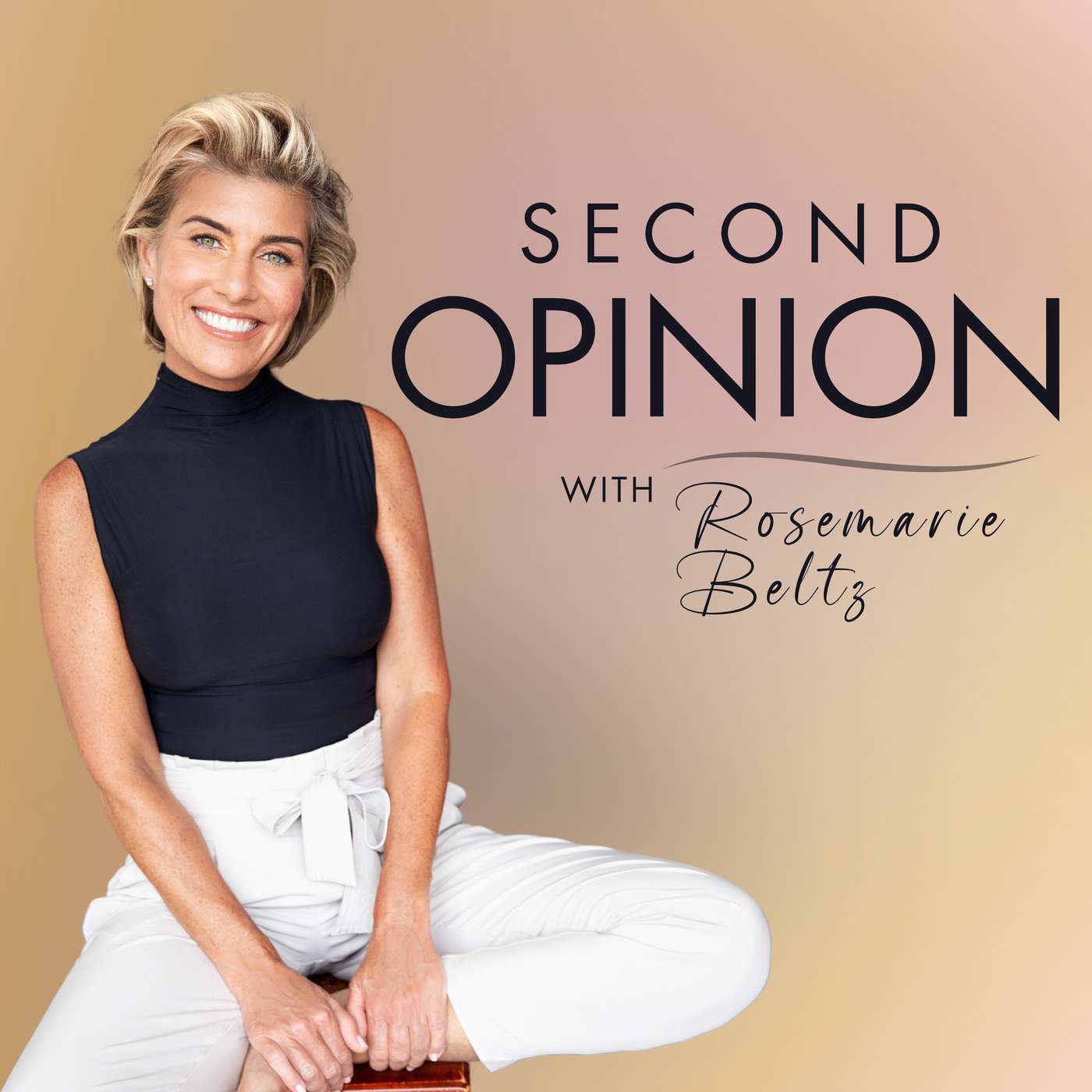
Hosted by Rosemarie Beltz—a cardiovascular perfusionist, Columbia-trained journalist, and former broadcast medical reporter with three decades inside operating rooms and high-stakes medicine—Second Opinion brings together a career spent practicing medicine and reporting on it to explore health, longevity, reinvention, and the wonderfully complicated reality of being somewhere in the middle.
Because midlife is strange.
Some days you feel 25—curious, ambitious, optimistic, and convinced there is still so much ahead.
Other days you’re tired. Your body feels different. Your parents are getting older. Your career may not fit quite the way it once did. Relationships change. The future suddenly feels both incredibly exciting and a little more finite.
And somehow, all of those things can be true at the same time.
We are also living through something previous generations never quite experienced.
We have more medical knowledge, better technology, greater access to information, and potentially more healthy years ahead of us. We’re talking about healthspan, hormones, metabolic health, strength, sleep, brain health, longevity, artificial intelligence, and treatments that barely existed a generation ago.
We may be living longer—but what are we going to do with all that extra life?
That’s where Second Opinion begins.
Each episode follows the questions worth asking now: What does the science actually say? What are we getting wrong? What should we be paying attention to? How do we make better medical decisions? And beyond health—how do we build lives that still feel interesting, connected, purposeful, and very much our own?
We talk with physicians, researchers, scientists, innovators, and people with something meaningful to teach us. And sometimes Rosemarie turns the microphone on herself—sharing what she is learning from medicine, journalism, starting over, building something from scratch, and discovering that you don’t necessarily become less curious about your life as you get older.
Sometimes you become more curious.
🎙️ We explore: midlife health • perimenopause & menopause • hormones • heart health • metabolic health • GLP-1s • longevity & healthspan • sleep • strength • brain health • stress • preventive medicine • navigating healthcare • relationships • work • purpose • reinvention • technology • and what it means to create a meaningful next chapter.
This isn’t about trying to be 25 again.
We can’t go back. And maybe we don’t want to.
It’s about taking everything we’ve learned, everything science is learning, and everything we still don’t know—and asking what might be possible from here.
Call it Midlife 2.0.
No perfect roadmap. No pretending we have it all figured out. Just smart conversations, good science, lived experience, and better questions about how we want to spend the years ahead.
🌍 Now reaching listeners in 60 countries.
Independently produced and rooted in New York City—where Rosemarie is still figuring out what she wants to be when she grows up.
Second Opinion isn’t here to tell you what to think. It’s here to give you something worth thinking about.
What if the smartest thing you do this August isn’t adding another wellness habit…but letting something go?
As we enter National Wellness Month and the final stretch of our 90-day Summer Experiment, this episode explores a different definition of well-being—one rooted in science, curiosity, preventive health, and the quiet confidence to change course when new information arrives.
After a summer spent exploring hydration, freedom, attention, identity, and intentional living, August arrives with a new question:
What have I learned—and am I willing to let that learning change my plan?
Recorded from my Brooklyn terrace, on the bus into Manhattan, and while waiting for my annual mammogram before work at NYU, this deeply personal episode blends neuroscience, medicine, journalism, and the beauty of late summer into an invitation to slow down, reassess, and truly experience the season before it slips away.
Together we’ll explore:
• Why changing your mind is often a sign of cognitive flexibility, not inconsistency
• The surprising neuroscience behind pivoting, intuition, and decision fatigue
• The difference between a placeholder, a true pivot, and simply getting stuck
• Why preventive health care—mammograms, eye exams, screenings, and routine maintenance—is one of the most overlooked forms of wellness
• What the latest microbiome research is teaching us about dietary diversity, fiber, and building upon healthy habits instead of constantly starting over
• Why August may be the perfect month to subtract instead of add
• How to recognize when your body is quietly asking for recovery
• Why “living well” may be more important than endlessly optimizing yourself
Along the way, I also share why I’ve decided to pause new weekly episodes through the remainder of August—and why that decision isn’t about burnout.
It’s about paying attention.
Sometimes the healthiest decision isn’t pushing harder.
Sometimes it’s creating enough space to hear what’s trying to emerge next.
Because perhaps the final lesson of our Summer Experiment isn’t becoming more disciplined.
It’s becoming more responsive.
Responsive to our bodies.
Responsive to our relationships.
Responsive to new information.
Responsive to the quiet voice saying:
I still want the destination… I just don’t want to get there this way.
This August…
Drink the water.
Eat the peaches.
Wear the dress.
Make the appointment.
Watch the sunset.
Leave a little room for surprise.
And maybe…
Be the miracle.
🌿 This Week’s August Experiment
Instead of another wellness challenge, try this:
RESTORE
What in your life needs care?
RELEASE
What can you stop forcing?
REIMAGINE
Where has new information changed the plan?
RECEIVE
What can you allow August to give you?
🎧 While We’re On Pause
I’ll be spending the remainder of August:
• Continuing my hydration and microbiome research
• Exploring nutrition through greater dietary diversity and fiber
• Taking care of my own preventive health
• Reading, writing, interviewing, and preparing an exciting Season Three
• Spending intentional time with family and friends
• Living enough life to come back with something worth sharing
I hope you’ll use these next few weeks to revisit previous episodes, continue your own experiments, and enjoy every beautiful day that’s left of summer.
💬 Let’s Continue the Conversation
I’d love to hear from you.
What is one thing you’re ready to release this August?
Or perhaps an even better question…
Where has life given you enough new information to change your mind?
If this episode resonated with you, please consider:
✓ Following Second Opinion
✓ Leaving a review on Apple Podcasts or Spotify
✓ Sharing this episode with someone navigating midlife
Because curiosity is contagious.
And the best conversations are the ones we continue together.
📚 Research & Sources Mentioned
This episode was independently researched using peer-reviewed medical literature, evidence-based health resources, and current neuroscience research.
Preventive Health
• U.S. Preventive Services Task Force (USPSTF)
Breast Cancer Screening Recommendations
https://www.uspreventiveservicestaskforce.org
Neuroscience & Decision Making
• National Institutes of Health (NIH)
Neural mechanisms of voluntary changes of mind and cognitive flexibility
Explores the brain networks involved in updating decisions, including the anterior cingulate cortex, anterior insula, and prefrontal cortex.
https://pmc.ncbi.nlm.nih.gov/articles/PMC10152092/
• National Institutes of Health (NIH)
Intuition and Insight: Two Processes That Build on Each Other
A fascinating review examining intuition, insight, predictive processing, and how accumulated experience shapes rapid decision-making.
https://pmc.ncbi.nlm.nih.gov/articles/PMC5020639/
Decision Fatigue & Cognitive Load
• Peer-reviewed reviews examining decision fatigue, cognitive effort, executive function, and the evolving science behind mental overload.
https://pmc.ncbi.nlm.nih.gov/articles/PMC11808891/
Gut Health & the Microbiome
• Peer-reviewed research on the gut microbiome, dietary diversity, fiber, microbial metabolites, and gut-brain communication.
https://pmc.ncbi.nlm.nih.gov/articles/PMC8153313/
• Recent review of the Gut–Brain Axis
https://pubmed.ncbi.nlm.nih.gov/40728958/
Books Mentioned
Quench
Dana Cohen, MD & Gina Bria
An exploration of hydration, structured water, nutrition, and whole-body hydration.
About the Host
Rosemarie Beltz is a Board-Certified Cardiovascular Perfusionist with over three decades of experience in medicine and a Columbia University-trained journalist.
Second Opinion blends evidence-based health journalism with personal storytelling, helping curious mid-lifers navigate health, longevity, reinvention, relationships, and life’s next chapter with curiosity instead of fear.
Each episode is independently researched, written, produced, and hosted by Rosemarie in New York City.
🤝 Interested in Being a Guest?
One of my goals for Season Three is to bring even more world-class experts and thoughtful conversations to Second Opinion.
If you’re a physician, researcher, scientist, healthcare professional, longevity expert, psychologist, nutrition researcher, or someone with an extraordinary story that could help our audience better understand health and life after 40…
I’d love to hear from you.
I’m also always interested in hearing from listeners whose lives…
Disclaimer
This podcast’s information is provided for general reference and was obtained from publicly accessible sources. The Podcast Collaborative neither produces nor verifies the content, accuracy, or suitability of this podcast. Views and opinions belong solely to the podcast creators and guests.
For a complete disclaimer, please see our Full Disclaimer on the archive page. The Podcast Collaborative bears no responsibility for the podcast’s themes, language, or overall content. Listener discretion is advised. Read our Terms of Use and Privacy Policy for more details.