Leap Together

Leap Together
Podcast Description
This is the Leap Together podcast, where we highlight top leaders driving breakthroughs in clinical research and life sciences.
Podcast Insights
Content Themes
The podcast focuses on themes related to clinical research, patient engagement, and healthcare equity. Specific topics include barriers to clinical trial participation, the role of technology in research, and the importance of patient advocacy, with episodes such as making clinical trials more accessible featuring leaders like Zachary Gobst who share their expertise and personal stories.
This is Impactful Breakthroughs, the podcast where we highlight top leaders driving breakthroughs in clinical research and life sciences.
Each episode features candid and inspiring conversations with the people who have dedicated their lives to shaping the future of healthcare. You’ll hear stories from the physicians who’ve run hundreds of clinical trials, biotech founders chasing the next cure, surgeons pioneering new techniques, and patient advocates who turned their own diagnoses into a mission to help others.
Hosted by Zach Gobst, who has spent his career working alongside clinical trial teams and patient communities, be sure to subscribe on Apple Podcasts, Spotify, or wherever else you listen.
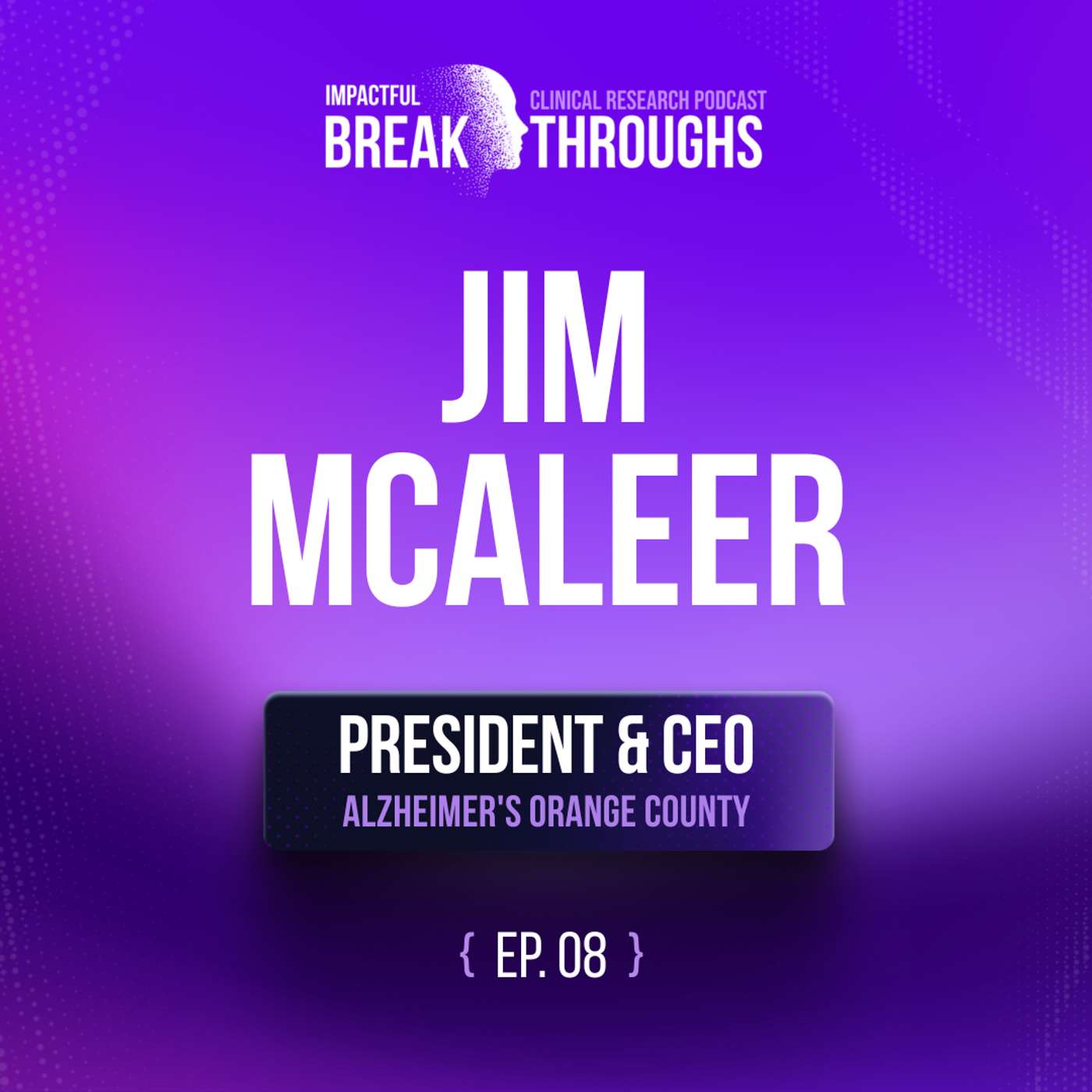
How can sponsors spend upwards of $50m on phase 3 trials and still struggle to fill them? Jim McAleer, President and CEO of Alzheimer’s Orange County, has an answer that has nothing to do with the protocol.
On this episode of Impactful Breakthroughs, he speaks with Laura Brencher, VP of Patient Advocacy at Leapcure, about why trusted community organizations are the practical route into clinical trials. Alzheimer’s OC is an independent nonprofit providing care consultations, education, support groups and adult day health services to families living with dementia. Jim has run the organization for 22 years and has expanded their reach to now support over 30,000 people a year.
Jim and Laura cover drug developments which were “always 18 months away” without ever arriving, his hopes for the future of research in the space, and why it’s so critical for patients to be seen as early as possible. You’ll also hear about the many ways Jim and his team holistically support families by connecting them with art, culture, and faith.
The throughline throughout their conversation is that community organizations are the ones deservedly earning trust from the patients they serve. Treating them as the conduit to successful trials is the fastest honest route to enrollment.
Timestamps
00:00 Episode Start
01:55 How Jim got into the Alzheimer’s space
03:10 What changed in the past 22 years
05:30 Dementia as the umbrella term
07:20 The caregiver experience up close
11:00 Inside Alzheimer’s Orange County’s programs
12:50 Why art, music and faith last longer
15:20 Connecting families to clinical research
17:45 What a good sponsor partnership looks like
20:10 Why families do or don’t join trials
21:55 The hardest parts of running a nonprofit
25:30 Jim’s career highlight and closing reflections
Key Takeaways
- It’s okay for this to suck. Jim’s care managers say this to caregivers who feel guilty about needing a break. He describes spouses of 60 and 70 years watching a partner forget their wedding, and he makes the point that the hardest moment is different for every family. Giving people permission to be tired and out of patience is what makes respite and in-home safeguards something they will actually use.
- The earlier you face what’s ahead, the more prepared you can be. The pathology for Alzheimer’s dementia can sit for 15 or 20 years before symptoms show, and families often read early signs as normal aging. Earlier referral turns a care consultation into a planning conversation, and it tracks with where Jim says the science is focusing on.
- What we bring to the table is the trust of the people we serve. This is Jim’s description of what a sponsor is actually getting in an advocacy partnership. A pharmaceutical company is rarely the organization which families experiencing disease interact with – the organization whose helpline they’ve been calling for years is.
- Hope is wonderful, false hope is not. Jim ensures his staff corrects coverage that treats a phase 1 mouse study as a potential cure. His team wants families to understand which results are merely a nice headline and which actually deserve their attention.
Guest Shoutouts
- Joshua D. Grill, PhD, Director, UCI MIND, and Professor of Psychiatry & Human Behavior, University of California, Irvine
- Aaron Ritter, MD, Larkin Family Endowed Chair in Integrative Brain Health and Director, Memory & Cognitive Disorders Program, Hoag Pickup Family Neurosciences Institute
- Dung Trinh, MD, Chief Medical Officer, Healthy Brain Clinic, and Medical Director, Alzheimer’s Orange County
Resources
Disclaimer
This podcast’s information is provided for general reference and was obtained from publicly accessible sources. The Podcast Collaborative neither produces nor verifies the content, accuracy, or suitability of this podcast. Views and opinions belong solely to the podcast creators and guests.
For a complete disclaimer, please see our Full Disclaimer on the archive page. The Podcast Collaborative bears no responsibility for the podcast’s themes, language, or overall content. Listener discretion is advised. Read our Terms of Use and Privacy Policy for more details.