The Good Humanitarian

The Good Humanitarian
Podcast Description
Have you ever sat and wondered how disasters like floods and earthquakes intersect with conflicts, or how climate change will influence the disasters and responses of tomorrow? Humanitarianism is often thought to be about heroes and victims. But really, it's about people, just like you and I, living through and dealing with extreme situations in their own ways. The humanitarian system is itself a patchwork of people and organisations. And, like all systems, the people who work within it can make mistakes or bad decisions. Join us as we delve into all of this and more with experts from the HSC.
Podcast Insights
Content Themes
The podcast examines the intersections of disaster response, humanitarian ethics, and climate change, exploring themes such as how climate change affects migration, the principles of effective humanitarian work, and the challenges of bespoke responses to crises, with episodes discussing disaster recovery ethics and the impact of humanitarian actions.
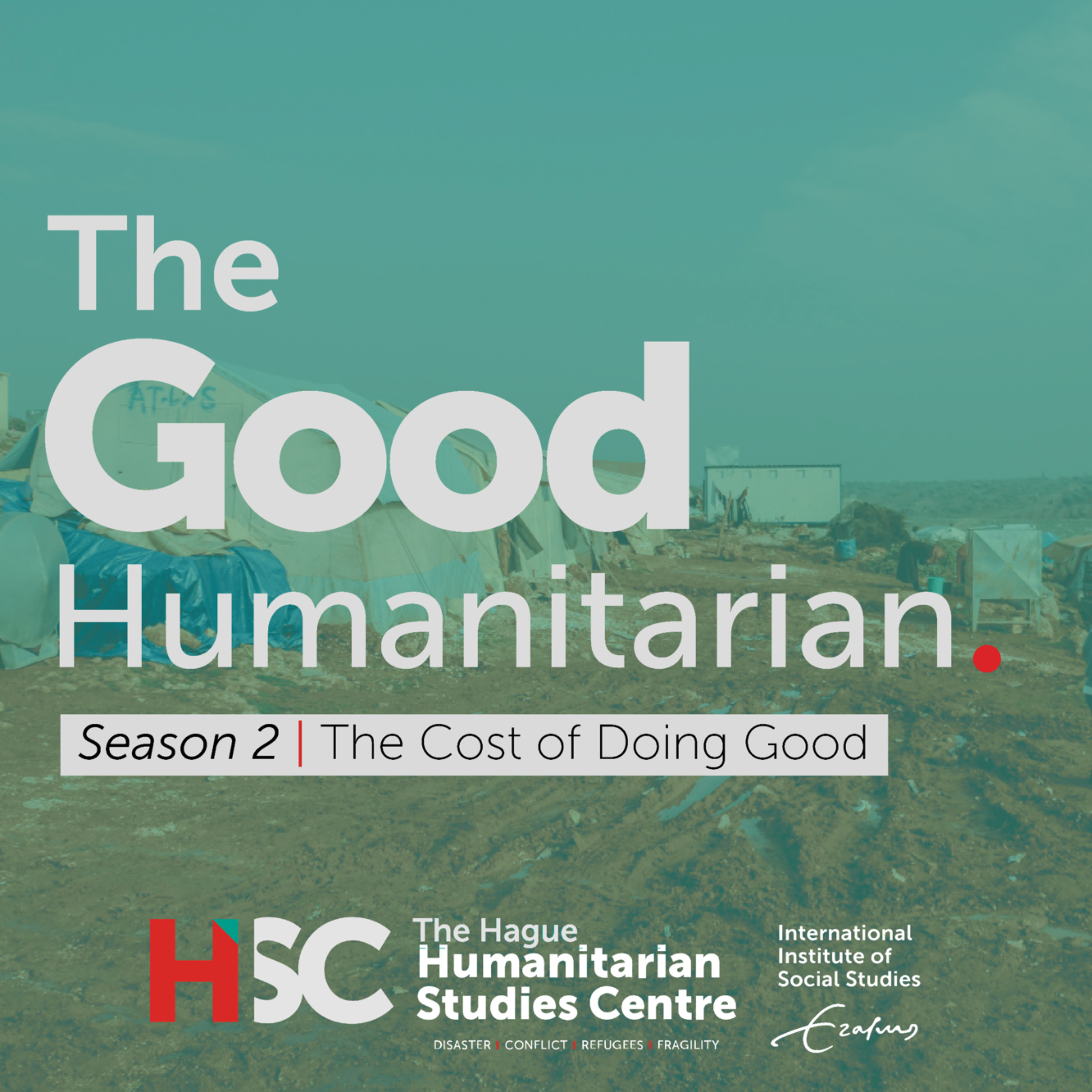
Have you ever wondered what it really costs to do good in a world where crises are cascading and growing faster than the resources to respond to them? Humanitarian work is often seen as selfless and heroic, but behind every response are complex choices about money, safety, power and whose needs are met first. And the system itself? Still a patchwork of organisations, people, policies and pressures, where even the best intentions can collide with reality. In Season 2 of ‘The Good Humanitarian’, we’re exploring The Cost of Doing Good.
You’ve probably heard of the Geneva Conventions: laws meant to govern war, protect civilians and shield doctors, journalists and aid workers. These and other laws are also meant to make sure that when the worst crimes happen, someone is held responsible. But what happens when those laws are ignored, delayed or applied selectively? In this episode, we are asking why accountability matters, how international laws and treaties are converted into action and what it really means for civilians and aid workers when justice is postponed, denied or never comes at all?
Guests Thandiwe Matthews, Lecturer in Human Rights, Law and Development Studies at the University of the Witwatersrand in Johannesburg, South Africa and Gabrielė Chlevickaitė, International Criminal Law Researcher at the Asser Institute in The Hague, guide us through this episode where we look at the cost of doing nothing.
In the podcast we also question: What makes a ”good” humanitarian? We would like to hear from you. Leave a comment here or via social media.
The Good Humanitarian is a podcast by The Hague Humanitarian Studies Centre (HSC), based at the International Institute of Social Studies, part of Erasmus University Rotterdam. Stay up to date by following the HSC on LinkedIn and check out our website.
Disclaimer
This podcast’s information is provided for general reference and was obtained from publicly accessible sources. The Podcast Collaborative neither produces nor verifies the content, accuracy, or suitability of this podcast. Views and opinions belong solely to the podcast creators and guests.
For a complete disclaimer, please see our Full Disclaimer on the archive page. The Podcast Collaborative bears no responsibility for the podcast’s themes, language, or overall content. Listener discretion is advised. Read our Terms of Use and Privacy Policy for more details.