Smart Charge by RiDERgy

Smart Charge by RiDERgy
Podcast Description
Smart Charge by RiDERgy brings you to the forefront of fleet electrification, energy management, and sustainability. Hosted by the RiDERgy team, this podcast dives into the intersection of technology, mobility, and energy.
Each episode delivers actionable insights, expert perspectives, and real-world solutions for fleet managers, sustainability enthusiasts, and industry professionals.
Explore smart charging strategies, grid optimization, EV innovation, and fleet strategies while engaging with industry leaders to uncover opportunities in the electrified future.
Podcast Insights
Content Themes
The podcast explores themes such as smart charging strategies, grid optimization, electric vehicle innovation, and fleet electrification. For example, Episode 4 features Klaus Huber discussing entrepreneurial spirit in the energy sector and the necessary strategies for success, while Episode 3 delves into the challenges of the energy transition with CEO Bastian Gierull of Octopus Energy, highlighting smart meters and AI applications.
Smart Charge by RiDERgy brings you to the forefront of fleet electrification, energy management, and sustainability. Hosted by the RiDERgy team, this podcast dives into the intersection of technology, mobility, and energy.
Each episode delivers actionable insights, expert perspectives, and real-world solutions for fleet managers, sustainability enthusiasts, and industry professionals.
Explore smart charging strategies, grid optimization, EV innovation, and fleet strategies while engaging with industry leaders to uncover opportunities in the electrified future.
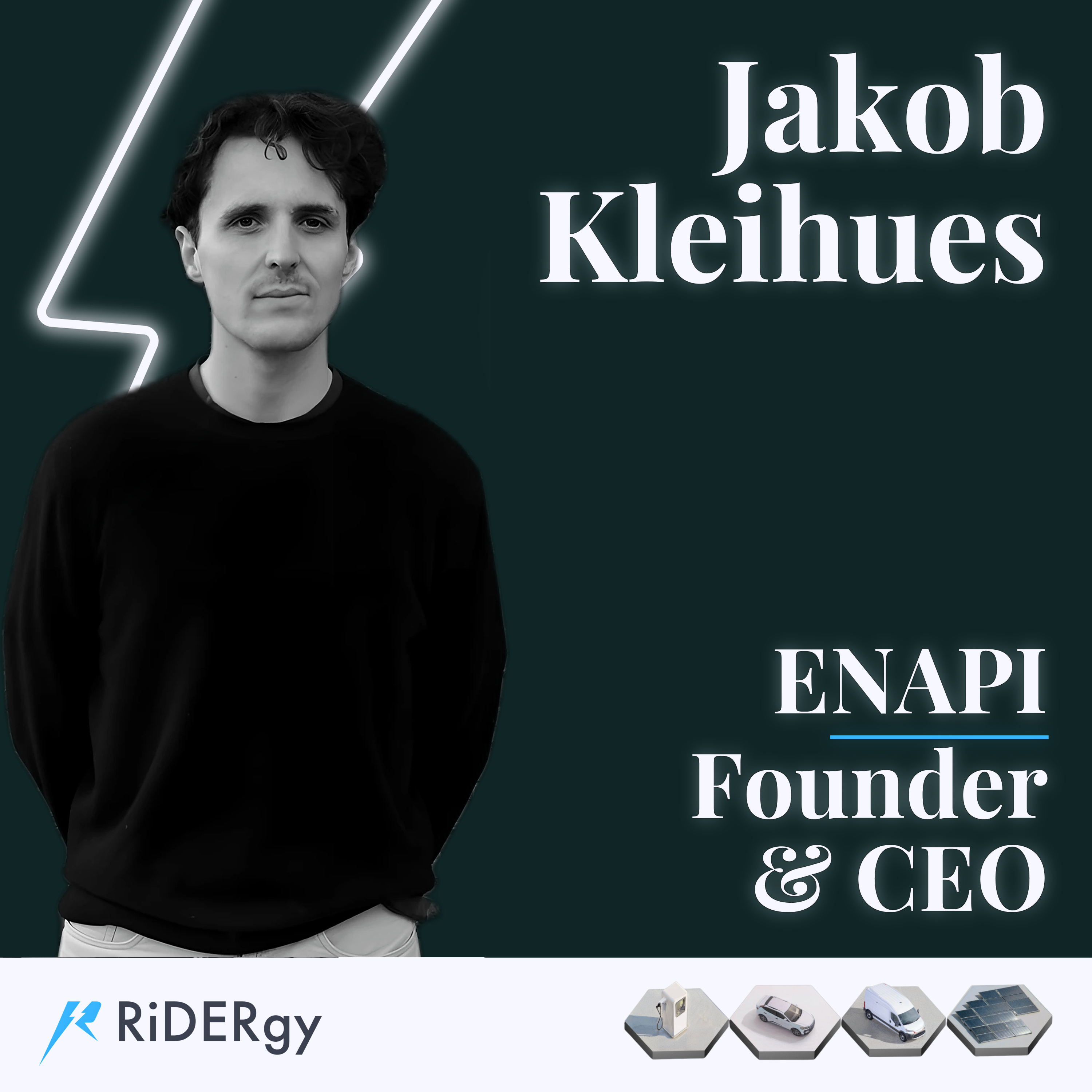
With 500 players on each side of the market, connecting everyone to everyone takes 250,000 bilateral integrations, and every one of them needs a handshake, testing and maintenance. Jakob Kleihues, co-founder of ENAPI, argues that connectivity between charge point operators and mobility service providers should be a free commodity, and that the real money is in financial clearing.
Jakob explains why connecting to hundreds of partners one by one does not scale: with 500 players on each side of the market, that is 250,000 bilateral integrations, and every one of them needs a handshake, testing and maintenance. ENAPI replaces them with a single connection. Since it started onboarding, it has connected more than 450 partners and over one million charge points, with implementation times that rarely exceed one or two weeks. He also shows why even a fee of five cents per session pushes volume towards direct connections, and how brokering the transaction lets ENAPI check invoiced charge detail records against the sessions it authorized.
The conversation also covers the practical side of pricing, from discounts applied at charge detail record level instead of a flat reduction on the invoice to the new booking module in OCPI 2.3, and what it takes to keep a published 99.998 percent uptime with a very small team where more than 94 percent of production code is written by AI. Jakob explains why the US, Australia and New Zealand followed network by network rather than country by country, and why he wants the industry to think about the size of the pie rather than the slice.
An episode about turning connectivity into a commodity, and about what it takes to make public charging simply work.
Topics covered:
- OCPI and why bilateral integrations do not scale
- Free connectivity and the business case for financial clearing
- Validating charge detail records
- Discounts, variable prices and the booking module
- Uptime and AI native engineering
- Growing network by network into the US
Disclaimer
This podcast’s information is provided for general reference and was obtained from publicly accessible sources. The Podcast Collaborative neither produces nor verifies the content, accuracy, or suitability of this podcast. Views and opinions belong solely to the podcast creators and guests.
For a complete disclaimer, please see our Full Disclaimer on the archive page. The Podcast Collaborative bears no responsibility for the podcast’s themes, language, or overall content. Listener discretion is advised. Read our Terms of Use and Privacy Policy for more details.