Roadrageous

Roadrageous
Podcast Description
This is Roadrageous, the podcast for safer drivers, smarter training, and bold ideas. Featuring innovators and thought leaders from the driver training industry, we’re here to inspire and educate.
Podcast Insights
Content Themes
The podcast delves into themes of fleet safety, driver training methodologies, and innovative safety technologies. Episodes highlight specific topics such as the essential components of a successful fleet safety program, the integration of telematics in training, and the impact of gamification on driver behavior. For instance, the episode featuring Bill Vargo compares safe driving to making a quality Bolognese sauce, illustrating the need for consistency and the right ingredients in both fields.
This is Roadrageous, the podcast for safer drivers, smarter training, and bold ideas. Featuring innovators and thought leaders from the driver training industry, we’re here to inspire and educate.
Silent Support, Massive Impact
Craig Croner is Deputy Director of Fleet Operations for the City of Glendale with 30+ years experience managing 1,500 assets across police, fire, waste, and municipal operations.
Here’s a glimpse of what you’ll learn:
- [1:27] From high school shop class to 30 years in fleet leadership
- [5:32] What “invisible infrastructure” really means in municipal operations
- [8:11] Managing everything from police cars to combine harvesters
- [10:06] Why onboarding safety training is non-negotiable
- [12:17] The evolution from paper files to integrated fleet management systems
- [13:22] How GPS technology went from “Big Brother” to exoneration tool
- [17:43] The parking lot story: How GPS saved a driver’s reputation
- [21:04] The cardiac event rescue: GPS technology that saved a life
- [22:57] Advice for new fleet managers entering the industry
- [27:44] Why “adaptive” is the future of fleet operations
In this episode…
Most cities run invisible infrastructure. Firefighters respond, police intervene, waste trucks collect—but nobody thinks about the fleet operations behind it all.
After 30 years in fleet management, Craig Croner proved that invisibility isn’t a limitation—it’s the goal. Managing 1,500 assets so smoothly that operators never think about vehicles. Integrating GPS, telematics, and safety seamlessly. Reframing technology from surveillance to support.
Listen to how Craig built excellence that nobody sees.
Quotable Moments:
- “Hopefully they get to do their job without thinking about the vehicle. That’s our job.”
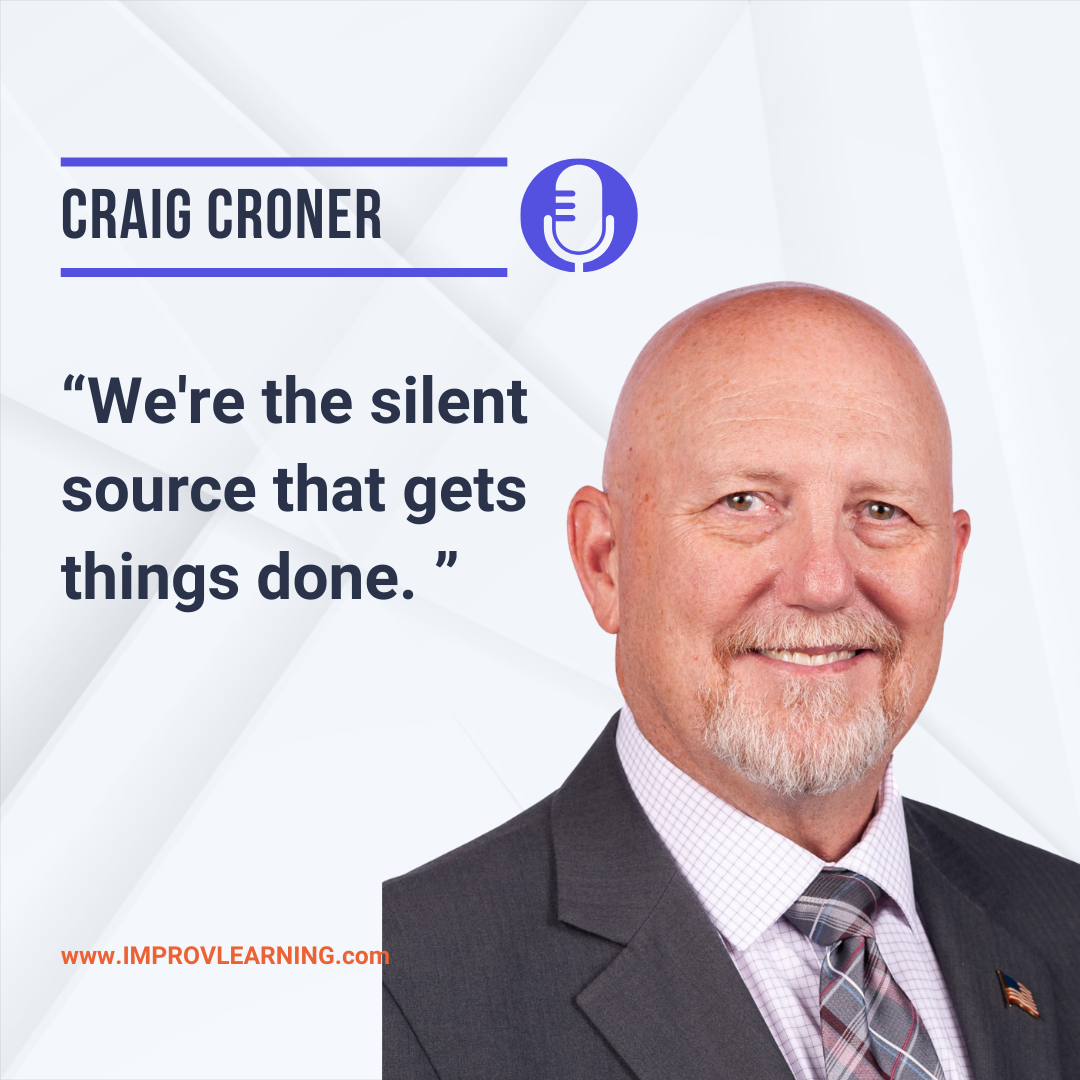
- “We’re the silent source that gets things done.”
- “The first thing that comes to an operator’s mind is, ‘Oh, it’s Big Brother looking at me.'”
- “We’re not looking at you. We’re looking at things where we can exonerate you.”
- “In a million years, I would never have thought I could use GPS to help a family find answers in a crisis.”
- “There’s a difference between being on the cutting edge and the bleeding edge of technology.”
Action Steps:
- Define fleet’s support role clearly. Ensure operators won’t have to think about vehicle reliability.
- Invest in comprehensive onboarding safety training. Day one means full safety certification for new technicians.
- Build integration into technology strategy. GPS, telematics, and maintenance platforms should talk to each other.
- Test and pilot before scaling. Know your ROI before investing broadly.
- Reframe GPS technology as support, not surveillance. Train supervisors to tell the real story: optimization, efficiency, exoneration.
- Use GPS for driver exoneration first. Collect stories where technology proved your driver was right.
- Be on the cutting edge, not the bleeding edge. Adopt technology after proven track record, not day one.
- Accept the invisibility. Your greatest success is when nobody knows you’re there.
The Invisible Infrastructure
Craig manages everything from police cars to fire trucks to waste vehicles to graders. In the private sector, you specialize. In public sector, you become a generalist.
“You can’t be specialized in one specific field. You have to be really good at multiple fields and understand the equipment.”
Safety starts on day one: comprehensive onboarding for technicians covering lifting vehicles, overhead cranes, and all safety protocols. But safety also means every vehicle leaving the yard is safe for the operator. One tire flying off due to improper torque creates real consequences.
Technology evolved from paper files (1996) to integrated platforms. Today, Geotab GPS talks to FASTER fleet management. A driver reports a vehicle issue and it automatically generates a work order. Diagnostic codes surface before failures happen.
From “Big Brother” to Exoneration Tool
When GPS first appeared, operators feared surveillance. Craig’s solution: reframe it.
“It’s up to fleet management to sell the program not based on ‘it’s a gotcha,’ but ‘it really helps us drive being more efficient,'” he explains. Fuel optimization, idle time reduction, vehicle diagnostics, cost savings.
But the most powerful benefit? Exoneration.
A code compliance officer gets backed into by another vehicle in a parking lot. The at-fault driver claims the fleet vehicle hit them. GPS data showed exactly what happened—and exonerated the driver completely.
“That word gets out. You have to be able to pinpoint those things and raise that awareness. It’s not just about Big Brother. It actually helps you guard against something.”
The culture shifted. Operators started trusting technology because they saw it work in their favor.
The Cardiac Event: When GPS Became a Family Support Tool
A code compliance officer suffered a cardiac event and became non-responsive at the VA hospital. His wife, searching for answers, contacted the supervisor. GPS immediately confirmed the vehicle location at the hospital and relayed it to the family. The technology didn’t alert emergency responders or activate rescue protocols—instead, it gave the spouse the critical information she needed to locate her husband and connect with hospital staff. This single detail transformed GPS from a surveillance tool into genuine family protection
Testing Before Scaling
Craig has seen implementations fail when organizations hope technology solves problems.
“The worst implementations are always, ‘We hope that it does this,’ or they’re not testing as they implement,” he says.
His approach: pilot, test, measure ROI, then scale. Will it save man hours? Improve DOT compliance? Free up staff for meaningful work?
“There’s a difference between being on the cutting edge and the bleeding edge of technology.”
Advice for New Fleet Managers
Find a mentor. Get certified through APWA programs. Join GFX (Government Fleet Executives). Remember that fleet exists to enable frontline operations.
“Fleet management isn’t for the weak. But there’s a lot of rewards because when you see a fire truck on scene, you know you played a role.”
Key Takeaways
✓ Fleet’s job is invisibility—make vehicles work so operators never think about them
✓ Comprehensive onboarding prevents workplace incidents
✓ Integrate systems so inspections automatically generate work orders
✓ Reframe GPS from surveillance to support through exoneration
✓ Test and pilot technology before scaling
✓ Use GPS for driver exoneration stories to build trust
✓ Be on the cutting edge, not the bleeding edge
✓ Greatest success is when nobody notices you’re there
Resources mentioned in this episode:
- Craig Croner on LinkedIn
- City of Glendale Fleet Services
- GFX – Government Fleet Executives
- APWA – American Public Works Association
- Geotab GPS & Telematics
- SPIDER® Driver Training
- Chad Lindholm on LinkedIn
- Gary Alexander on LinkedIn
About Craig Croner
Craig Croner is Deputy Director of Fleet Operations for the City of Glendale, Arizona, leading a team of 36 managing 1,500 assets across police, fire, solid waste, and municipal operations. With 30+ years of fleet management experience spanning beverage industry safety direction and centralized fleet services for the City of Boise, Craig brings a unique perspective on complex public sector infrastructure.
A nationally recognized speaker and GFX advisor, Craig was inducted into the 2025 Public Fleet Hall of Fame for advancing fleet operations and technology integration in the public sector.
This episode is brought to you by IMPROVLearning.
At IMPROVLearning, we’re dedicated to transforming driver education through innovative, research-backed training methods. Our SPIDER™ Driver Training platform combines humor with proven brain-training techniques to help drivers anticipate and avoid dangers on the road.
Fleet operations provide the vehicles. SPIDER training develops the cognitive skills that complement your fleet infrastructure: hazard recognition, space management, and split-second decision-making.
To learn more about how IMPROVLearning complements your fleet strategy, visit improvlearning.com.
Disclaimer
This podcast’s information is provided for general reference and was obtained from publicly accessible sources. The Podcast Collaborative neither produces nor verifies the content, accuracy, or suitability of this podcast. Views and opinions belong solely to the podcast creators and guests.
For a complete disclaimer, please see our Full Disclaimer on the archive page. The Podcast Collaborative bears no responsibility for the podcast’s themes, language, or overall content. Listener discretion is advised. Read our Terms of Use and Privacy Policy for more details.