The Big Year Podcast
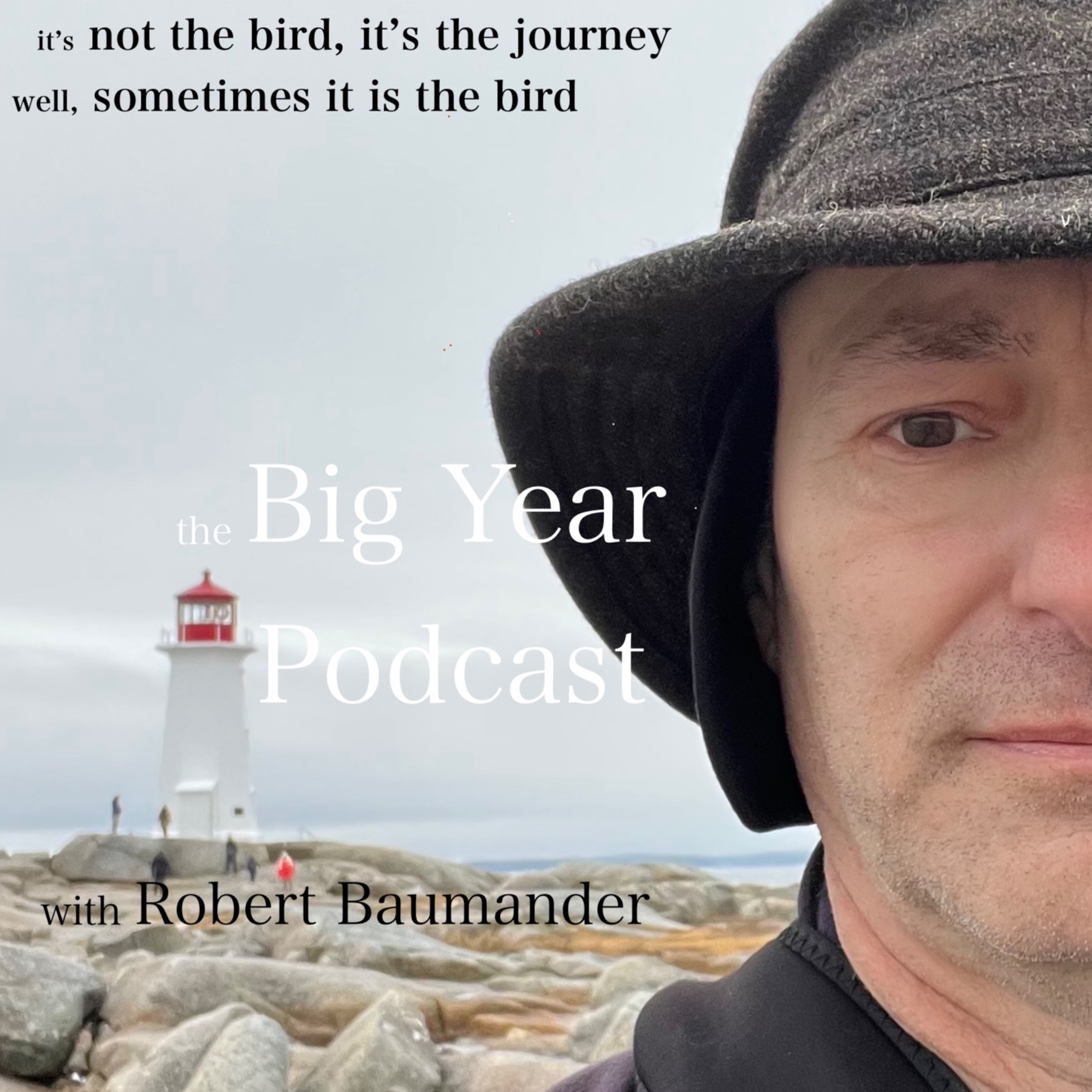
The Big Year Podcast
Podcast Description
Welcome to the Big Year Podcast, a show devoted to birders who do Big Years. A Big Year is a 365 day commitment to see as many birds as possible in a defined area, including the ABA Area, states, provinces or counties in the US and Canada.
Podcast Insights
Content Themes
The podcast focuses on themes of birding adventures, personal journeys in nature, and the challenges of completing Big Years, with episodes discussing specific experiences such as self-powered Big Years, record-breaking seasons, and the psychological benefits of birding, including conversations with guests like Tiffany Kersten and Lynn Barber who have their own unique Big Year stories.
Welcome to the Big Year Podcast, a show devoted to birders who do Big Years. A Big Year is a 365 day commitment to see as many birds as possible in a defined area, including the ABA Area, states, provinces or counties in the US and Canada.
Birds are dinosaurs. I’ll say that again. Birds are dinosaurs. Yes, birds, in fact, split off from a common non-avian dinosaur long before the asteroid hit 66 million years ago, and were flying the skies of our ancient planet while T-rex ruled the earth. In fact, they shared the airspace with the pterodactyls, and out competed them. The birds took took out the pterosaurs long before the last days of the dinosaurs. All 11,000 modern species of birds that soar the skies today, were descended from the group of ground dwelling, seed eating, beaked, feathered dinosaurs, capable of powered flight, known as the “crown group” in the family tree. These birds made it through the apocalypse of the astroid strike that caused the extinction of all the non-avian dinosaurs, including our favorites from Jurassic Park, T-Rex, Vleosorapter and Stegosaurus.
In the original Jurassic Park, Dr. Grant famously compared a Vleosorapter skeleton to modern birds, pointing out that their bones were hollow and their pelvis was turned backwards like a bird. Of course, he was scoffed at, and in fact many paleontologists in the late 20th century, like Dr. Grant, were in the minority. Ornithologists were actually amongst the last holdouts. In the early 1900’s biologist Thomas Henry Huxley, famously knowns as “Darwin’s Bulldog,” for his dogged defense of Darwin’s theory of evolution by means of natural selection, proposed that birds were, in fact, dinosaurs and that Archaeopteryx, the first known bird, was a transitional species between dinosaurs and modern birds. Yet, decades later, this obvious fact fell out of favor amongst scientists and ornithologists, who lacked the imagination to see what was so self-evident to Huxley.
In 1994, when Jurassic Park came out, the perception was beginning to change. Then, in 1996 the first feathered dinosaurs were discovered in China. Suddenly the bird-dinosaur connection became a fact that no one could ignore. Birds were and are dinosaurs. Which brings us to today’s guest, paleontologist Riley Black, author of many books, including “When the Earth was Green,” and “The Last Days of the Dinosaurs.” I recently finished her book “The Shortest History of the Dinosaurs,” and as I was listening, one thing became apparent early on, Riley’s history of the dinosaurs was in many ways a history of birds, from the first feathered dinosaurs, to the first that discovered flight, to our modern birds of today.
And on October 27, 2026, her newest book, “Tyrant Lizard Queen” will be published in print and available as and e-book or as an audio book, which is my preference. The book is available for preorder at your favorite digital book store, and I can’t wait to begin listening. So while I wait for publication date, it’s time to travel back in time about, oh I’d say, 120 million years with Riley Black and learn just how, where and when birds evolved from dinosaurs.
Reptiles, dinosaurs and birds, oh my!
If you want to take a deeper dive into both dinosaurs and the origin of birds, I highly recommend reading or listening to Riley’s other books, “When the Earth was Green”, “The Last Days of the Dinosaurs” and “The Shortest History of the Dinosaurs.” I would also suggest you check out the books of Neil Shubin and Steve Brusatte.

Disclaimer
This podcast’s information is provided for general reference and was obtained from publicly accessible sources. The Podcast Collaborative neither produces nor verifies the content, accuracy, or suitability of this podcast. Views and opinions belong solely to the podcast creators and guests.
For a complete disclaimer, please see our Full Disclaimer on the archive page. The Podcast Collaborative bears no responsibility for the podcast’s themes, language, or overall content. Listener discretion is advised. Read our Terms of Use and Privacy Policy for more details.