Tech Threads: Weaving the Intelligent Future
Tech Threads: Weaving the Intelligent Future
Podcast Description
This podcast hosted by Baya Systems explores the cutting edge of technology, from AI acceleration to data movement and chiplet innovation. Each episode dives into groundbreaking advancements shaping the future of computing, featuring insights from industry experts on the trends and challenges defining the tech landscape. Tune in to stay ahead in the rapidly evolving world of technology.
Podcast Insights
Content Themes
The podcast covers cutting-edge themes in technology such as AI acceleration, data movement, and chiplet innovation. For instance, in the inaugural episode, the discussion revolves around the rapid evolution of the semiconductor industry, highlighting the impact of AI on chip design and the implications of a slowing Moore's Law.
This podcast hosted by Baya Systems explores the cutting edge of technology, from AI acceleration to data movement and chiplet innovation. Each episode dives into groundbreaking advancements shaping the future of computing, featuring insights from industry experts on the trends and challenges defining the tech landscape. Tune in to stay ahead in the rapidly evolving world of technology.
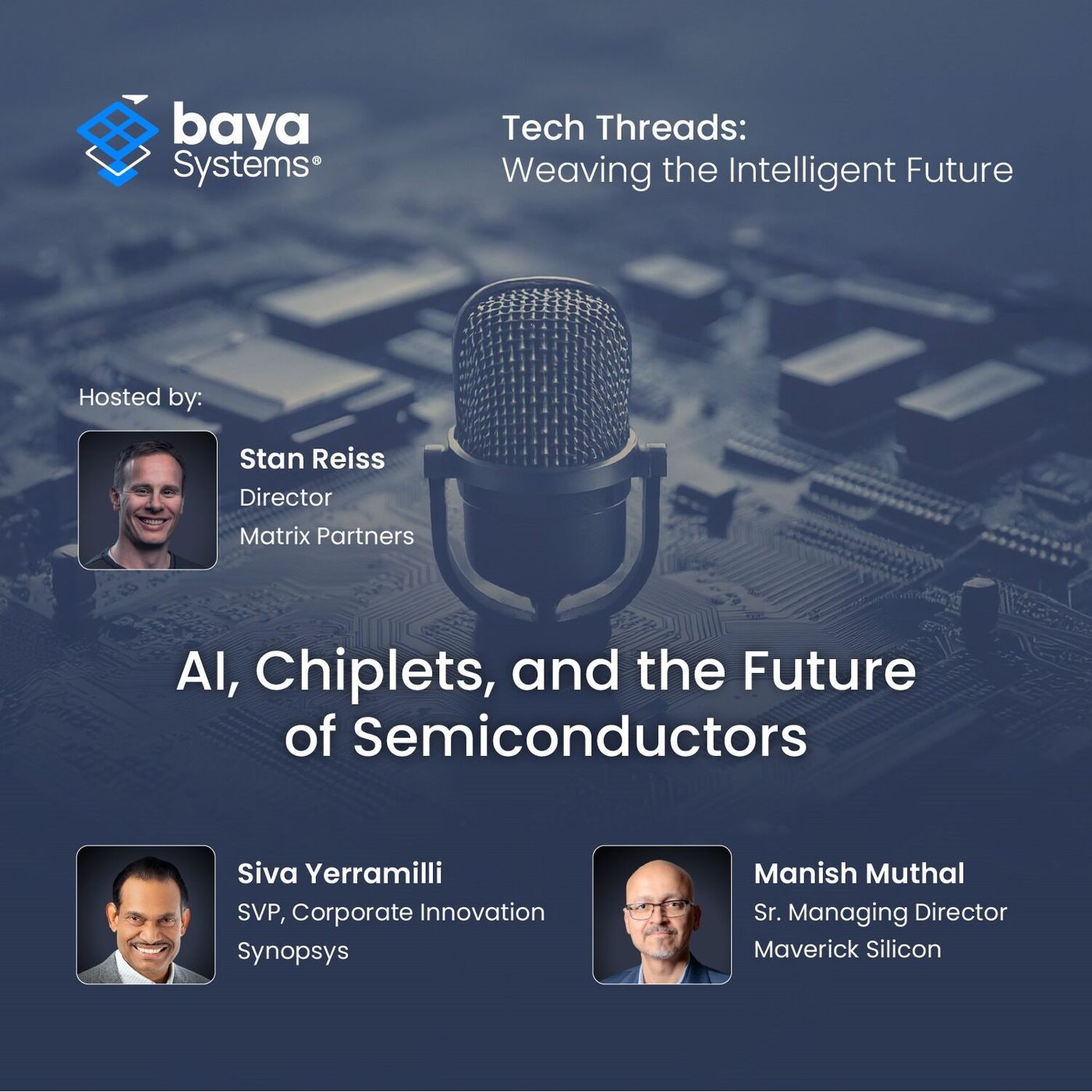
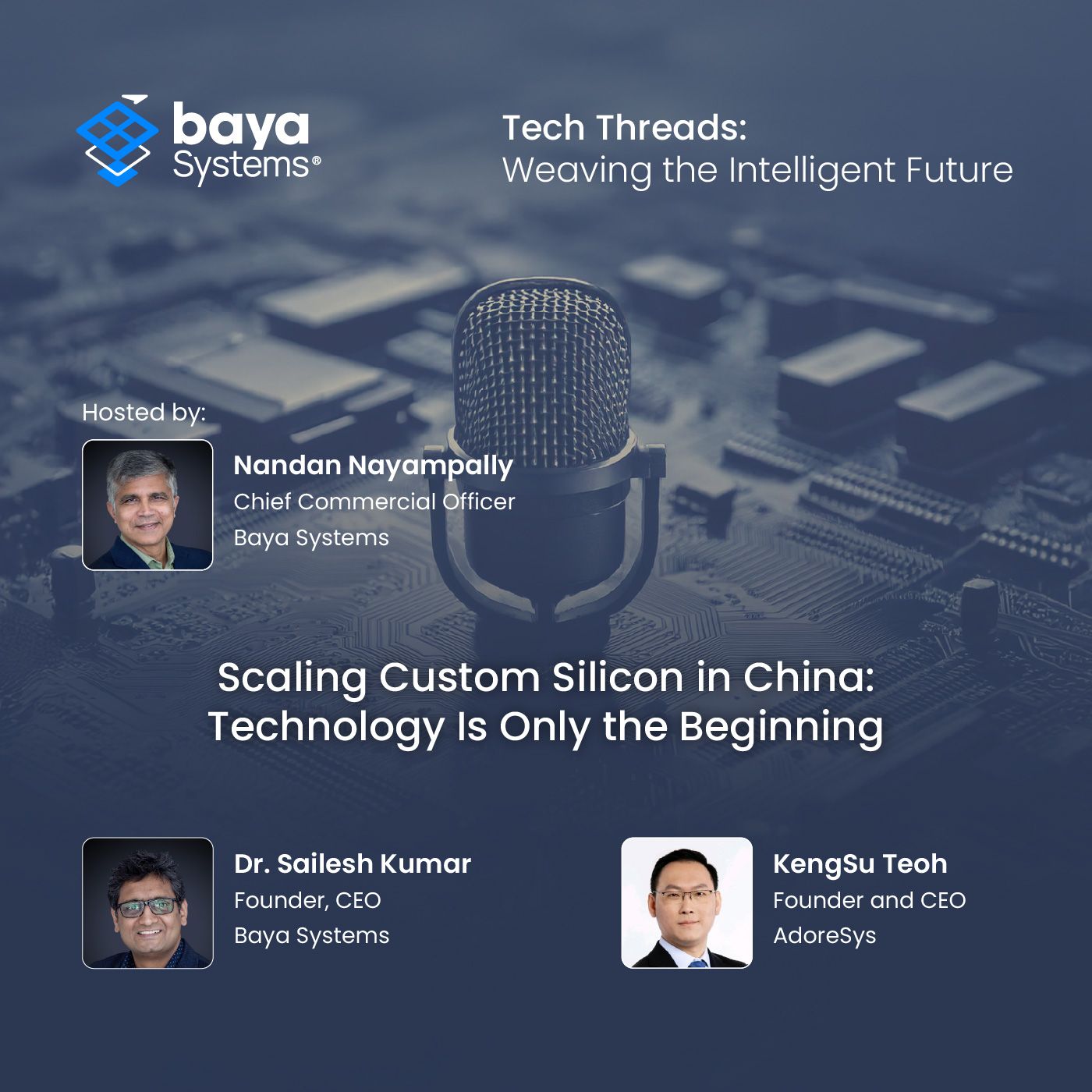
In this episode of Tech Threads: Weaving the Intelligent Future, Baya Systems Founder and CEO Sailesh Kumar joins AdoreSys Founder and CEO KengSu Teoh to discuss the companies’ new partnership and what it means for semiconductor customers across China and the broader Asia-Pacific region.
Hosted by Nandan Nayampally, the conversation explores the rapid growth of custom silicon, the increasing importance of data movement and interconnect technology, and how Baya and AdoreSys are combining complementary strengths to support complex SoC and chiplet designs.
From Technology Adoption to Implementation
Sailesh and KengSu discuss how Baya and AdoreSys can combine their complementary strengths to support customers across the design journey, from evaluating advanced interconnect technology to silicon implementation.
Inside the Conversation
• Why data movement and connectivity are becoming defining challenges in modern computing systems
• How the shift toward custom silicon is changing customer requirements and development models
• Why chiplet architectures create new opportunities and new connectivity challenges
• What semiconductor design teams in China value when evaluating and adopting technology
• How local engineering relationships can accelerate technical engagement and customer support
• What Baya Systems and AdoreSys hope to accomplish through their partnership
Disclaimer
This podcast’s information is provided for general reference and was obtained from publicly accessible sources. The Podcast Collaborative neither produces nor verifies the content, accuracy, or suitability of this podcast. Views and opinions belong solely to the podcast creators and guests.
For a complete disclaimer, please see our Full Disclaimer on the archive page. The Podcast Collaborative bears no responsibility for the podcast’s themes, language, or overall content. Listener discretion is advised. Read our Terms of Use and Privacy Policy for more details.