Story Deep Dive Podcast
Story Deep Dive Podcast
Podcast Description
Join editor and USA Today bestselling author Dana Pittman and developmental editor Rachel Arsenault for a weekly deep dive into great novels. storydeepdive.substack.com
Podcast Insights
Content Themes
The show emphasizes a range of topics within literature, focusing primarily on plot structure, character development, and writing techniques. Examples include their episode deep dives into the character journey in Ninth House by Leigh Bardugo and the dynamics of humor in Things We Never Got Over. Additionally, they explore how themes like power, community, and emotional healing are presented across genres.
Join editor and USA Today bestselling author Dana Pittman and developmental editor Rachel Arsenault for a weekly deep dive into great novels.
Welcome to Story Deep Dive!
In this episode, Dana and Rachel open their October month on Hell Bent by Leigh Bardugo, one of the few book twos the podcast has covered, and set the lens for the month: what a middle book in a trilogy has to do. They dig into how Bardugo raises the stakes without getting more gruesome than Ninth House, and how she walks a reader into a very big imagination one step at a time.
Whether you’re a romance writer, paranormal author, or story strategist, you’ll gain valuable insights on making a sequel feel familiar without repeating it, escalating stakes by making them personal instead of bigger, and earning enough reader trust to take your story anywhere.
You can also watch the video version of this podcast on YouTube!
Estimate Timestamps
1:21 – Drafting Month and the Group Spreadsheet
Rachel shares first draft month in the Story Cipher Academy, where her only rule is “There are no rules except finish.” This round she added a shared goal tracker in which every writer’s checkbox also moves a group progress bar, turning individual goals into a communal push. She admits she is “not a spreadsheet girl,” and a student fixed her formula overnight.
9:20 – Dana’s 52-Week Project
Fresh off her 75-day challenge, Dana is building a year-long plan for how she writes, teaches, and shows up online, with a goal of being two weeks ahead on content. “Real glow ups do not happen in no 90 days.” She ties it back to writing: the runway you build today is what you reap later, whether the goal is a book, a series, or an agent.
21:32 – Spoilers and the Blurb
Rachel reads the back cover copy with a standing warning: Hell Bent is one big spoiler for Ninth House, so listeners who want to stay clean should start with the podcast’s first four episodes. Dana confesses she never reads the blurb on a Rachel pick, which is how she ended up texting about ghosts last time.
24:50 – The Agenda for the Month
Rachel frames everything through book two: how this one functions, how it escalates without going more gruesome, and what a middle book offers a writer. Dana brings three threads: “she baby steps us into her crazy,” Bardugo’s control of information, and how she builds a container that is entirely her own.
31:34 – Same But Different
Rachel shows how the sequel mirrors book one without rehashing it. The rescue plot grows out of book one’s ending, the prologue structure repeats, and a new murder mystery is nested inside the bigger plot instead of standing alone. Dana adds that the new allies bring freshness while keeping us rooted in Lethe.
35:58 – Escalating the Stakes Without More Gore
Rachel lays out the escalations: Alex and Dawes start on their last chance with Lethe, Darlington alive and suffering in hell is worse than Darlington dead, and the conspiracy keeps going deeper. Dana names why it works. Personal stakes are about importance to the character, not size, and pairing this book’s subject matter with more gore “would have been too much.”
42:16 – Baby Stepping Us Into Her Crazy
Dana’s signature idea for the month. Book one built the foundation, so book two can take you deeper, one Gray at a time. “Had we been with Darlington and the Ring of Fire at the beginning,” she would have been back on Amazon checking the categories. Because Bardugo walked her there, the shock lands as story.
48:06 – Go Wide or Go Deep
Rachel breaks book two opportunities into two buckets: widen the world and the cast, or deepen the protagonist, their gift, and the characters you already have. Every book two does both. Hell Bent stays at Yale and expands the world “almost vertically.”
52:07 – Navigating Information Off the Grid
With rule-following Darlington gone, the story leaves the documented rituals behind. Dana’s read: “The things that we learned in book two were in theory true in book one. But it just wasn’t time yet.” When the reader feels off balance, it is intentional, “making us feel off because they feel off.”
55:04 – Building a Lane of Your Own
For writers told to pick a lane, Dana shows how Bardugo blurs genres without losing readers. The decorum and pacing of the opening buy enough trust that “she can go just about anywhere.”
58:06 – The Boiling Frog
Rachel’s metaphor for growing a world slowly so the reader never jumps out, followed by both hosts realizing, live, how grim the phrase is.
1:00:41 – Buying Time and Buying Trust
Dana’s coaching lens for writers with a big imagination: find the entry point, show restraint early “while still packing a punch,” and “you’re buying time and buying trust.”
1:04:32 – Not Just for Book Twos
Rachel stresses that the month’s takeaways apply to standalones and book threes too. Dana adds that a trilogy’s book two maps neatly onto the middle of any novel.
Book Selection:
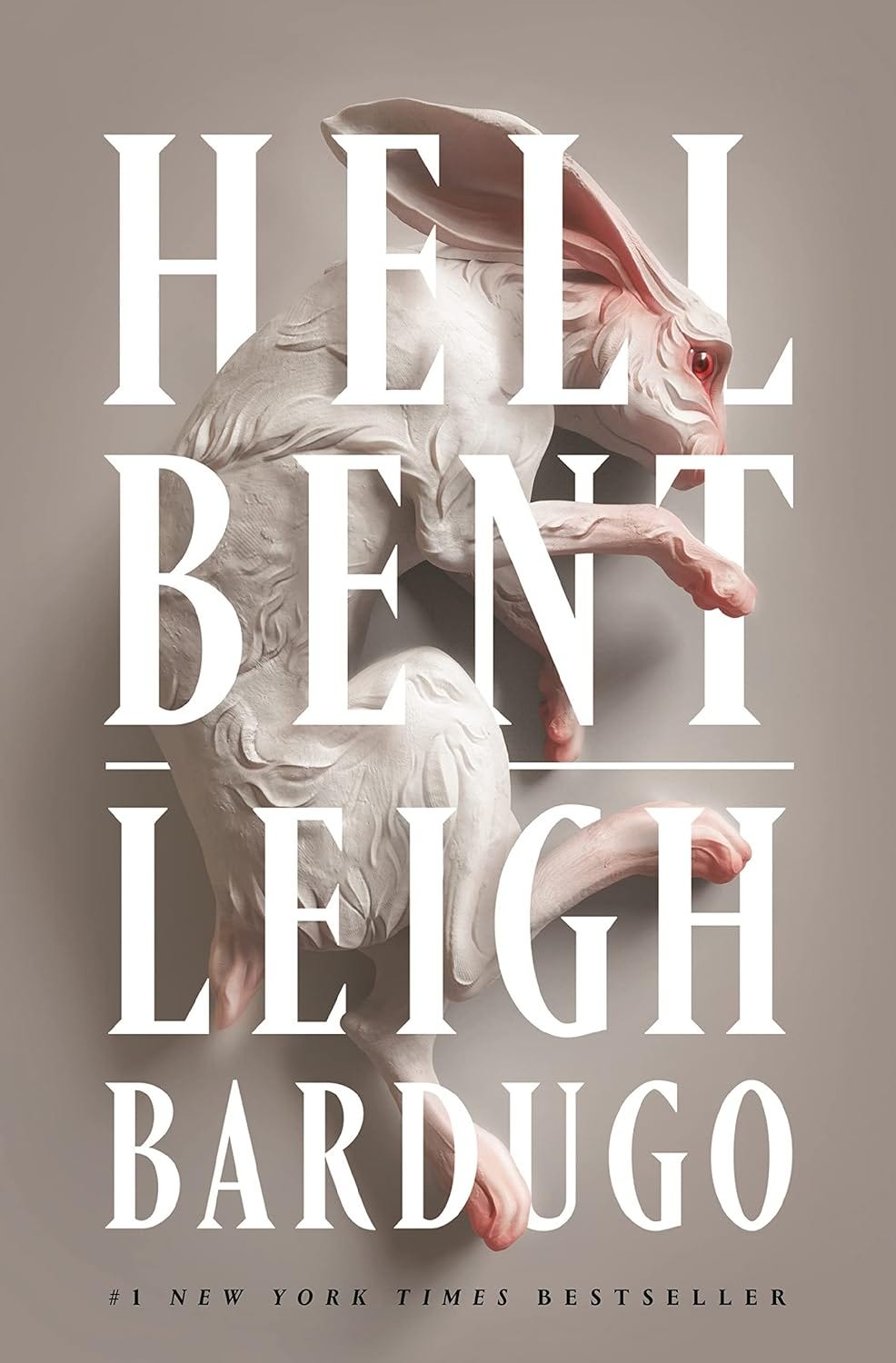
Title: Hell Bent
Author: Leigh Bardugo
Wealth. Power. Murder. Magic. The Ivy League is going straight to hell in the sequel to the smash New York Times bestseller Ninth House from #1 bestselling author Leigh Bardugo.
Find a gateway to the underworld. Steal a soul out of hell. A simple plan, except people who make this particular journey rarely come back. But Galaxy “Alex” Stern is determined to break Darlington out of purgatory—even if it costs her a future at Lethe and at Yale.
Forbidden from attempting a rescue, Alex and Dawes can’t call on the Ninth House for help, so they assemble a team of dubious allies to save the gentleman of Lethe. Together, they will have to navigate a maze of arcane texts and bizarre artifacts to uncover the societies’ most closely guarded secrets, and break every rule doing it. But when faculty members begin to die off, Alex knows these aren’t just accidents. Something deadly is at work in New Haven, and if she is going to survive, she’ll have to reckon with the monsters of her past and a darkness built into the university’s very walls.
Thick with history and packed with Bardugo’s signature twists, Hell Bent brings to life an intricate world full of magic, violence, and all too real monsters.
Where to Find the Book
Hell Bent by Leigh Bardugo is available in several formats. It’s also widely available in libraries and online retailers. Details on her website.
Next Episode:
In the next episode, Dana and Rachel dig into the plot of Hell Bent: catching readers up without a recap, setting up six plot threads in the first hundred pages, and try-fail cycles that move the story forward instead of stalling it.
Join the Conversation:
Like what you heard? Subscribe, leave a review, and share your thoughts at storydeepdive.com. Follow Story Deep Dive on YouTube and Substack, and connect with Dana and Rachel to keep the discussion going!
This is a public episode. If you would like to discuss this with other subscribers or get access to bonus episodes, visit storydeepdive.substack.com
Disclaimer
This podcast’s information is provided for general reference and was obtained from publicly accessible sources. The Podcast Collaborative neither produces nor verifies the content, accuracy, or suitability of this podcast. Views and opinions belong solely to the podcast creators and guests.
For a complete disclaimer, please see our Full Disclaimer on the archive page. The Podcast Collaborative bears no responsibility for the podcast’s themes, language, or overall content. Listener discretion is advised. Read our Terms of Use and Privacy Policy for more details.