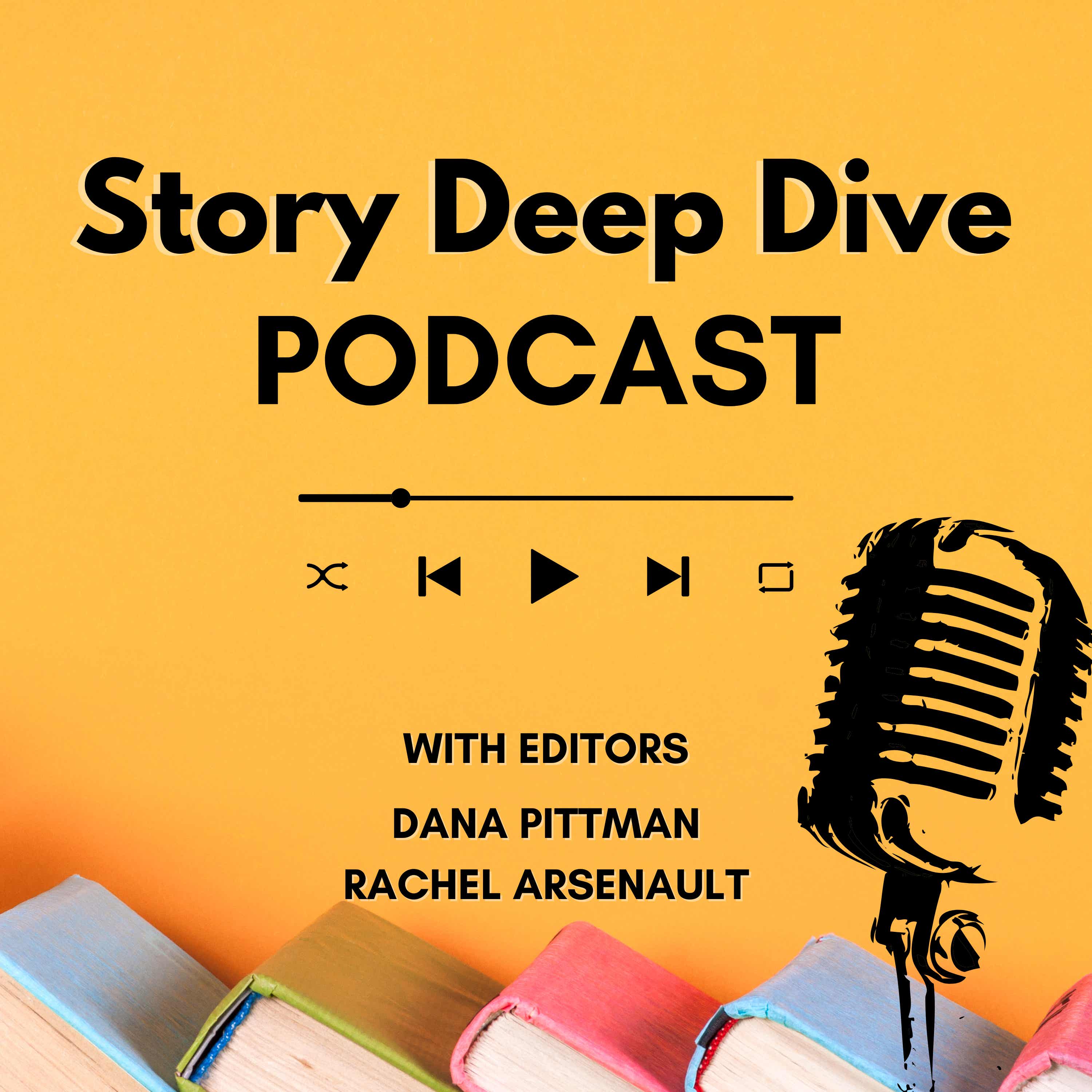
Story Deep Dive Podcast
Story Deep Dive Podcast
Podcast Description
Join editor and USA Today bestselling author Dana Pittman and developmental editor Rachel Arsenault for a weekly deep dive into great novels. storydeepdive.substack.com
Podcast Insights
Content Themes
The show emphasizes a range of topics within literature, focusing primarily on plot structure, character development, and writing techniques. Examples include their episode deep dives into the character journey in Ninth House by Leigh Bardugo and the dynamics of humor in Things We Never Got Over. Additionally, they explore how themes like power, community, and emotional healing are presented across genres.
Join editor and USA Today bestselling author Dana Pittman and developmental editor Rachel Arsenault for a weekly deep dive into great novels.
Welcome to Story Deep Dive!
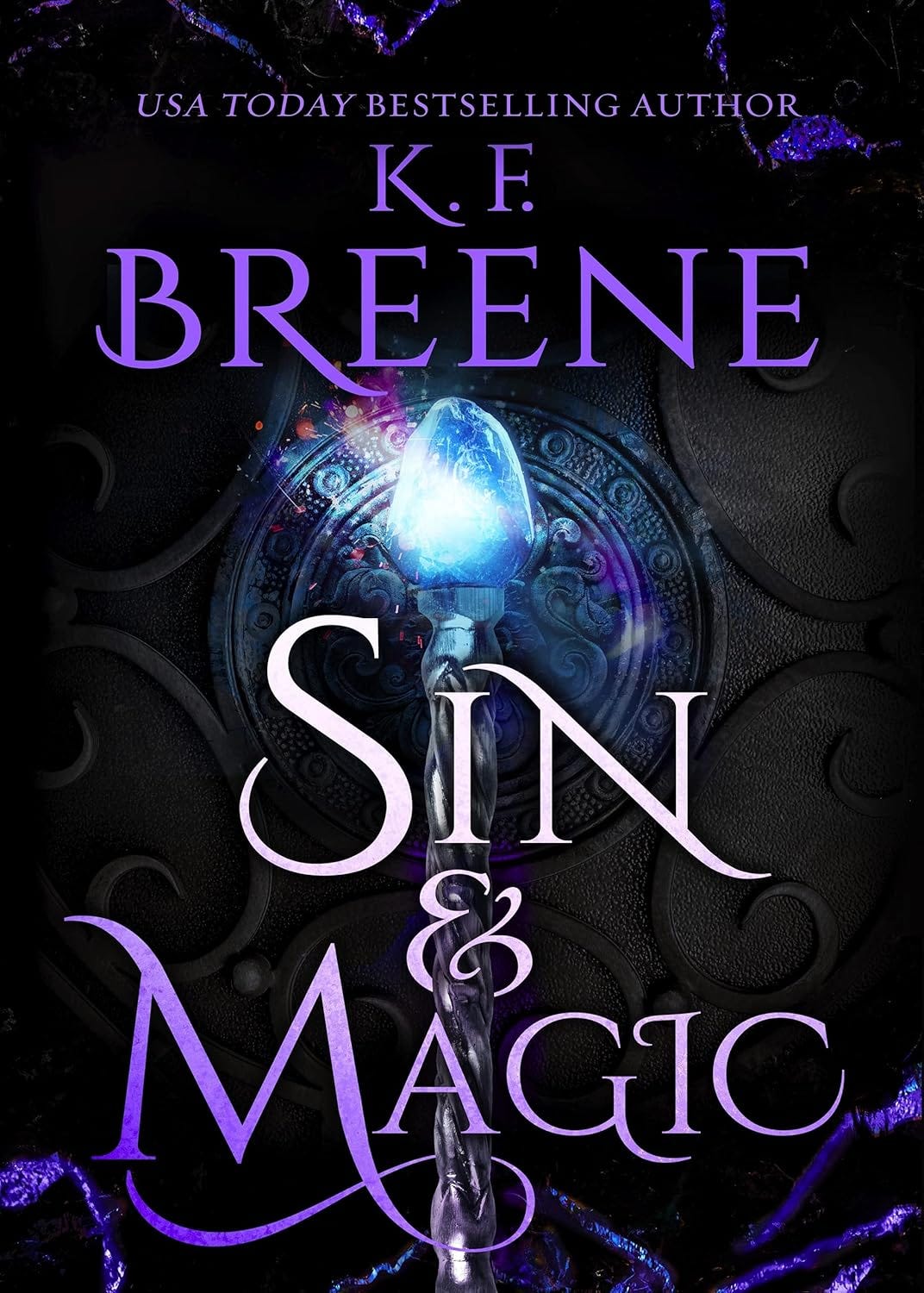
In this episode, Rachel Arsenault and Dana Pittman dive into the plot craft of K.F. Breene’s Sin & Magic (Book 2 in Demigods of San Francisco), exploring what it takes to build a satisfying installment inside a long series—without losing the romance-first reader promise.
Whether you’re a romance writer, fantasy/paranormal writer, or storyteller building a series, you’ll gain valuable insights on how Book 2 functions structurally, how a single story goal can power a full novel while feeding a series arc, and how genre promise shapes what “stakes” should feel like on the page.
You can also watch the video version of this podcast on YouTube!
Estimate Timestamps
00:00 – Welcome + Episode Setup (Plot Deep Dive)
Rachel and Dana kick things off by reintroducing Story Deep Dive as a craft-focused podcast where they analyze books “as writers.” Today’s focus is plot—specifically how Sin & Magic builds momentum as a Book 2 while keeping the series-wide story moving.
02:00 – Dana’s Bootcamp Update: Plotting in Public as a Forcing Function
Before the book discussion, Rachel checks in with Dana about what’s happening at Danja Tales. Dana breaks down her recent one-week Bootcamp: one hour a day, Monday through Friday, with one writer in the hot seat plotting a novel live using Dana’s Addictive Romance Blueprint while others watch and learn.
Dana shares how demanding the format is for both coach and student—live critique, fast turnaround between sessions, and the intense mental effort of hearing not only what the writer is saying, but what the story is trying to become. Dana describes the post-session crash as pure deflation—like “poking a balloon” and watching all the energy drain out.
Notable quote: “It’s a forcing function… this happens every time.”
06:00 – The “All Is Lost” Moment Every Writer Hits (And Why That’s the Point)
Rachel asks whether Bootcamp always includes an “all is lost” moment. Dana confirms it does—every time—and explains why that’s valuable: the live environment makes it impossible to quietly spiral, blame yourself, or quit. Instead, writers have to face the truth: messy recalibration is normal.
Dana shares how, in this Bootcamp, the hot seat writer rewrote Act 1 repeatedly—so much that by Day 3 they were still in Act 1 when the plan was to be in Act 2. But the breakthrough came from one simple clarifying question: “Is this the story you wanted to tell?” When the writer said yes, Dana knew they’d found the right story—before drafting a version that would’ve required a page-one rewrite.
Notable quote: “If we did Act 1 every day… it would just have to be Act 1 every day. This is her book.”
14:30 – Process Reality Check: Writers Quit When They Think the Problem Is Them
Rachel reflects on the larger lesson: writers hit walls and assume they’ve failed, when the wall is simply part of the process. Dana agrees and adds that the real friction is often the gap between what we think writing should feel like and what it actually is—especially when you’re working out story truth before drafting.
They discuss how plotting “too much” can actually be the stage where you remove what won’t work upfront, creating a cleaner springboard for drafting later—and how learning this publicly becomes a shared community lesson.
19:00 – Rachel’s Academy Parallel: First Draft Month + Guided Act 1 Hot Seat
Rachel shares what’s happening at Story Cypher Academy: it’s First Draft Month, where she helps overthinkers and perfectionists write imperfect drafts on purpose—because a first draft isn’t supposed to look like a third draft. She also describes an alumni/fellows feature where peers read a graduate student’s Act 1 and discuss it using guided craft questions (stakes, themes, inciting incident, story question), creating clarity and strengthening community.
Notable quote: “Is this getting you closer to or further from the story you actually want to tell?”
28:00 – Dana’s Story Catch-Up: Sin & Magic Recap
Dana gives listeners a quick story reset before the craft discussion: Sin & Magic follows Alexis, a broke, hidden macromancer who agrees to work for Kieran, a powerful demigod, to find and free his mother’s trapped spirit before his vengeful father discovers their plan. With allies (including the wildcard necromancer Bria) and the two teens Alexis protects, the story blends found family, secret missions, and a romance-first engine under the shadow of an off-page villain.
31:30 – Book Two Craft: World Expansion Without Losing the Reader
Dana frames the first major plot takeaway: Sin & Magic succeeds because it never forgets it’s Book 2. The world expands in layered ways—Alexis’s magic, her wards’ growth, Kieran’s circle, and the broader supernatural structure of San Francisco—while still keeping the narrative grounded in Alexis’s perspective as someone who previously lived on the outskirts of magic.
They also praise how Breene makes Book 2 feel accessible: the opening catches readers up quickly and clearly without bogging the story down, so new readers can jump in while still feeling tempted to go back to Book 1.
36:30 – Series Structure + “Act Two” Energy: A Standalone That Still Feeds the Arc
Rachel notes that Book 2 functions like an Act Two moment in the larger six-book series: training, deeper immersion, and growing awareness of stakes. She highlights how Breene takes one clear story objective—freeing Kieran’s mother—and expands it into an entire novel, while also using it to expose Alexis to the series-wide conflict connected to the villain Valens.
Key insight: A Book 2 can feel complete while still acting as a bridge—advancing both the single-book plot and the series spine.
44:00 – The “Three Threads” Plot Engine: Romance, the Mother Mission, and the Valens Shadow
Dana breaks down the plot as carrying multiple major threads at once:
the slow-burn romance,
the mission to help Kieran’s mother reach a true ending, and
the escalating threat tied to Kieran’s father/Valens.
A key shift comes from Alexis’s moral core—her refusal to accept “only this one matters.” Her heart expands the mission from “save his mom” to “no one left behind,” revealing character through action and raising the emotional stakes of what Valens has done.
Notable quote: “This is a huge book of showing who they are.”
48:30 – Stakes Debate: Fantasy Lens vs. Romance Lens (And Why Promise Matters)
Rachel shares her tension as a fantasy-leaning reader: inside the single-book experience, some conflicts feel like near misses or quick resolves, which can make the stakes feel flatter even when the series is escalating overall. She clarifies that escalating stakes don’t have to mean bigger explosions—consequences can be nuanced: tightening constraints, harder obstacles, deeper relational strain.
Dana counters through the romance-first lens: the primary escalation here is the relationship push/pull and what the villain threat means emotionally—especially Kieran’s fear that he could become like his father. They land on a shared craft takeaway: different audiences look for different signals, so authors must choose what to emphasize—and then execute that choice cleanly without leaving loose threads.
Notable quote: “You’ve got to figure out what to edit. You can’t keep everything.”
55:30 – Closing Plot Hook: Life Can’t Go Back to Normal
Dana sums up what Book 2 represents in the series: the characters cross a threshold where life will never return to what it was—Alexis, her wards, Kieran, and his inner circle are all changed by what they’re learning and risking. The romance remains the driving undercurrent: the story keeps asking whether Kieran and Alexis will give in to what they feel, and what happens when mounting pressure forces a real choice.
Rachel closes by marveling at the challenge of sustaining a single romantic relationship across six books, and they agree Breene delivers what she promises—making readers want to continue.
Book Selection
Title: Sin & Magic
Author: K.F. Breene
I’ve agreed to work for a Demigod. My job? Find the spirit of his mother and release her before his vengeful father finds out and kills us all.
Have I lost my mind?
Thankfully, I don’t have to do it alone. Kieran has brought in help: a Necromancer who loves to flirt with danger.
Bria can help me find the clues to free Kieran’s mom. She can also help me learn my potent and extremely terrifying magic.
But as we work deeper into magical San Francisco, we uncover a minefield waiting to explode. There are far worse things than death.
Where to Find the Book
Sin & Magic by K.F. Breene is available in several formats. It’s also widely available in libraries and online retailers. Details on her website.
Next Episode:
In the next episode, Rachel Arsenault and Dana Pittman will explore the characters in Sin & Magic—how relationships reveal identity, how the cast dynamic supports the romance-first spine, and what the character work teaches writers about series momentum. Be sure to tune in!
Join the Conversation:
Like what you heard? Subscribe, leave a review, and share your thoughts. Follow Story Deep Dive at storydeepdive.com and connect with Dana and Rachel to keep the discussion going!
This is a public episode. If you would like to discuss this with other subscribers or get access to bonus episodes, visit storydeepdive.substack.com
Disclaimer
This podcast’s information is provided for general reference and was obtained from publicly accessible sources. The Podcast Collaborative neither produces nor verifies the content, accuracy, or suitability of this podcast. Views and opinions belong solely to the podcast creators and guests.
For a complete disclaimer, please see our Full Disclaimer on the archive page. The Podcast Collaborative bears no responsibility for the podcast’s themes, language, or overall content. Listener discretion is advised. Read our Terms of Use and Privacy Policy for more details.