Normal Curves: Sexy Science, Serious Statistics
Normal Curves: Sexy Science, Serious Statistics
Podcast Description
Normal Curves is a podcast about sexy science & serious statistics. Ever try to make sense of a scientific study and the numbers behind it? Listen in to a lively conversation between two stats-savvy friends who break it all down with humor and clarity. Professors Regina Nuzzo of Gallaudet University and Kristin Sainani of Stanford University discuss academic papers journal club-style — except with more fun, less jargon, and some irreverent, PG-13 content sprinkled in. Join Kristin and Regina as they dissect the data, challenge the claims, and arm you with tools to assess scientific studies on your own.
Podcast Insights
Content Themes
The podcast centers around the intersection of science and statistics, delving into topics such as the interpretation of scientific studies, statistical methodologies, and the implications of research findings, with episode examples including critiques of recent medical studies and discussions on how to understand p-values and confidence intervals.
Normal Curves is a podcast about sexy science & serious statistics. Ever try to make sense of a scientific study and the numbers behind it? Listen in to a lively conversation between two stats-savvy friends who break it all down with humor and clarity. Professors Regina Nuzzo of Gallaudet University and Kristin Sainani of Stanford University discuss academic papers journal club-style — except with more fun, less jargon, and some irreverent, PG-13 content sprinkled in. Join Kristin and Regina as they dissect the data, challenge the claims, and arm you with tools to assess scientific studies on your own.
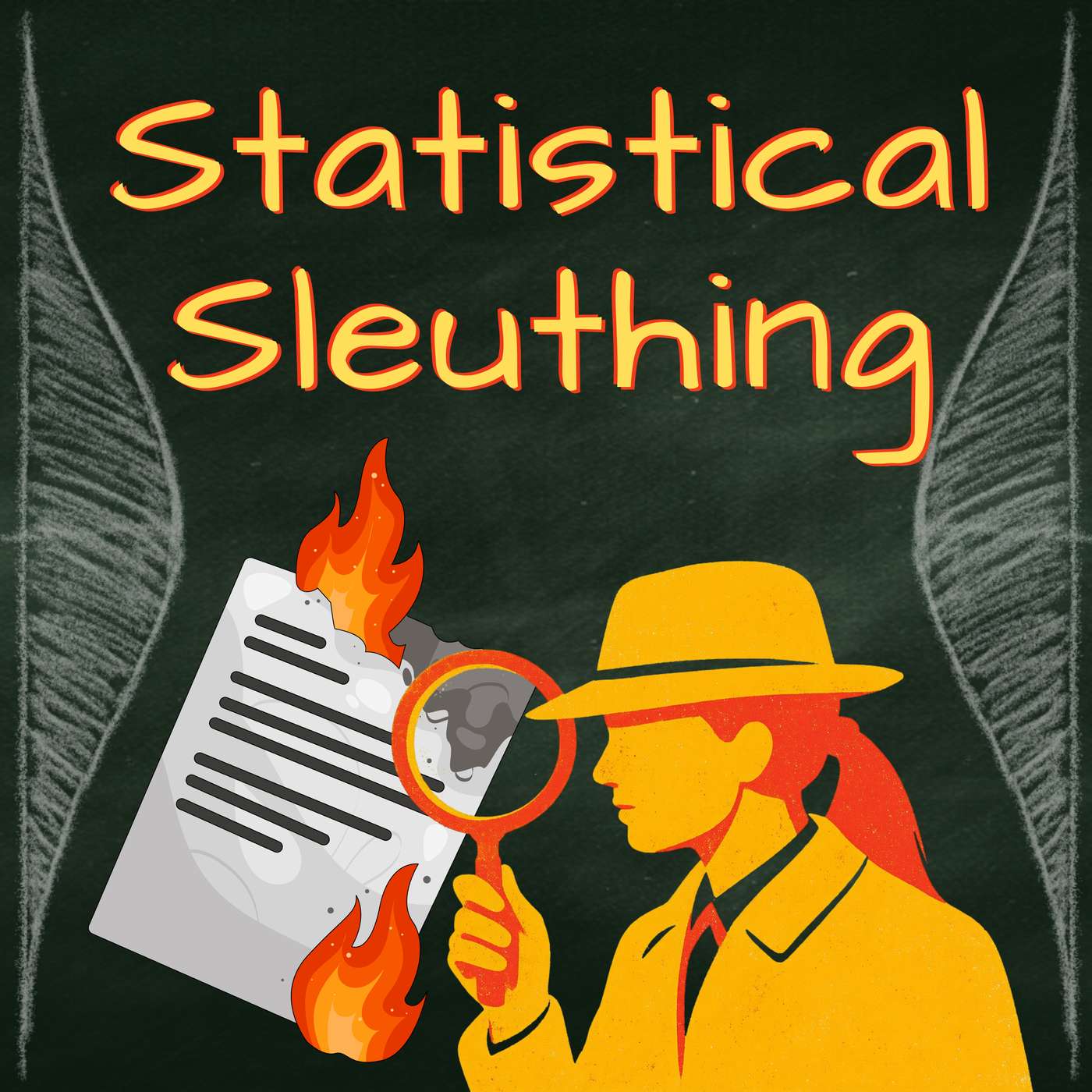
Can you spot problems in a scientific study just by reading the published paper? We put our statistical sleuthing skills to the test with a famous study on procrastination and deadlines that was retracted more than 20 years after it was published. But were there clues hidden in plain sight in the published results—and would we have noticed anything suspicious at the time? We put on our data-detective hats and find a few statistical clues of our own before turning to Data Colada’s investigation of the original data, where the story gets even stranger. Along the way, we hunt for missing participants, question suspiciously enormous effects, meet some unlikely data twins, and discover why sometimes the best statistical tool is simply asking: Do these data behave like real people?
Statistical topics
- Statistical sleuthing
- Effect sizes
- Degrees of freedom
- Replication
- Missing data
Methodologic Morals
- “A data detective’s toolbox is surprisingly simple. Check the degrees of freedom, look for twins, question giant effects, and ask whether the data actually make human sense.”
- “You don’t have to be a statistician to catch a statistical criminal.”
References
- Data Colada blog posts:
- Data and code: https://researchbox.org/7135
- Retraction Watch article: https://retractionwatch.com/2026/09/03/procrastination-study-duke-dan-ariely-psychological-science-data-colada-tampering-retraction/
- Original 2002 paper: https://journals.sagepub.com/doi/10.1111/1467-9280.00441
- Retraction notice: https://journals.sagepub.com/doi/10.1177/09567976261488042
- Hyndman K, Bisin A. Replication of “Procrastination, Deadlines, and Performance: Self-Control by Precommitment”.Psychol Sci. 2026;37(8):557-571. doi:10.1177/09567976261460772
Kristin and Regina’s online courses:
Demystifying Data: A Modern Approach to Statistical Understanding
Clinical Trials: Design, Strategy, and Analysis
Medical Statistics Certificate Program
Epidemiology and Clinical Research Graduate Certificate Program
Program that Kristin teaches in::
Epidemiology and Clinical Research Graduate Certificate Program
Kristin’s manuscript writing course:
https://instats.org/seminar/from-data-to-discussion-writing-a-scient
Find us on:
Kristin – LinkedIn & Twitter/X
Regina – LinkedIn &ReginaNuzzo.com
- (00:00) – Introduction
- (02:15) – The Procrastination Paper and Study Two
- (08:51) – Suspiciously Tidy Results
- (16:18) – Study One: Real Classroom Stakes
- (20:06) – Missing Data and First Red Flags
- (28:17) – How Data Colada Got the Data
- (33:43) – When the Replication Failed
- (35:36) – Red Flags: Data Twins and Sanity Checks
- (47:21) – Study One Gets the Spreadsheet Treatment
- (51:45) – The Grading Scheme Unravels
- (57:51) – Manuscript Versions Reveal the Truth
- (01:08:11) – Rating the Claim and Methodological Morals
Disclaimer
This podcast’s information is provided for general reference and was obtained from publicly accessible sources. The Podcast Collaborative neither produces nor verifies the content, accuracy, or suitability of this podcast. Views and opinions belong solely to the podcast creators and guests.
For a complete disclaimer, please see our Full Disclaimer on the archive page. The Podcast Collaborative bears no responsibility for the podcast’s themes, language, or overall content. Listener discretion is advised. Read our Terms of Use and Privacy Policy for more details.