Straight Talking Sustainability

Straight Talking Sustainability
Podcast Description
Welcome to Straight Talking Sustainability! I'm your host, Emma Burlow.
If you're feeling lost in all the sustainability talk or struggling to see real results in your business, this podcast is for you.
We’ll clear up the confusion and focus on practical, straightforward actions that actually work.
Join me as I talk with experts, share real-world stories, and tackle the common roadblocks that stop businesses from making progress.
This is all about making sustainability easier and sharing what truly makes a difference.
Let’s keep it simple, effective, and make sustainability stick!
Podcast Insights
Content Themes
The podcast covers a range of themes such as practical climate action, business sustainability strategies, and environmental consciousness, featuring episodes like 'Top 5 Things People Say to Avoid Taking Climate Action' and '52 Simple Sustainability Hacks for 2025' that provide actionable advice and explore common myths and barriers to sustainable practices.
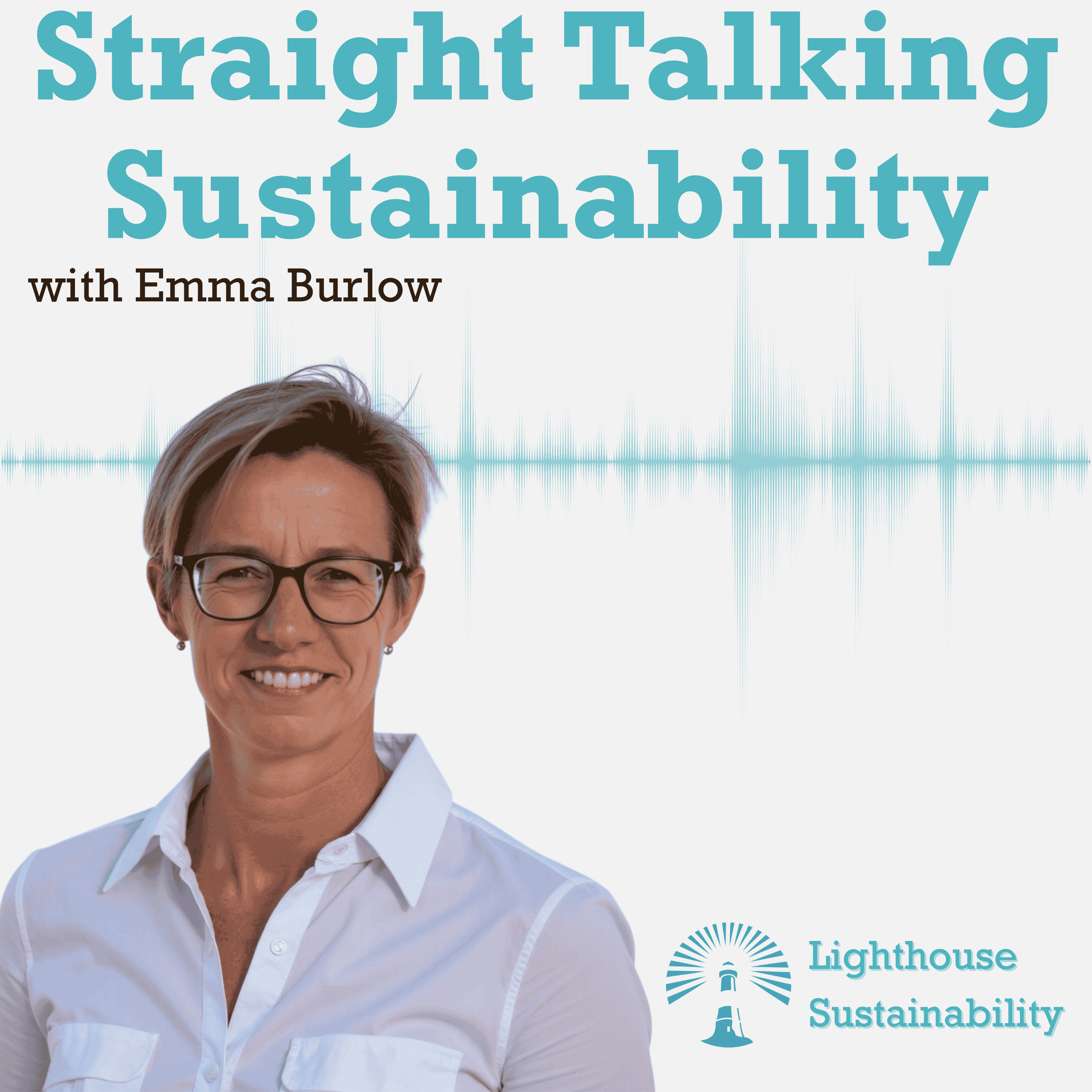
Welcome to Straight Talking Sustainability! I’m your host, Emma Burlow.
If you’re feeling lost in all the sustainability talk or struggling to see real results in your business, this podcast is for you.
We’ll clear up the confusion and focus on practical, straightforward actions that actually work.
Join me as I talk with experts, share real-world stories, and tackle the common roadblocks that stop businesses from making progress.
This is all about making sustainability easier and sharing what truly makes a difference.
Let’s keep it simple, effective, and make sustainability stick!
In this intellectually stimulating solo episode of Straight Talking Sustainability, host Emma Burlow draws unexpected connections between Richard Dawkins’ 1976 concept of memes from “The Selfish Gene,” Professor Alice Roberts’ book “Dominance” exploring Christianity’s spread across the Roman Empire, and the historic Green Party by-election win in Manchester to explain why some workplace sustainability ideas thrive whilst others die despite passionate advocacy, brilliant facts, and months of effort.
The answer is not about working harder or having better data; it is about understanding that survival of the fittest means fit for the conditions, not strongest or most factually correct.
Emma opens with her girl crush on Professor Alice Roberts (anatomist, trained doctor, Birmingham University professor) whose Dominance book tour revealed a crucial insight: Christianity succeeded across the Roman Empire because conditions made the idea fit, not because the idea was objectively superior.
This led Emma to discover that Richard Dawkins coined the term “meme” in 1976 (not the internet), derived from Greek mimeme meaning “something imitated,” shortened to sound like gene. Memes spread through culture exactly as genes spread through populations: they replicate, mutate, and compete for attention and survival.
Crucially, memes thrive when conditions are right (timing, wit, playing on fears or humour), just as sustainability ideas compete in seas of news, business priorities, and workplace distractions.
Dawkins’ “survival of the fittest” does not mean strongest or only heroes survive; fit means suited for the environment, perfect to thrive in those conditions. This is workplace sustainability: why some initiatives take off whilst loads flop, leaving professionals wondering how hard they must work when the real issue is environmental mismatch, not effort deficiency.
Three Requirements For Ideas To Thrive:
First, conditions must be right. Workplaces function as ecologies: some are lush biodiverse innovation hubs, others resemble disused car parks with rubbish and single bramble bushes. Identical approaches fail or succeed based on existing conditions (net zero targets, nervous leadership wanting to look useful, pain points creating opportunities).
Reading the room, sensing emotions, identifying challenges, and finding crevices to sneak into matters more than perfect pitch decks. Do not flog dead horses; find where micro-environments already exist.
Second, ideas must be relatable. People adopt things that feel like them (why memes go viral, why abstract Scope 3 dashboards get blank stares whilst team-specific quarterly projects gain traction).
Holding meetings at 9am about sustainability versus lunch-and-learn meet-and-greets with snacks, games, competitions, and Teams promotion creates vastly different engagement. Being spontaneous and relevant beats bland diary placeholders every time.
Third, ideas must travel well. Post-it note test: can you explain your sustainability meme in one breath? If it needs 30-second elevator pitches, it is too complex. People must pass it on without fully understanding it (Christianity spread across empires with minimal written records for hundreds of years) and without looking stupid if they get it wrong. Zero friction, no demanding actions from busy people.
The Green Party Manchester By-Election Case Study:
Hannah Spencer’s 41% vote share becoming first Northern Green MP demonstrates perfect timing and conditions. Analysts noted her relatability (plumber with lived experience) resonating during cost-of-living pressure and dissatisfaction with other parties.
Critics complained Greens were not talking about environment enough, missing the strategic point: winning votes when nobody wants environmental talk requires leaning into cost-of-living and immigration whilst maintaining Green identity.
Someone on Facebook claimed voters did not know it was an environmental party; Emma responds “they’re called the Greens,” noting you would really have to miss that obvious signal.
Practical Workplace Applications:
Stop pushing ideas that do not fly. Read rooms, be relatable, find pain points, talk about sustainability without mentioning it (Hannah Spencer is a Green MP who persuaded thousands on different tickets).
Gain trust first, then slide ideas in. Struggling green teams often use wrong vehicles; make ideas fit conditions rather than forcing compliance. Create micro-environments (moss in rock crevices, seeds in tree gaps) where tiny cultural shifts enable growth. Be happy people are talking about something they were not discussing last week; perfection is not required. Make ideas sticky like memes (if needing explanations or straplines, probably will not work).
Time pitches carefully: financial problems mean talk about cutting food waste not solar panel investment; office restructures mean internal reuse processes not abstract strategy.
Emma concludes: if Christianity can spread across empires purely by hearsay, if plumbers can become MPs during political division, sustainability projects can survive quarters and years by morphing to fit conditions. Someone must plant acorns for trees to bloom decades later.
In this evolutionary biology and workplace change episode, you’ll discover:
- Why Richard Dawkins coined “meme” in 1976 from Greek mimeme (something imitated)
- How ideas spread through culture like genes through populations (replicate, mutate, compete)
- Why “survival of the fittest” means suited for environment, not strongest
- The three requirements for ideas to thrive (right conditions, relatability, travels well)
- How Hannah Spencer’s 41% Green Party vote demonstrates strategic messaging over purity
- Why struggling green teams often use wrong vehicles for their workplace ecology
- The micro-environment strategy (moss in crevices) for cultural shifts
- How Christianity spread across Roman Empire with minimal written records proves simplicity works
- Why timing matters more than data quality (financial problems require different pitches than restructures)
- The post-it note test for sticky ideas (one breath explanation, zero friction)
Key Insights:
(02:37) Conditions make ideas fit: “Christianity spread across the Roman Empire… it was successful because the conditions made the idea fit.”
(04:32) Dawkins coined meme: “The word meme actually came from Richard Dawkins. 1976, evolutionary biologist. He coined the term meme… as a way that ideas spread through a culture the same way as genes spread through populations.”
(06:48) Why ideas fail: “An idea doesn’t spread just because it’s a great idea. And it certainly doesn’t just spread because you’ve spent weeks or months or years nurturing it.”
(08:53) Survival of the fittest redefined: “Survival doesn’t mean strongest, it means fit for its conditions. That’s why if you come out with the best figures, the best facts, the slickest pitch deck and you get tumbleweed, now you know why.”
(17:51) Micro-environments matter: “Trying to create micro environments… What is the smallest thing you can do to shift a culture, a behaviour, a team and then move forward. We often pitch too high.”
(20:18) Timing is everything: “The best idea will not take root if you pitch it in the wrong season, the wrong place, or at the wrong time to the wrong people. It won’t work.”
Useful Links
Alice Roberts — Books — On Tour May 2025
The Selfish Gene | Richard Dawkins
Meme | Definition, Meaning, History, & Facts | Britannica
Connect With Emma
Book an enquiry call with Emma
Disclaimer
This podcast’s information is provided for general reference and was obtained from publicly accessible sources. The Podcast Collaborative neither produces nor verifies the content, accuracy, or suitability of this podcast. Views and opinions belong solely to the podcast creators and guests.
For a complete disclaimer, please see our Full Disclaimer on the archive page. The Podcast Collaborative bears no responsibility for the podcast’s themes, language, or overall content. Listener discretion is advised. Read our Terms of Use and Privacy Policy for more details.