Building Your Sales Engine

Building Your Sales Engine
Podcast Description
A show where Mark McGraw, a top Sandler Sales Trainer and David H. Sandler award winner, interviews salespeople and sales managers to discover their successes and how they got to be the people they are today.
We break down the elements of selling success and share mindsets, habits and techniques that help salespeople and managers build a proven, reliable, transferable system for sales.
Podcast Insights
Content Themes
The show covers essential sales skills, team building, and personal growth through insights from experienced sales professionals. Topics include resilience in sales, overcoming adversity, practical sales techniques, and establishing a successful sales culture with episodes like Scaling Your Sales Team and Your Winning Prospecting Mindset highlighting actionable strategies.
A show where Mark McGraw, a top Sandler Sales Trainer and David H. Sandler award winner, interviews salespeople and sales managers to discover their successes and how they got to be the people they are today.
We break down the elements of selling success and share mindsets, habits and techniques that help salespeople and managers build a proven, reliable, transferable system for sales.
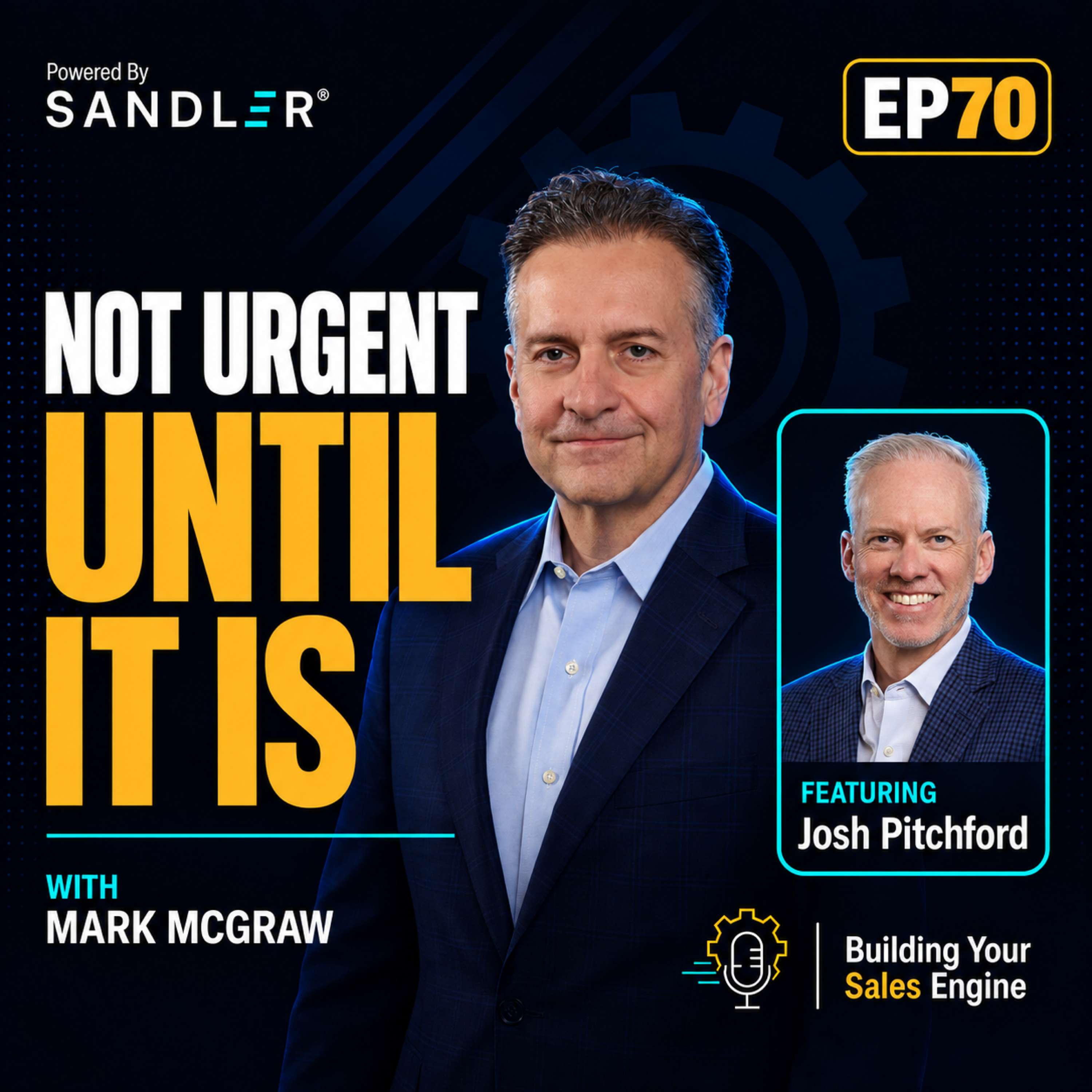
Sales prospecting is never urgent until your pipeline is empty — Mark McGraw and Josh Pitchford break down the habits, blocks, and manager moves that make prospecting consistent before it becomes a crisis.
Sales prospecting is the number one constraint sales teams name year after year, and Josh Pitchford’s line explains exactly why: “Prospecting is not urgent until it is.” In this episode, Mark McGraw and Josh dig into the creative avoidance that keeps sellers busy with everything except finding new business — and what actually breaks the cycle.
Josh walks through the group prospecting model he runs with clients: dedicated phone camps and power hours, sellers paired up in round robin so everyone listens and learns, and a 15-to-30-minute debrief that celebrates the work, not just the wins. The numbers speak for themselves — 600 dials, 100 conversations, 20 new meetings in a single day. Mark adds the individual side: reduce friction so your block is execution time and not prep time, treat the start like an F1 green light, and remember that building a list is not prospecting.
You’ll also get the behavioral triggers that get sellers moving — pulling future pain into the present, the “just do one” rule, and the Pomodoro 25-minute sprint with notifications off. And for sales leaders, Mark shares the no-fly zone: protected calendar hours where no internal meeting can touch prime selling time.
Host: Mark McGraw — Building Your Sales Engine
Co-host: Josh Pitchford — Building Your Sales Engine
In This Episode
Why prospecting sits in the “important but not urgent” box — and what happens when it finally turns urgent
Creative avoidance: the honest exercise of naming what you do instead of prospecting
Phone camps and power hours — how to structure blocked prospecting time that teams actually show up for
The workout-buddy effect: why prospecting alongside someone beats sitting alone with a list of 25 names
Round robin calling, real-time debriefs, and how tonality and posture cross-pollinate across a team
Celebrating the process, not just the results — 600 dials, 100 conversations, 20 meetings
Reducing friction so your block is execution, not “getting ready to get ready”
Behavioral triggers that start the engine: future pain in the present, “just do one,” and the Pomodoro 25-minute sprint
Fat and happy, lumpy sales, and why your convictions are only as strong as your pipeline
No-fly zones: how sales leaders protect prime selling hours and go to bat for their team
Links
Sandler: https://www.Sandler.com
Episode page: https://www.BuildingYourSalesEngine.com/
Show links: https://linktr.ee/buildingyoursalesengine
Mark McGraw on LinkedIn: https://www.linkedin.com/in/markmcgraw/
Josh Pitchford on LinkedIn: https://www.linkedin.com/in/josh-pitchford-6163274/
Disclaimer
This podcast’s information is provided for general reference and was obtained from publicly accessible sources. The Podcast Collaborative neither produces nor verifies the content, accuracy, or suitability of this podcast. Views and opinions belong solely to the podcast creators and guests.
For a complete disclaimer, please see our Full Disclaimer on the archive page. The Podcast Collaborative bears no responsibility for the podcast’s themes, language, or overall content. Listener discretion is advised. Read our Terms of Use and Privacy Policy for more details.