Building Your Sales Engine

Building Your Sales Engine
Podcast Description
A show where Mark McGraw, a top Sandler Sales Trainer and David H. Sandler award winner, interviews salespeople and sales managers to discover their successes and how they got to be the people they are today.
We break down the elements of selling success and share mindsets, habits and techniques that help salespeople and managers build a proven, reliable, transferable system for sales.
Podcast Insights
Content Themes
The show covers essential sales skills, team building, and personal growth through insights from experienced sales professionals. Topics include resilience in sales, overcoming adversity, practical sales techniques, and establishing a successful sales culture with episodes like Scaling Your Sales Team and Your Winning Prospecting Mindset highlighting actionable strategies.
A show where Mark McGraw, a top Sandler Sales Trainer and David H. Sandler award winner, interviews salespeople and sales managers to discover their successes and how they got to be the people they are today.
We break down the elements of selling success and share mindsets, habits and techniques that help salespeople and managers build a proven, reliable, transferable system for sales.
Inversion thinking helps sales professionals anticipate failure before it happens, creating prevention rules that guarantee goal achievement.
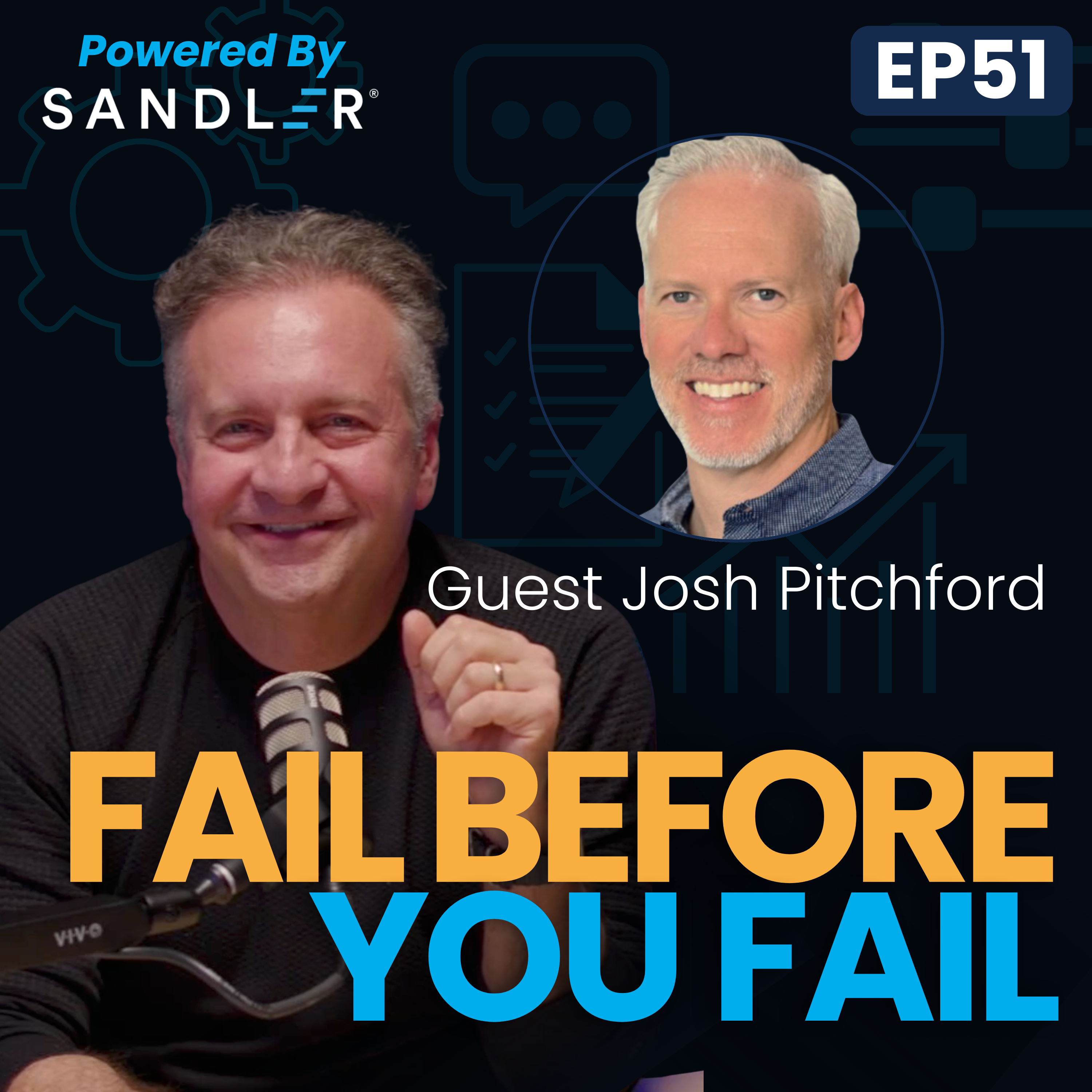
What if the secret to hitting your sales goals was visualizing failure instead of success? In this episode, Mark McGraw and Josh Pitchford explore inversion thinking, a powerful three-step framework that flips traditional goal-setting on its head. Instead of imagining success, you imagine failing at your goal and work backward to identify what went wrong.
The process is simple but transformative: First, set your goal. Second, imagine it is the end of the year and you have failed. Third, create prevention rules that eliminate those failure points before they happen. This pre-mortem approach leverages our natural tendency toward negative thinking and turns it into a strategic advantage.
Mark and Josh dive into practical applications, from shortening sales cycles to building prospecting habits. You will learn how to “pre-decide” your actions to remove willpower from the equation and why public accountability can leverage your need for approval to keep you on track. As the Sandler rule states, you have to learn to fail to win, and this episode shows you how to fail before you fail.
About Josh Pitchford
Josh Pitchford is a Sandler trainer and coach at Sales Engine, where he helps sales professionals and teams build predictable revenue systems. With extensive experience in enterprise sales and account management, Josh specializes in teaching relationship-building strategies, account planning, and the Sandler methodology.
🔗 Josh on LinkedIn: https://www.linkedin.com/in/josh-pitchford-6163274/
Host
Mark McGraw — Building Your Sales Engine
In This Episode
The three-step inversion thinking framework for goal achievement
Why imagining failure works better than visualizing success
How to conduct a pre-mortem before things go wrong
The concept of pre-deciding to eliminate willpower in the moment
Creating non-negotiable prevention rules
Common reasons salespeople fail to hit goals: not prospecting enough, extended sales cycles
Getting to the ultimate decision maker to shorten sales cycles
Finding the buyer’s compelling event instead of relying on your own
Why humans are wired for negative thinking and how to leverage it
The importance of clear next steps in every sales conversation
Bulletproofing your deals to mitigate risk
Public accountability and leveraging need for approval
Bringing future pain into the present moment to drive action
Never let how you feel determine how you act
Building rumble strips as guardrails toward your goals
Links
Sandler: https://www.Sandler.com
Episode page: https://www.BuildingYourSalesEngine.com/
Show links: https://linktr.ee/buildingyoursalesengine
Josh on LinkedIn: https://www.linkedin.com/in/josh-pitchford-6163274/
Disclaimer
This podcast’s information is provided for general reference and was obtained from publicly accessible sources. The Podcast Collaborative neither produces nor verifies the content, accuracy, or suitability of this podcast. Views and opinions belong solely to the podcast creators and guests.
For a complete disclaimer, please see our Full Disclaimer on the archive page. The Podcast Collaborative bears no responsibility for the podcast’s themes, language, or overall content. Listener discretion is advised. Read our Terms of Use and Privacy Policy for more details.