Tech Transforms

Tech Transforms
Podcast Description
Global technology is changing the way we live. Critical government decisions affect the intersection of technology advancement and human needs. This podcast talks to some of the most prominent influencers shaping the landscape to understand how they are leveraging technology to solve complex challenges while also meeting the needs of today's modern world.
Podcast Insights
Content Themes
Explores the intersection of technology, security, and policy, focusing on themes like AI's role in cybersecurity, the impact of insider threats on critical infrastructure, and the implications of generative AI. Episodes highlight current trends and challenges, such as data privacy concerns, workforce automation, and the importance of a collective defense in cybersecurity.

Global technology is changing the way we live. Critical government decisions affect the intersection of technology advancement and human needs. This podcast talks to some of the most prominent influencers shaping the landscape to understand how they are leveraging technology to solve complex challenges while also meeting the needs of today’s modern world.
Buying a cross-domain solution doesn’t guarantee your mission’s data will get where it needs to go. The harder work is understanding the architecture, risks, stakeholders and approvals that make secure information sharing possible.
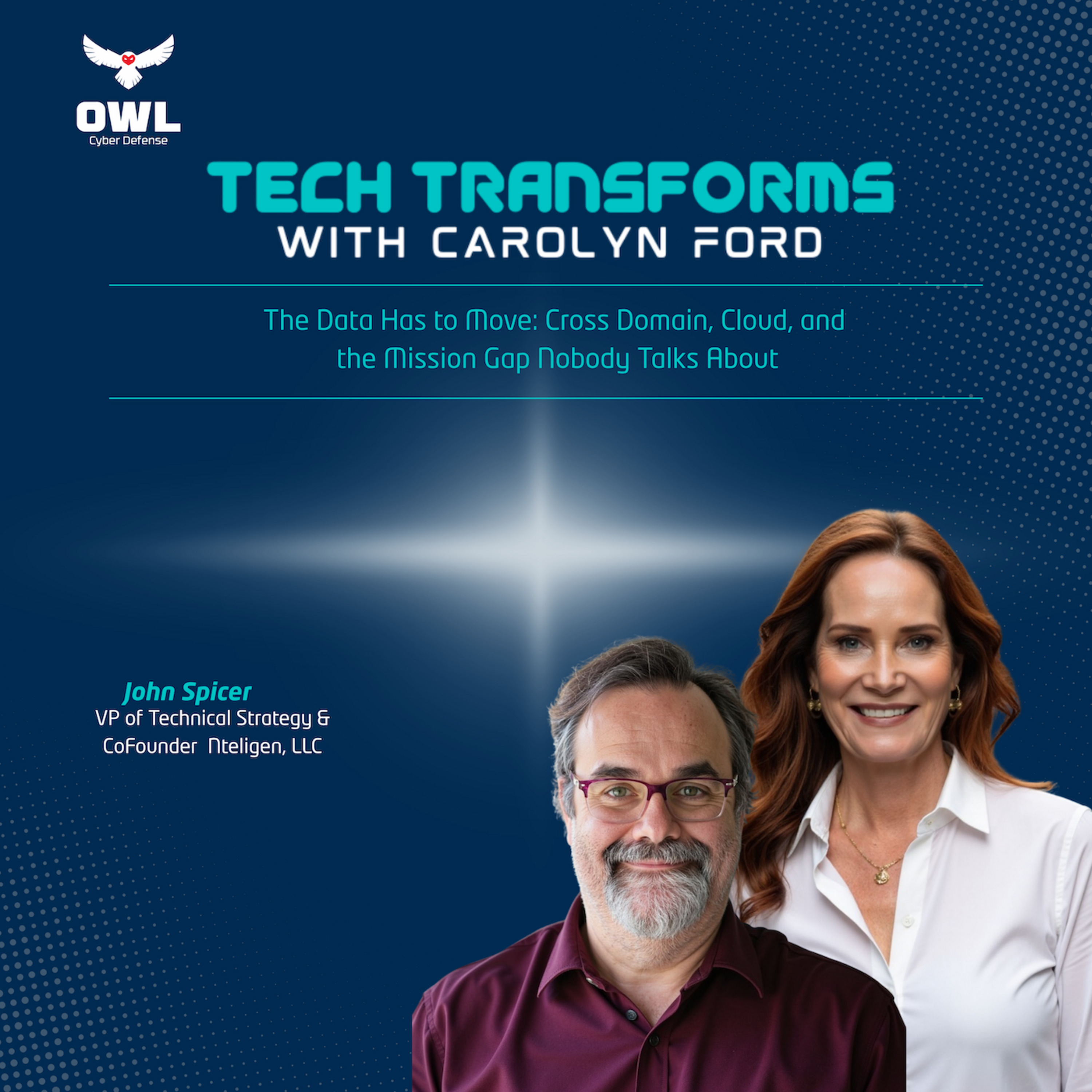
In this episode of Tech Transforms, Carolyn Ford talks with John Spicer, VP of Technical Strategy and Co-founder at Nteligen, about why government programs need to approach cross-domain requirements as a mission planning challenge. John shares how overlooked architectural requirements can leave seven figures’ worth of hardware sitting unused—and why an existing, approved solution may sometimes meet a mission’s needs without a new purchase.
They also explore how cross-domain solutions complement zero trust, why cloud elasticity creates challenges for traditional cross-domain architectures, and the distinction between mitigating threats and making informed risk decisions. John explains why Raise the Bar (RTB) guidance supports secure system design but does not replace a mission-specific assessment of acceptable risk.
His advice for leaders: start with the data your mission needs to move, bring the right stakeholders into the conversation early, and build secure information sharing into your roadmap before acquisition begins.
Show Notes
Guest LinkedIn: https://www.linkedin.com/in/john-spicer-9993191/
Nteligen Website & Published Research: https://www.nteligen.com
National Cybersecurity Strategy (2023): https://www.whitehouse.gov/wp-content/uploads/2023/03/National-Cybersecurity-Strategy-2023.pdf
DoD Cyber Strategy Summary (2023): https://media.defense.gov/2023/Sep/12/2003299076/-1/-1/1/2023\_DOD\_Cyber\_Strategy\_Summary.PDF
Enterprise Security Magazine Top 10 Recognition: https://www.prweb.com/releases/nteligen\_named\_a\_top\_vulnerability\_management\_solution\_provider\_by\_enterprise\_security\_magazine/prweb15525982.htm
Disclaimer
This podcast’s information is provided for general reference and was obtained from publicly accessible sources. The Podcast Collaborative neither produces nor verifies the content, accuracy, or suitability of this podcast. Views and opinions belong solely to the podcast creators and guests.
For a complete disclaimer, please see our Full Disclaimer on the archive page. The Podcast Collaborative bears no responsibility for the podcast’s themes, language, or overall content. Listener discretion is advised. Read our Terms of Use and Privacy Policy for more details.