Tech Transforms

Tech Transforms
Podcast Description
Global technology is changing the way we live. Critical government decisions affect the intersection of technology advancement and human needs. This podcast talks to some of the most prominent influencers shaping the landscape to understand how they are leveraging technology to solve complex challenges while also meeting the needs of today's modern world.
Podcast Insights
Content Themes
Explores the intersection of technology, security, and policy, focusing on themes like AI's role in cybersecurity, the impact of insider threats on critical infrastructure, and the implications of generative AI. Episodes highlight current trends and challenges, such as data privacy concerns, workforce automation, and the importance of a collective defense in cybersecurity.
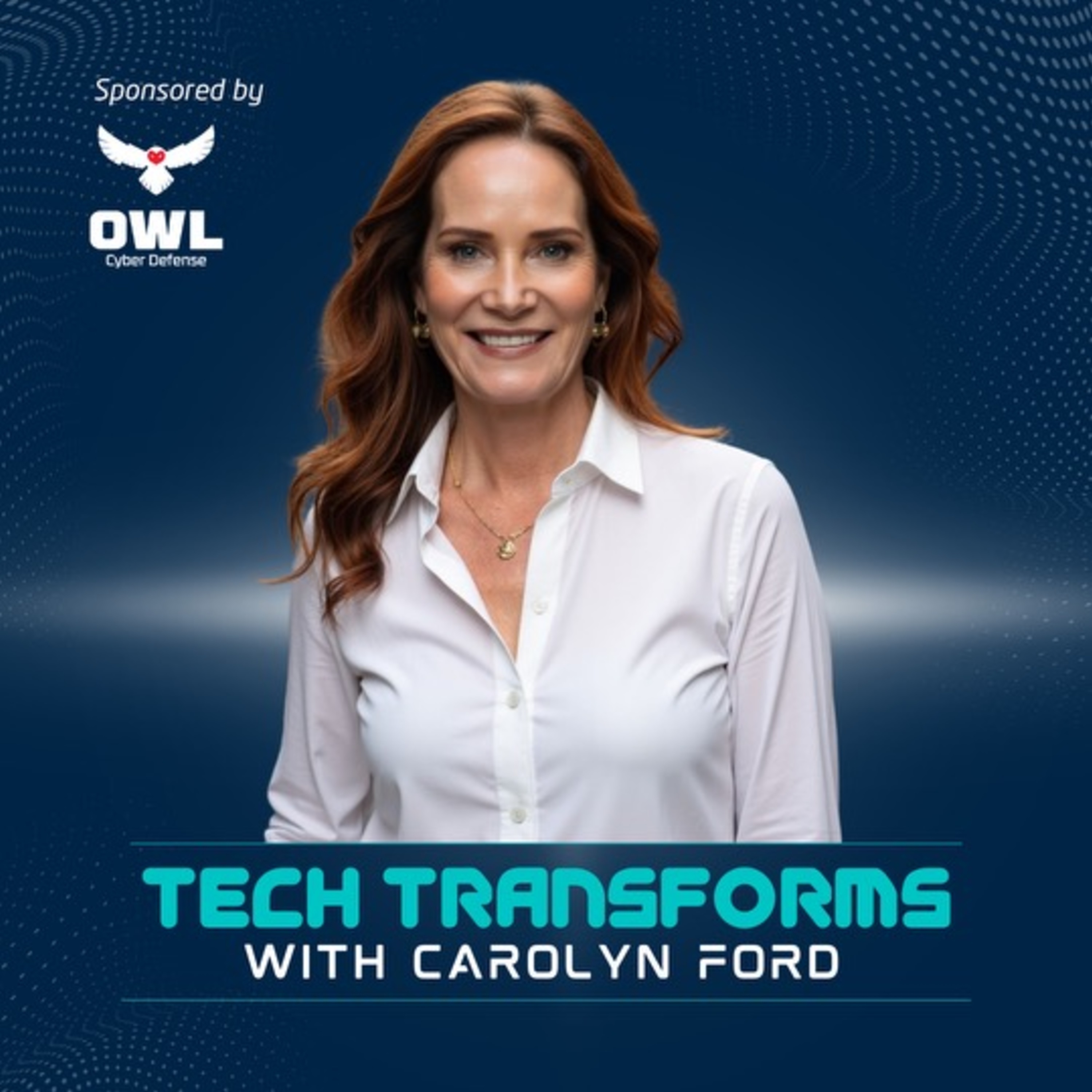
Global technology is changing the way we live. Critical government decisions affect the intersection of technology advancement and human needs. This podcast talks to some of the most prominent influencers shaping the landscape to understand how they are leveraging technology to solve complex challenges while also meeting the needs of today’s modern world.
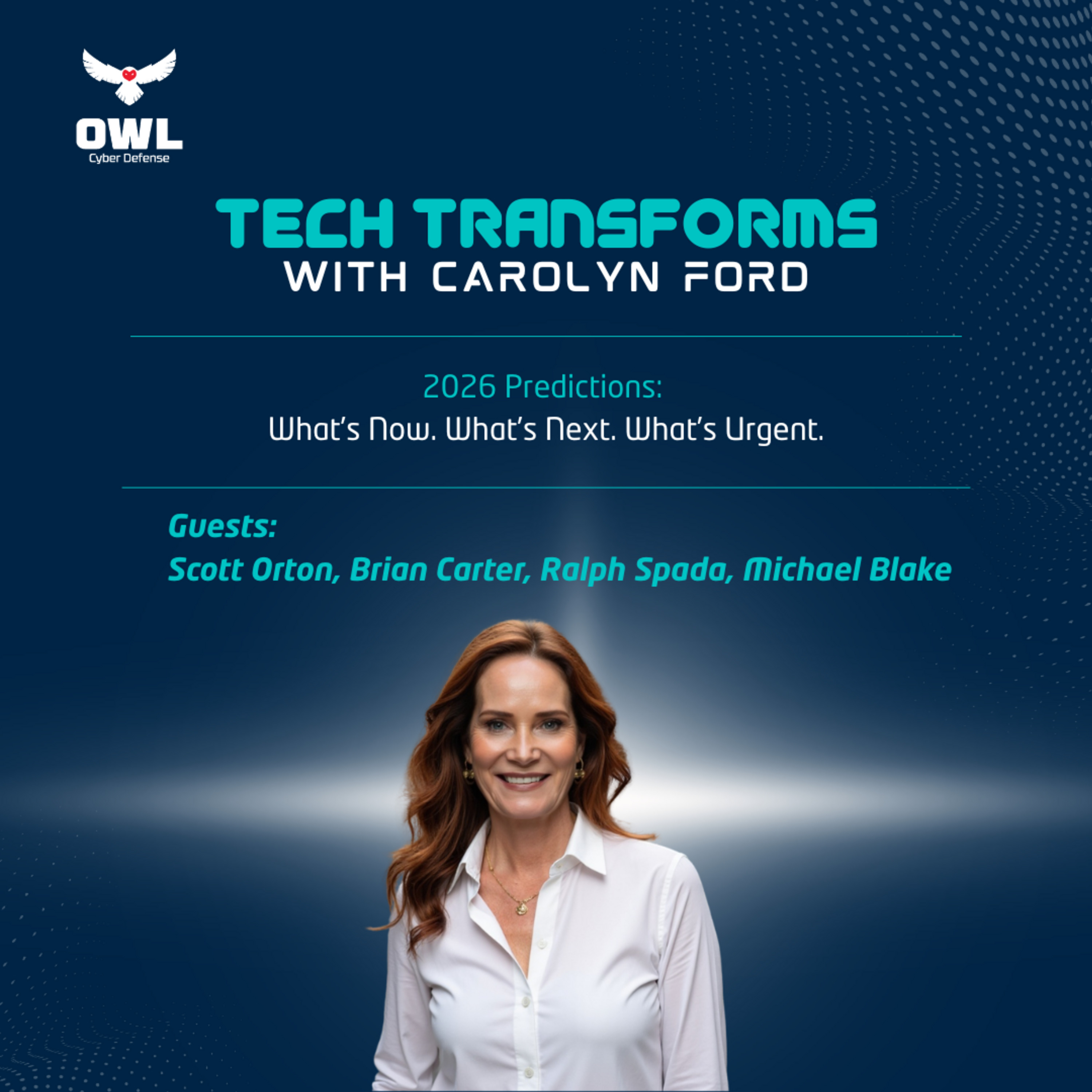
In this special 2026 Predictions episode of Tech Transforms, Carolyn Ford is joined by Brian Carter, Scott Orton, Ralph Spa, and Michael Blake from Owl Cyber Defense for a no-crystal-ball conversation about the signals already flashing across cybersecurity, defense, and digital trust.
This isn’t speculation. It’s trajectory.
The group tackles the accelerating collapse of content trust in a world of deepfakes, AI-generated media, and short-form misinformation. As generative tools become indistinguishable from reality, they predict a sharp shift toward deep identity assurance—powered by behavioral biometrics, cryptographic validation, and provable content provenance. In a future where “guaranteed human” becomes a competitive advantage, digital identity won’t be optional—it will be foundational.
From there, the conversation moves into AI containment. The panel argues that we must stop treating AI like helpful software and start treating it like a privileged insider—with unpredictable outputs and real liability attached. The solution? Deterministic boundaries enforced in hardware. As Scott puts it: if you want to confine a tiger, you don’t build the cage out of meat.
The episode also explores:
- The federal government’s accelerating shift from legacy primes to agile, non-incumbent innovators delivering 80% solutions faster
- Why battlefield communications must evolve beyond encryption to real-time, hardware-enforced trust
- How AI-powered offensive attacks are shrinking from teams to individuals—sometimes in Power Ranger suits
- The limits of Zero Trust when complexity, cost, and talent gaps collide
- Why cross-domain solutions and data diodes may be the real fail-safes in an increasingly networked world
Throughout the discussion, a clear thread emerges: software alone won’t save us. As systems grow more interconnected, autonomous, and AI-driven, trust must be anchored in hardware—simple, enforceable, and resistant to both human error and machine-scale attack.
The takeaway for 2026? Security leaders won’t lose because they lacked tools. They’ll lose because they trusted the wrong ones.
This episode challenges listeners to rethink modernization, containment, and what real trust looks like when machines are making decisions at machine speed.
Stay curious. The future isn’t waiting.
Shownotes
Scott Orton: LinkedIn | Email: [email protected]
Brian Carter: LinkedIn | Email:[email protected]
Ralph Spada: LinkedIn | Email: [email protected]
Michael Blake: https://www.linkedin.com/in/michael-blake-734b0a21/ | Email: [email protected]
Owl Cyber Defense: owlcyberdefense.com
Download the 2026 Predictions Report: https://owlcyberdefense.com/resource/decision-advantage-forecast-five-security-shifts-in-2026/
Story – Power Ranger Hacker: https://futurism.com/artificial-intelligence/tinder-for-nazis-hacked
Disclaimer
This podcast’s information is provided for general reference and was obtained from publicly accessible sources. The Podcast Collaborative neither produces nor verifies the content, accuracy, or suitability of this podcast. Views and opinions belong solely to the podcast creators and guests.
For a complete disclaimer, please see our Full Disclaimer on the archive page. The Podcast Collaborative bears no responsibility for the podcast’s themes, language, or overall content. Listener discretion is advised. Read our Terms of Use and Privacy Policy for more details.