Law in Context

Law in Context
Podcast Description
The rapid response events & podcasts series 'Law in Context' is hosted at the University of Sheffield, School of Law by Dr Anna Ventouratou (Lecturer in International Trade Law) and Dr Sotirios Lekkas (Lecturer in International Law). The series aims to provide an accessible overview of the legal matters pertaining to current affairs and the broader context within which the law operates. The talks are addressed to anyone that wants to know more about current affairs and what’s law got to do with it.
Podcast Insights
Content Themes
The podcast explores themes such as electoral law, digital technologies, human rights, social movements, and international litigation, with specific episodes addressing the legal implications of the US Presidential Elections, the Safety of Rwanda Bill, and the Russia-Ukraine conflict. For instance, one episode examines the intersection of elections and digital technologies, analyzing cyber-operations’ impact on electoral integrity.
The rapid response events & podcasts series ‘Law in Context’ is hosted at the University of Sheffield, School of Law by Dr Anna Ventouratou (Lecturer in International Trade Law) and Dr Sotirios Lekkas (Lecturer in International Law). The series aims to provide an accessible overview of the legal matters pertaining to current affairs and the broader context within which the law operates. The talks are addressed to anyone that wants to know more about current affairs and what’s law got to do with it.
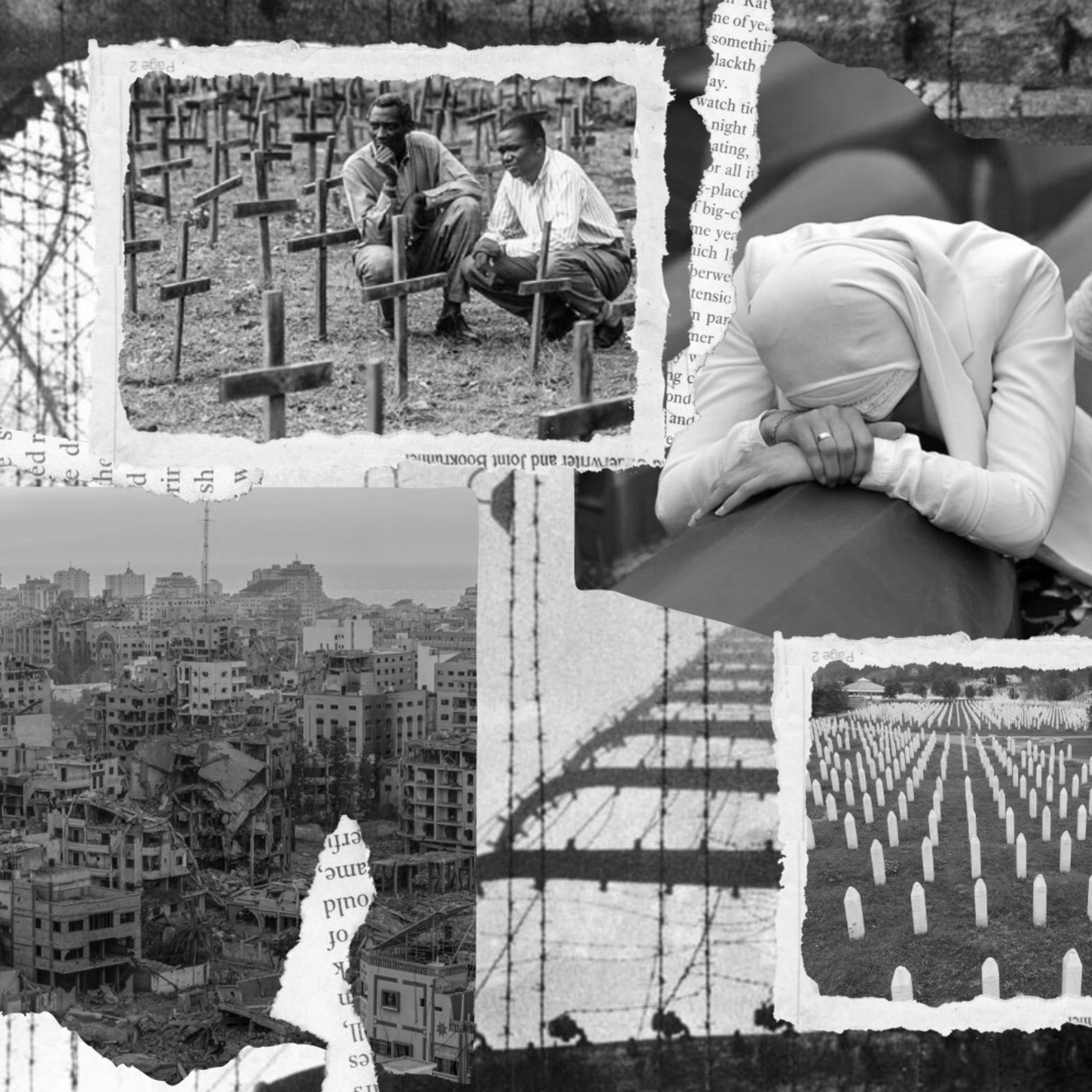
The word “genocide” feels like it has always been part of our vocabulary. But do we really understand what we mean when we use it? In everyday conversation, the term is often used to describe mass killings, widespread suffering, and horrific atrocities, especially in the context of armed conflict. Yet in law, genocide has a highly specific and demanding definition, shaped by a distinct legal and historical origin.
In this 11th episode of our series, Marko Milanović, Professor of Public International Law at the University of Reading helps us unpack this complex concept. Together, we explore what genocide means in international law, how courts interpret it, what it takes to prove it, and why it matters—both in courtrooms and beyond.
Disclaimer
This podcast’s information is provided for general reference and was obtained from publicly accessible sources. The Podcast Collaborative neither produces nor verifies the content, accuracy, or suitability of this podcast. Views and opinions belong solely to the podcast creators and guests.
For a complete disclaimer, please see our Full Disclaimer on the archive page. The Podcast Collaborative bears no responsibility for the podcast’s themes, language, or overall content. Listener discretion is advised. Read our Terms of Use and Privacy Policy for more details.