Transmission
Transmission
Podcast Description
Transmission brings you insights from thought leaders, energy experts and cleantech specialists from across the industry.
Podcast Insights
Content Themes
This podcast focuses on various themes such as battery technology trends, market dynamics, regulatory impacts, and engineering challenges, with specific episodes discussing topics like the future of BESS revenues, the implications of P415 for flexibility markets, and the role of hydropower in long-duration storage.
Transmission brings you insights from thought leaders, energy experts and cleantech specialists from across the industry.
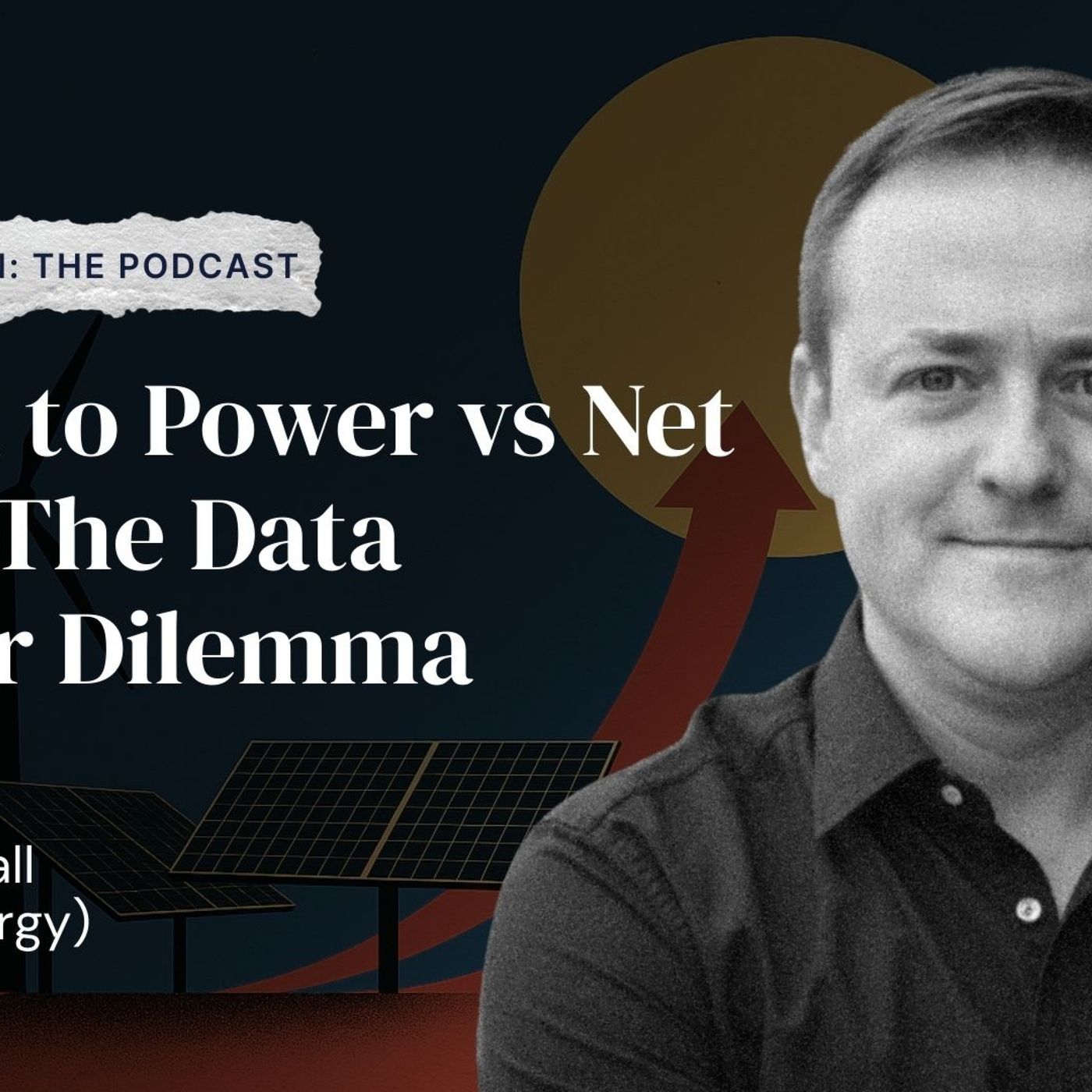
The AI boom has created an energy problem no one quite planned for. Every new data center needs power now – not in three years when the grid connection finally arrives. Developers are skipping the queue, installing on-site generation at a scale that would have seemed extraordinary five years ago.But speed to power isn’t the only pressure. Data center operators are also staring down net zero commitments, sustainability departments that want decarbonisation, and an energy trilemma of cost, carbon, and resilience.In this episode Alejandro is joined by Alex Marshall, Group Business Development and Marketing Director at Clarke Energy. Alex explains why gas engines have become the bridging technology of choice for hyperscale data centers, what a 450 MW peaking station outside London actually looks like, and whether the engineering department and the sustainability team will ever agree.You can watch or listen to new episodes every Tuesday and Thursday.Transmission is a Modo Energy production. Your host is Alejandro De Diego – US Market AnalystModo Energy helps the owners, operators, builders, and financiers of battery energy storage understand the market — and make the most out of their assets. Want all the latest power market news? Sign up for our free Weekly Dispatch newsletter: https://bit.ly/TheWeeklyDispatchChapters- 0:00 — Introduction- 1:44 — Guest intro: Alex Marshall & Clarke Energy- 3:30 — Data centers and the shift to self-generation- 5:00 — The inflection point: Ireland to the US- 7:00 — Biggest project: 450 MW peaking station, London- 7:45 — Gas engines vs batteries: what fills the dunkelflaute gap- 9:00 — What US data centers actually buy- 10:20 — The net zero pathway for gas engines- 14:00 — Speed to power vs cost savings- 17:00 — Europe vs US: sustainability and energy culture- 18:00 — 45Y production tax credit: what’s at stake- 22:10 — Clarke Energy’s business model- 22:40 — Project highlights: Ireland, Indiana, Nigeria, Romania- 25:00 — The contrarian view: biogas & organic waste
Disclaimer
This podcast’s information is provided for general reference and was obtained from publicly accessible sources. The Podcast Collaborative neither produces nor verifies the content, accuracy, or suitability of this podcast. Views and opinions belong solely to the podcast creators and guests.
For a complete disclaimer, please see our Full Disclaimer on the archive page. The Podcast Collaborative bears no responsibility for the podcast’s themes, language, or overall content. Listener discretion is advised. Read our Terms of Use and Privacy Policy for more details.