The Demystifying Cosmetics Podcast

The Demystifying Cosmetics Podcast
Podcast Description
The Demystifying Cosmetics podcast, hosted by industry veteran and beauty enthusiast Jennifer Cookson, creates a space for open and insightful conversations about the ever-evolving cosmetics world. At Tagra, we connect chemists, formulators, product developers, and marketers to discuss the latest trends, innovations, and strategies shaping the future of beauty. Join us as we break down technical barriers and uncover the stories and insights driving the next generation of cosmetics.
Podcast Insights
Content Themes
The podcast delves into various topics including sustainable packaging, regulatory changes, clean beauty standards, and the science behind cosmetic formulations, with episodes like The Business of Beauty discussing ingredient entrepreneurship and Unveiling Haircare Chemistry focusing on hair dye innovations.
The Demystifying Cosmetics podcast, hosted by industry veteran and beauty enthusiast Jennifer Cookson, creates a space for open and insightful conversations about the ever-evolving cosmetics world. At Tagra, we connect chemists, formulators, product developers, and marketers to discuss the latest trends, innovations, and strategies shaping the future of beauty. Join us as we break down technical barriers and uncover the stories and insights driving the next generation of cosmetics.
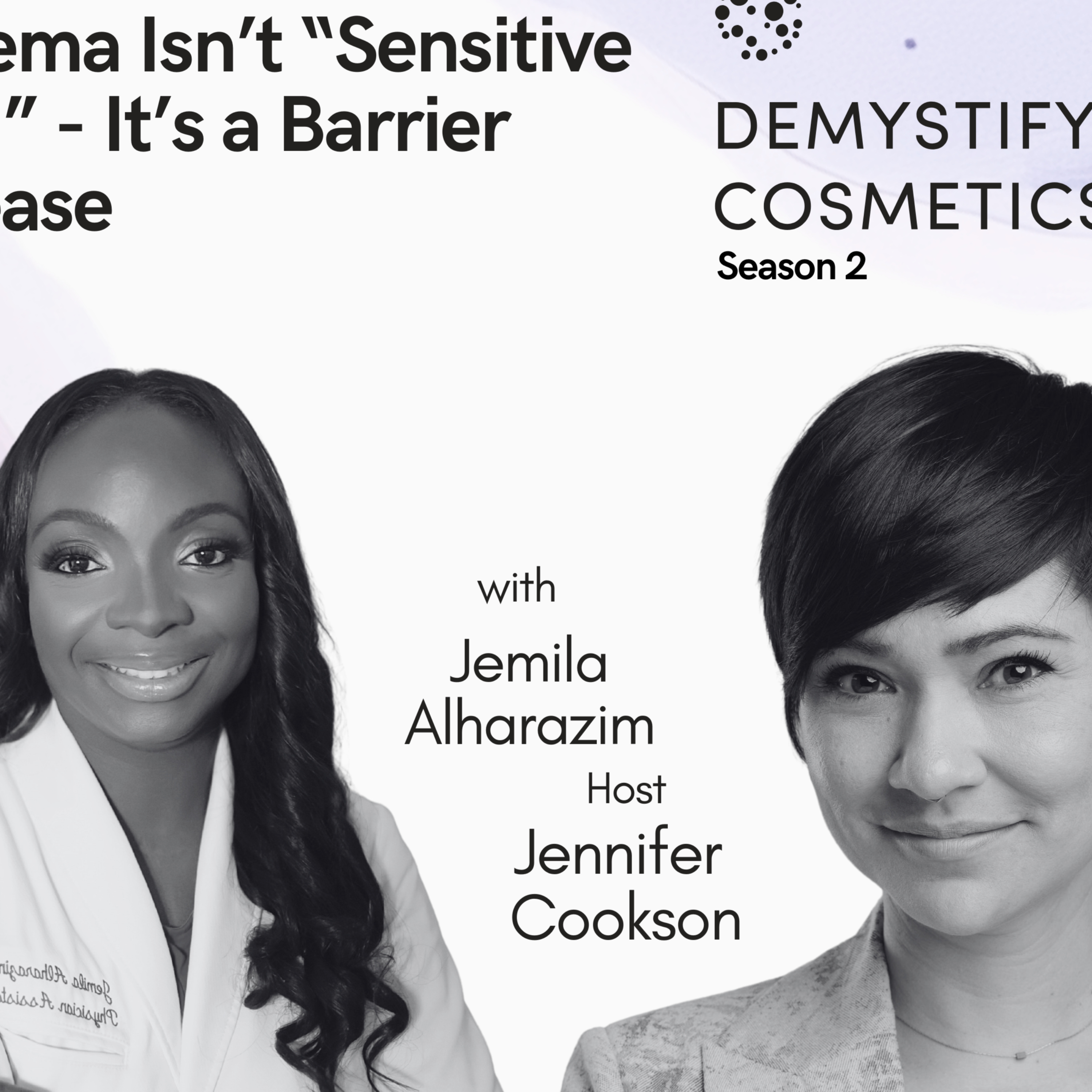
In this episode, host Jennifer Cookson sits down with Dr. Brent Ridge—physician, public health graduate, MBA, co-founder of Beekman 1802, and chairman of kindness.org. The conversation explores how Beekman started not as a beauty brand but from a chance farmhouse purchase, recession job loss, and a note from a farmer losing his herd of 100 goats. Dr. Ridge explains why goat milk’s pH matches skin’s barrier, how oligosaccharides serve as prebiotics for the microbiome, and why they’re extracting goat milk exosomes for targeted delivery inspired by chemotherapy research. He discusses the discipline of proving every claim for TV retail governed by FTC standards, why authenticity’s only measurement is longevity, and how kindness isn’t just storytelling—it’s operationalized through ambassador screening via the kindness quotient and the science showing optimism and social interactions are the most important factors in longevity.Takeaways:• Eczema Is an Immune Barrier Disease, Not Just Dry Skin: Eczema presents as scaly, rough patches commonly in arm folds, behind knees, and behind ears, characterized by the itch-scratch cycle where scratching worsens inflammation. It’s part of the atopic triad alongside asthma and allergies—if anyone in the family has one, children are likely to develop another. Treating severe eczema early actually decreases the risk of developing food allergies.• The Barrier Has Holes: Understanding Transepidermal Water Loss: Think of skin like a house with walls that keep the outside world out and inside world in. In eczema, the barrier has cracks allowing outside irritants (fragrances, dyes, pollen, fabrics, even sweat) to enter while moisture escapes. This transepidermal water loss creates the dryness, and the vulnerable barrier allows common irritants to trigger the itch-scratch cycle.• Fragrance-Free Is Easier Than Identifying Specific Allergens: While patch testing can identify specific fragrance components causing contact dermatitis, most fragrances are indeed irritants for compromised skin. Rather than trying individual components, it’s easier to go fragrance-free first, get skin clear, then add one thing at a time for 1-2 weeks to test tolerance. Delayed hypersensitivity reactions mean you could use a product for days before reacting on day seven.• Mild to Severe Treatment Requires Layered Approach: Mild cases require proper skincare—fragrance-free everything including detergent, moisturizing twice daily, avoiding known triggers like wool/polyester, using occlusives before swimming. Moderate cases may need topical steroids, while severe cases require biologics. Ocean Olive’s whipped gel fits mild-to-moderate as the first grab at irritation signs, also working for mosquito bites. Even on biologics, maintaining skincare routines helps stretch dosing intervals.• Food Restriction Creates Food Allergies, Not Prevents Them: While certain foods can worsen eczema, completely removing them from diet doesn’t mean it’s a true IgE-mediated food allergy (hives, vomiting, difficulty breathing, EpiPen). Removing foods may improve eczema temporarily, but reintroducing after elimination actually promotes true life-threatening food allergies. Eat trigger foods in moderation rather than complete elimination.
Find Ocean Olive’s whipped gel and learn more about eczema management at: https://ocean-olive.com/
Disclaimer
This podcast’s information is provided for general reference and was obtained from publicly accessible sources. The Podcast Collaborative neither produces nor verifies the content, accuracy, or suitability of this podcast. Views and opinions belong solely to the podcast creators and guests.
For a complete disclaimer, please see our Full Disclaimer on the archive page. The Podcast Collaborative bears no responsibility for the podcast’s themes, language, or overall content. Listener discretion is advised. Read our Terms of Use and Privacy Policy for more details.