New Wave History – A Fresh Perspective On Historical Events

New Wave History - A Fresh Perspective On Historical Events
Podcast Description
New Wave History is a non-partisan initiative from New Wave Global that seeks to make understanding history easier.It aims to achieve this by fostering a critical perspective on our collective history, and making the main ideas in key historical texts accessible to all, offering explanations and connections that make the past come alive.New Wave History hopes to transform the way people engage with history, by bridging the gap between the academic study of history and our audience.We aim to inspire critical thought and spark curiosity, and fostering a deeper understanding of the events that have shaped our nation and region. New Wave History works in collaboration with New Wave Global, The Friday Times, SAPAN News Network, and other media, research outfits, academic institutions, and civil society groups in South Asia and the United States.
Podcast Insights
Content Themes
The podcast emphasizes critical analysis of historical narratives, focusing on topics like the creation of Pakistan, communal tensions, and the role of key historical figures. For example, episodes delve into discussions on Muhammad Ali Jinnah's complicated legacy, the dynamics of power-sharing during partition, and the secular versus religious identity debate in South Asia.
New Wave History is a non-partisan initiative from New Wave Global that seeks to make understanding history easier.
It aims to achieve this by fostering a critical perspective on our collective history, and making the main ideas in key historical texts accessible to all, offering explanations and connections that make the past come alive.
New Wave History hopes to transform the way people engage with history, by bridging the gap between the academic study of history and our audience.
We aim to inspire critical thought and spark curiosity, and fostering a deeper understanding of the events that have shaped our nation and region. New Wave History works in collaboration with New Wave Global, The Friday Times, SAPAN News Network, and other media, research outfits, academic institutions, and civil society groups in South Asia and the United States.
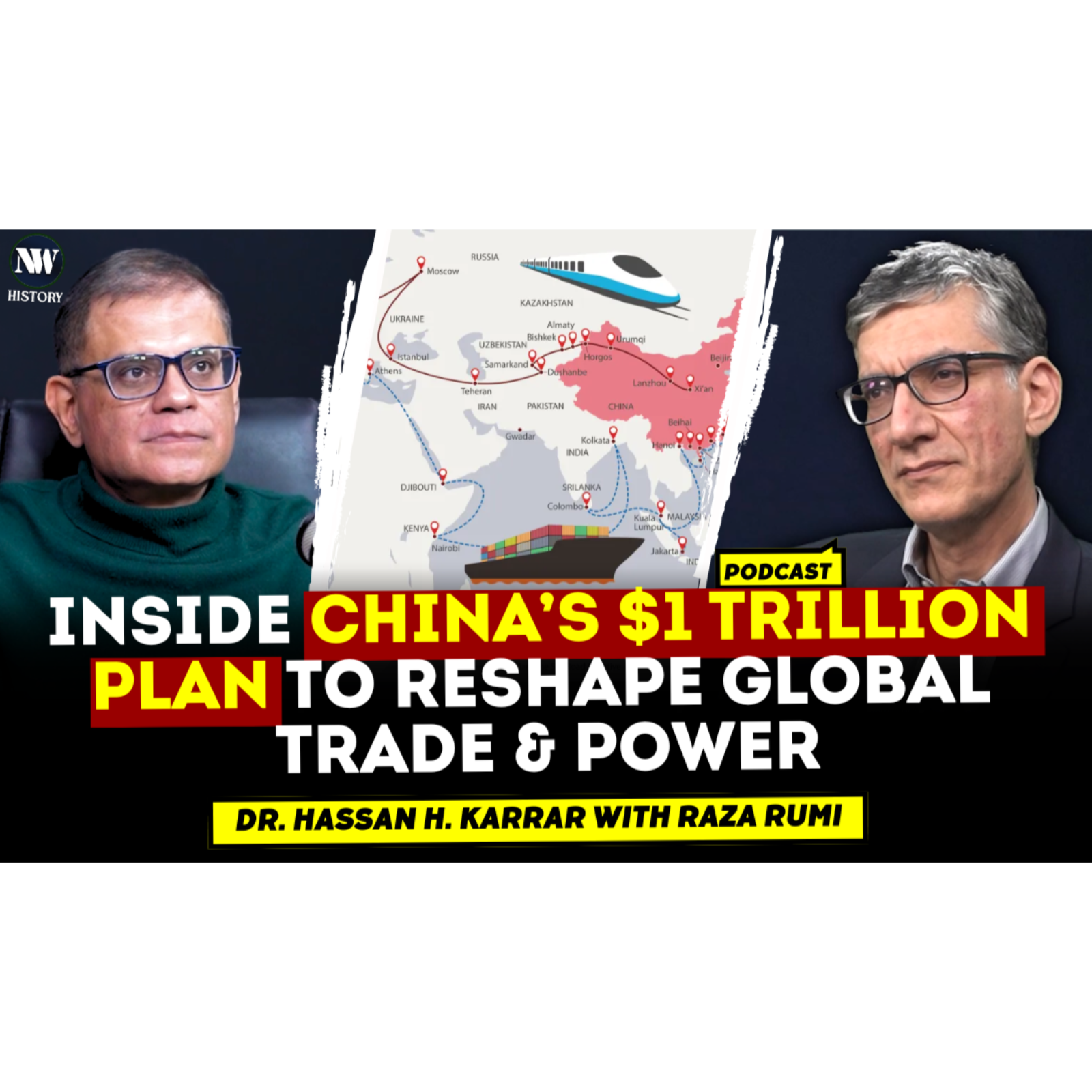
In this episode of New Wave History, Professor Hassan H. Karrar walks us through decades of Chinese interventions, the Belt and Road Initiative, and the rise of China as a global economic powerhouse. From the revival of the Silk Road to the transformation of bazaars in Central Asia, the podcast explores how China is reshaping global connectivity, infrastructure, and soft power. We also talked about the geopolitical implications, India’s concerns, and the potential for a new Eurasian partnership. Listen to a fresh conversation about investment, development, and the future of Asia.
Chapters:
00:40 What exactly is BRI?
2:24 Explaining the similarities and differences between Silk Route and BRI (Belt & Road Initiative)
9:10 Beyond infrastructure and economic nationalism, to what extent does China use the Belt and Road Initiative (BRI) to export or showcase its own philosophy of development and progress, often described as welfare-led but criticized by some as authoritarian or Maoist, particularly across regions like Central Asia, Africa, and Latin America?
12:47 China’s growth is often cited as proof that democracy isn’t necessary for development. With global democracy in decline, how do we reconcile economic success with concerns about human rights, inclusion, and democratic values?
15:21 After massive investments so far, how do Chinese officials and thinkers evaluate the successes and progress of the Belt and Road Initiative, especially as a long-term project?
19:04 How has China’s growing soft and hard power since the Cold War reshaped Central Asia, particularly through energy and trade ties with countries like Kazakhstan, Uzbekistan and Tajikistan, and is this bringing real transformation or reinforcing existing power structures?
28:06 You have worked in Africa and Latin America, where China’s footprint is growing. Some critics call BRI a “new East India Company.” Do you agree, or is this comparison misleading?
33:26 Recent attacks in Tajikistan highlight China’s growing security presence in Central Asia. How is India reacting, and could shifting U.S. policy under Trump change the West’s stance?
Disclaimer
This podcast’s information is provided for general reference and was obtained from publicly accessible sources. The Podcast Collaborative neither produces nor verifies the content, accuracy, or suitability of this podcast. Views and opinions belong solely to the podcast creators and guests.
For a complete disclaimer, please see our Full Disclaimer on the archive page. The Podcast Collaborative bears no responsibility for the podcast’s themes, language, or overall content. Listener discretion is advised. Read our Terms of Use and Privacy Policy for more details.