Emotional Damages: Practical Insights into Forensic Psychiatry for Litigating Attorneys

Emotional Damages: Practical Insights into Forensic Psychiatry for Litigating Attorneys
Podcast Description
In Emotional Damages, host and forensic expert Dr. Ambarin Faizi sits down with forensic colleagues, shedding light on their journeys and experiences. Through this podcast, Ambar aims to demystify forensic psychiatry and share practical insights that can aid attorneys in their engagement with forensic experts.
Podcast Insights
Content Themes
The podcast delves into various themes centered around forensic psychiatry and the legal system, covering topics such as the psychological impacts of childhood sexual abuse and complexities of psychiatric care in jails, with episodes exploring specific cases, the role of forensic psychiatrists in court, and the evolving legal challenges surrounding trauma.
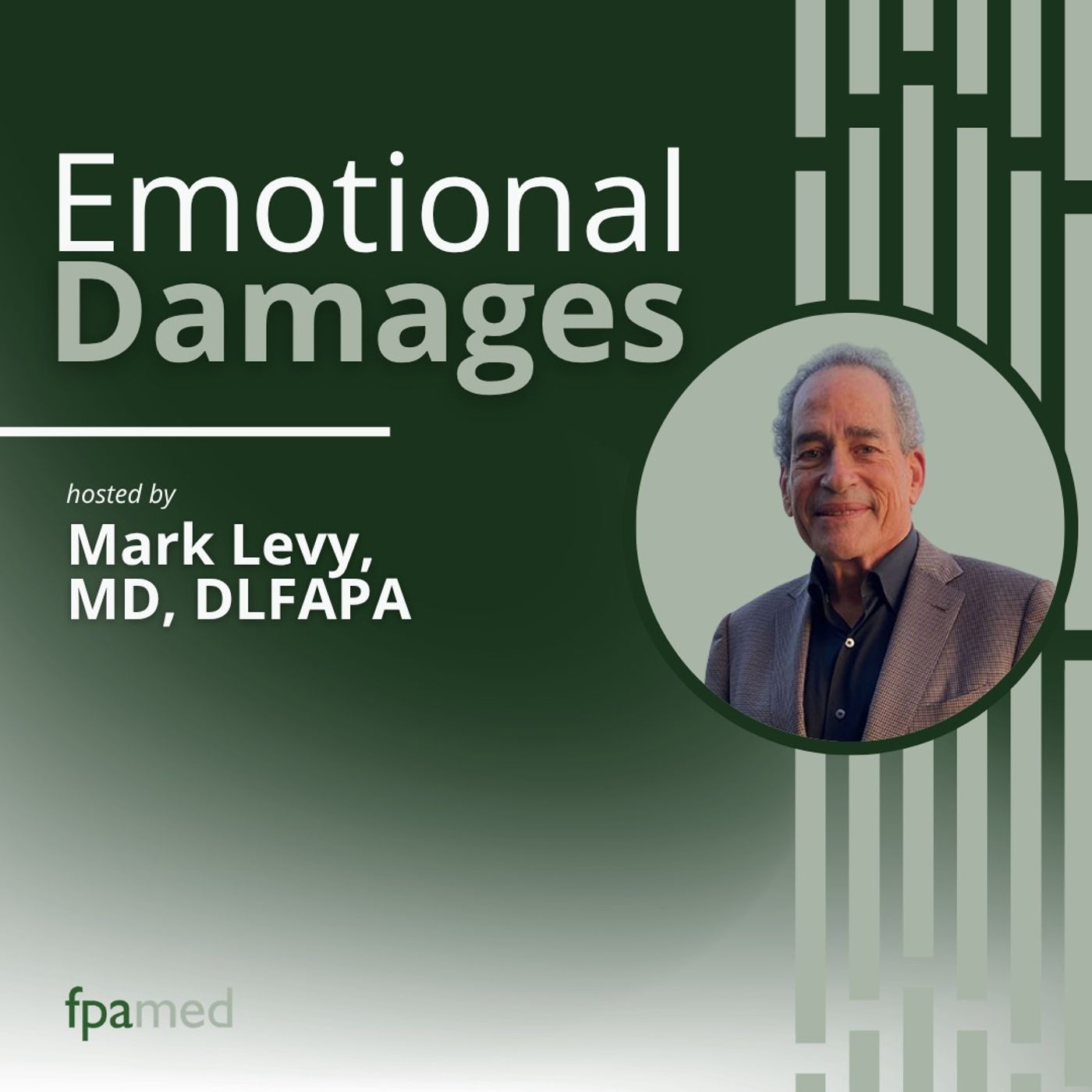
In Emotional Damages, host and forensic expert Dr. Mark Levy sits down with forensic colleagues, shedding light on their journeys and experiences. Through this podcast, he aims to demystify forensic psychiatry and share practical insights that can aid attorneys in their engagement with forensic experts.
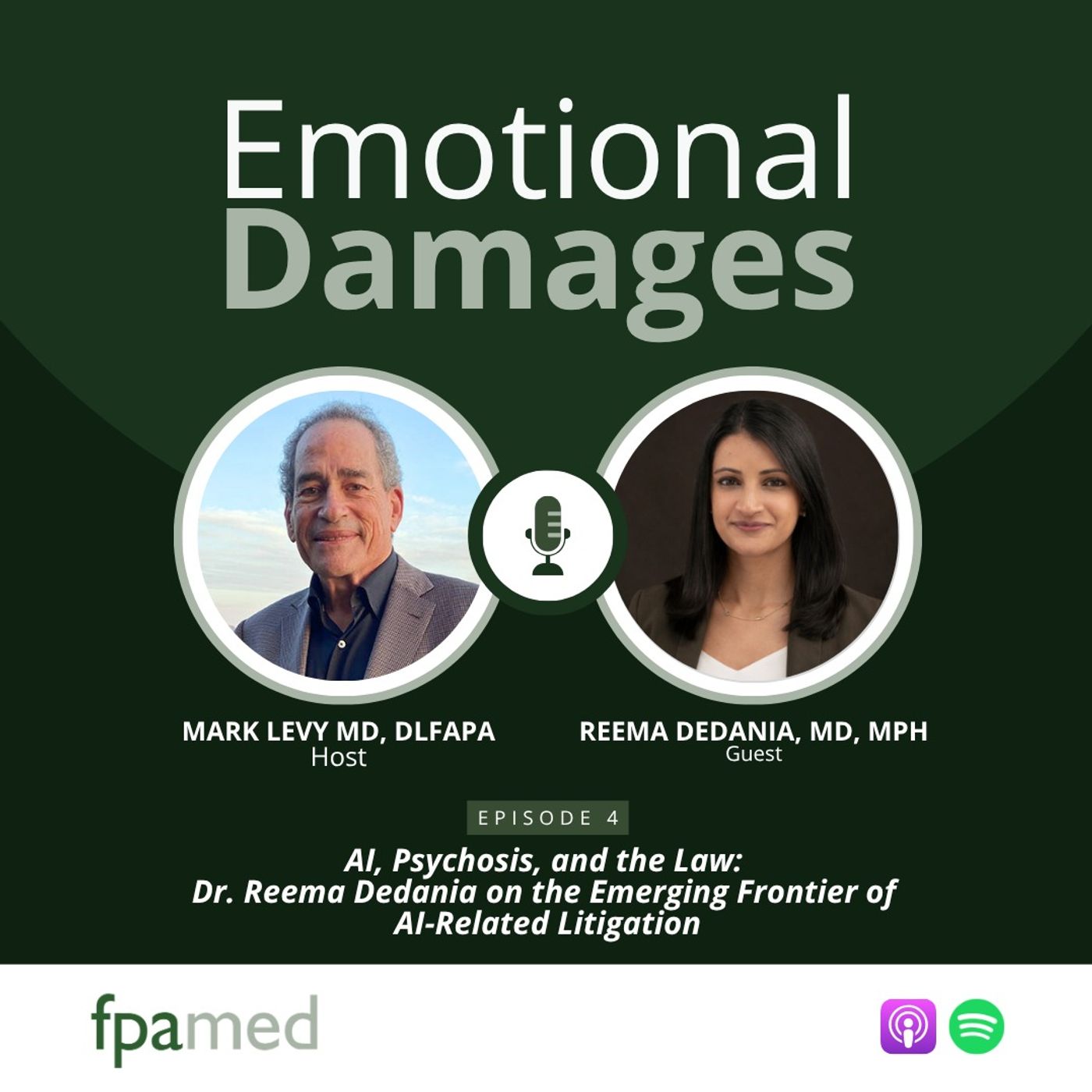
In this episode of Emotional Damages, Dr. Mark Levy speaks with Dr. Reema Dedania, forensic psychiatrist, assistant professor of psychiatry at Emory University School of Medicine, and associate training director of Emory’s forensic psychiatry fellowship — where she also serves as medical director of a jail-based competency restoration unit at Fulton County Jail.
Dr. Dedania explains how large language models — by design pattern-matching, connection-making, and sycophantic — can mirror and amplify the very cognitive distortions that define psychosis, giving rise to the emerging phenomenon of AI-associated psychosis. She describes the “paranoid echo chamber” that AI creates for vulnerable users, walks through the two major categories of AI-related litigation already appearing in courts (suicide and product liability cases), and offers concrete guidance to attorneys on how to approach these cases: accounting for preexisting psychiatric vulnerability, reading chat logs as collateral rather than literal evidence, and understanding causation as a spectrum rather than a simple cause-and-effect chain.
She also shares findings from her own firsthand experiment engaging a chatbot as a paranoid patient — and what the bot’s response revealed about the limits of current AI safeguards.
Have a topic you would like covered on the pod?
📧 Email us: [email protected]
🔗 Connect with fpamed:
🌐 Visit our website.
👋 Follow us on LinkedIn.
Disclaimer
This podcast’s information is provided for general reference and was obtained from publicly accessible sources. The Podcast Collaborative neither produces nor verifies the content, accuracy, or suitability of this podcast. Views and opinions belong solely to the podcast creators and guests.
For a complete disclaimer, please see our Full Disclaimer on the archive page. The Podcast Collaborative bears no responsibility for the podcast’s themes, language, or overall content. Listener discretion is advised. Read our Terms of Use and Privacy Policy for more details.