Tech and Drugs – Podcast

Tech and Drugs - Podcast
Podcast Description
Welcome to Tech and Drugs, the podcast exploring how data and AI are revolutionizing Pharma and Biotech.
Each episode features candid conversations with industry experts tackling real-world challenges, sharing success stories, and lessons learned. Explore how digital transformation accelerates breakthroughs and bridges the gap between tech and science.
🔍 What You’ll Discover:
• How AI is driving drug discovery and development.
• Insights from the forefront of TechBio innovation.
• Practical lessons for navigating digital transformation.
Podcast Insights
Content Themes
The podcast explores themes centered on data and AI's transformative impact on Pharma and Biotech, with specific episodes covering topics like AI-driven drug discovery, practical steps for digital transformation, and the power of human-centric methodologies, highlighted in discussions around causes like the efficiency problem in pharma and the future of AI experimentation.
Welcome to Tech and Drugs, the podcast exploring how data and AI are revolutionizing Pharma and Biotech.
Each episode features candid conversations with industry experts tackling real-world challenges, sharing success stories, and lessons learned. Explore how digital transformation accelerates breakthroughs and bridges the gap between tech and science.
🔍 What You’ll Discover:
• How AI is driving drug discovery and development.
• Insights from the forefront of TechBio innovation.
• Practical lessons for navigating digital transformation.
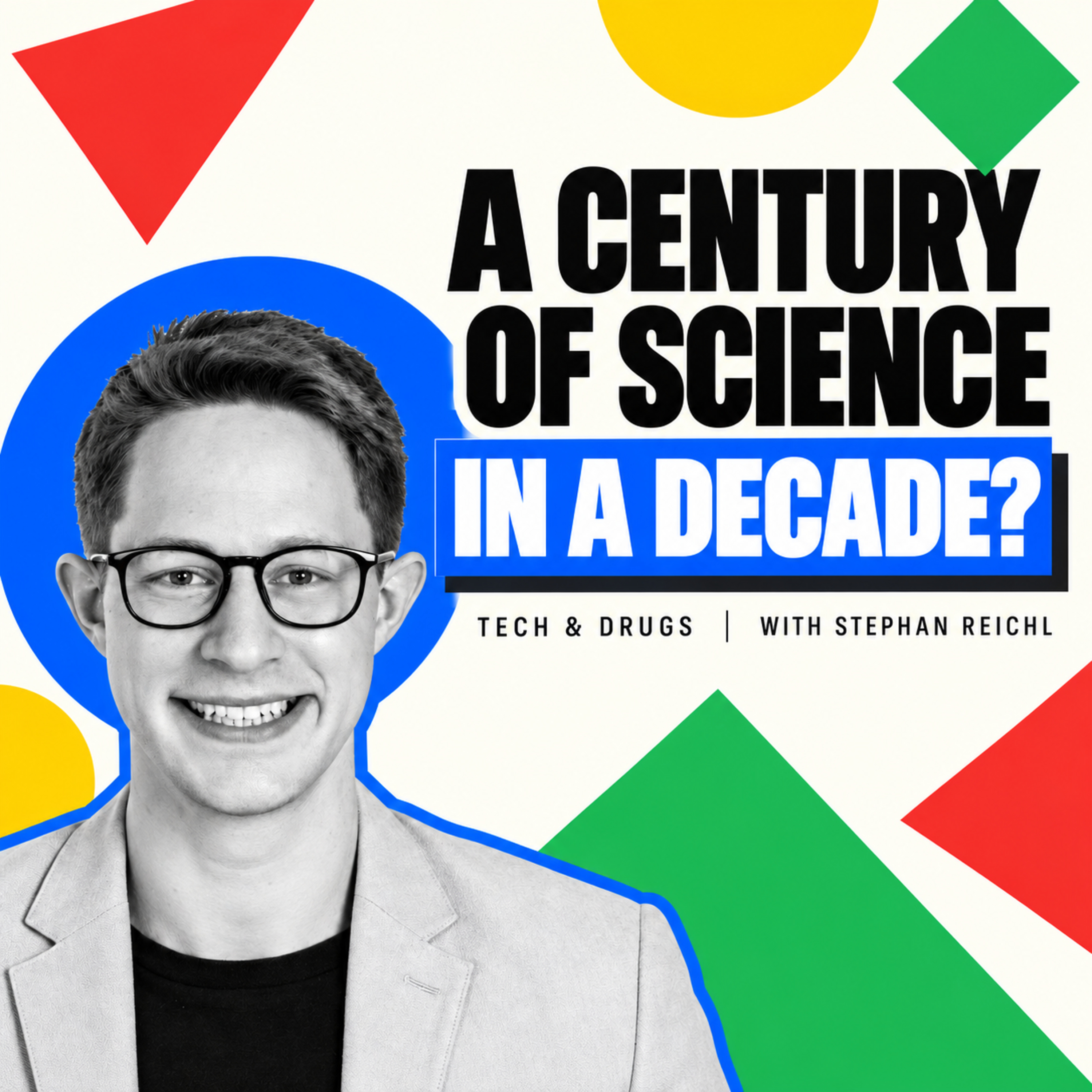
Can AI compress years of biomedical research into months? And if it can speed up literature reviews, coding and data analysis, what happens when the next step still depends on an experiment?I’m joined by Stephan Reichl, a biomedical data scientist at CeMM and the Medical University of Vienna, to explore the promise and practical limits of AI in science. Stephan co-authored a study asking how much general-purpose AI could accelerate biomedical research—and where the bottlenecks would move.We discuss smarter experimental design, predictive readouts, AlphaFold, SimulateGPT, the challenges of adopting AI in research teams, and a question that matters more as these systems gain autonomy: who decides what “good science” looks like?GUEST AND RESOURCESStephan’s paper, “What are the limits to biomedical research acceleration through general-purpose AI?”:https://www.nature.com/articles/s41598-025-32583-w“GPT-4 as a biomedical simulator” (SimulateGPT):https://pubmed.ncbi.nlm.nih.gov/38909448/MrBiomics, the bioinformatics workflow project mentioned in the conversation:https://github.com/epigen/MrBiomicsFit For Science, Stephan’s podcast with Rob ter Horst:https://www.youtube.com/@FitForScienceAccelerate Europe:https://accelerate-europe.org/Subscribe to Tech & Drugs for conversations about data, AI and the future of drug R&D:https://www.youtube.com/@TechandDrugsWhat part of scientific research would you trust an AI co-scientist to handle—and where would you insist on a human decision? Tell us in the comments.#AIforScience #DrugDiscovery #TechAndDrugs
Disclaimer
This podcast’s information is provided for general reference and was obtained from publicly accessible sources. The Podcast Collaborative neither produces nor verifies the content, accuracy, or suitability of this podcast. Views and opinions belong solely to the podcast creators and guests.
For a complete disclaimer, please see our Full Disclaimer on the archive page. The Podcast Collaborative bears no responsibility for the podcast’s themes, language, or overall content. Listener discretion is advised. Read our Terms of Use and Privacy Policy for more details.