Made for Health CIRS Mold Detox Chronic Disease Gut Health Better Sleep

Made for Health CIRS Mold Detox Chronic Disease Gut Health Better Sleep
Podcast Description
You were made for health—vibrant, thriving, and full of possibility. But navigating today’s broken healthcare system, endless misinformation, and confusion can feel overwhelming. On Made for Health, Dr. Aaron Hartman cuts through the noise to deliver science-backed solutions that restore your health and reignite your hope.
Join us each week for expert insights, practical tips, and inspiring conversations that empower you to harness your body’s incredible power to heal. Whether you're seeking clarity, direction, or just a trusted voice, this podcast is your roadmap to the vibrant life you were made for.
Podcast Insights
Content Themes
The podcast revolves around themes such as functional medicine, chronic illness, gut health, nutrition, and holistic healing. Notable episodes address topics like Chronic Inflammatory Response Syndrome (CIRS), the importance of individualized health evaluations, and the impact of environmental factors on wellness, with discussions featuring expert opinions on biotoxin removal strategies and the role of dietary adjustments for improving health conditions.
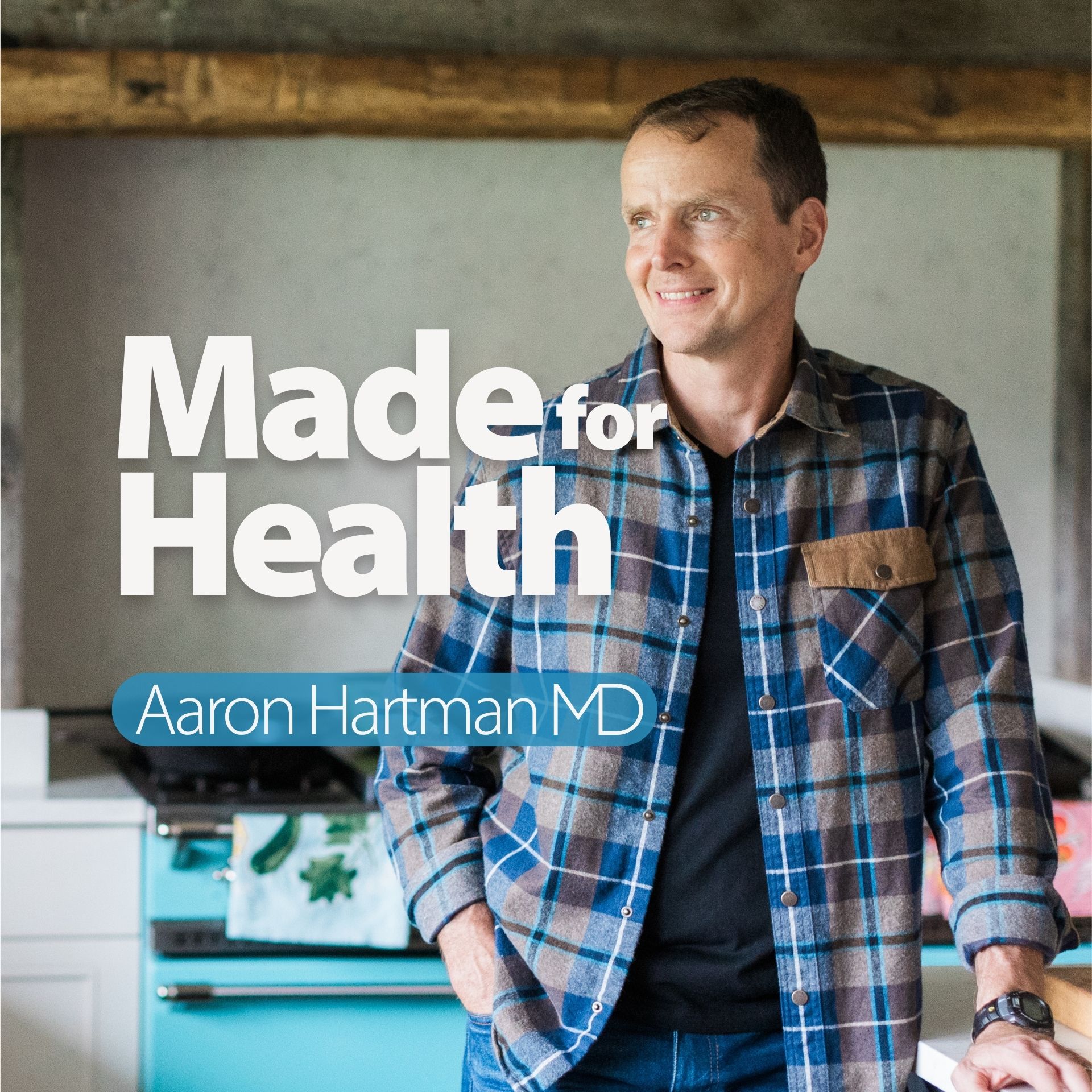
You were made for health—vibrant, thriving, and full of possibility. But navigating today’s broken healthcare system, endless misinformation, and confusion can feel overwhelming. On Made for Health, Dr. Aaron Hartman cuts through the noise to deliver science-backed solutions that restore your health and reignite your hope.
Join us each week for expert insights, practical tips, and inspiring conversations that empower you to harness your body’s incredible power to heal. Whether you’re seeking clarity, direction, or just a trusted voice, this podcast is your roadmap to the vibrant life you were made for.
🎒 Back-to-school season brings changing routines, new exposures, and added demands on the whole family. Support your family’s health this season with Richmond Integrative & Functional Medicine’s Back-to-School 2026 resources.
Back-to-School 2026:
https://richmondfunctionalmedicine.com/lp/back-to-school-2026/
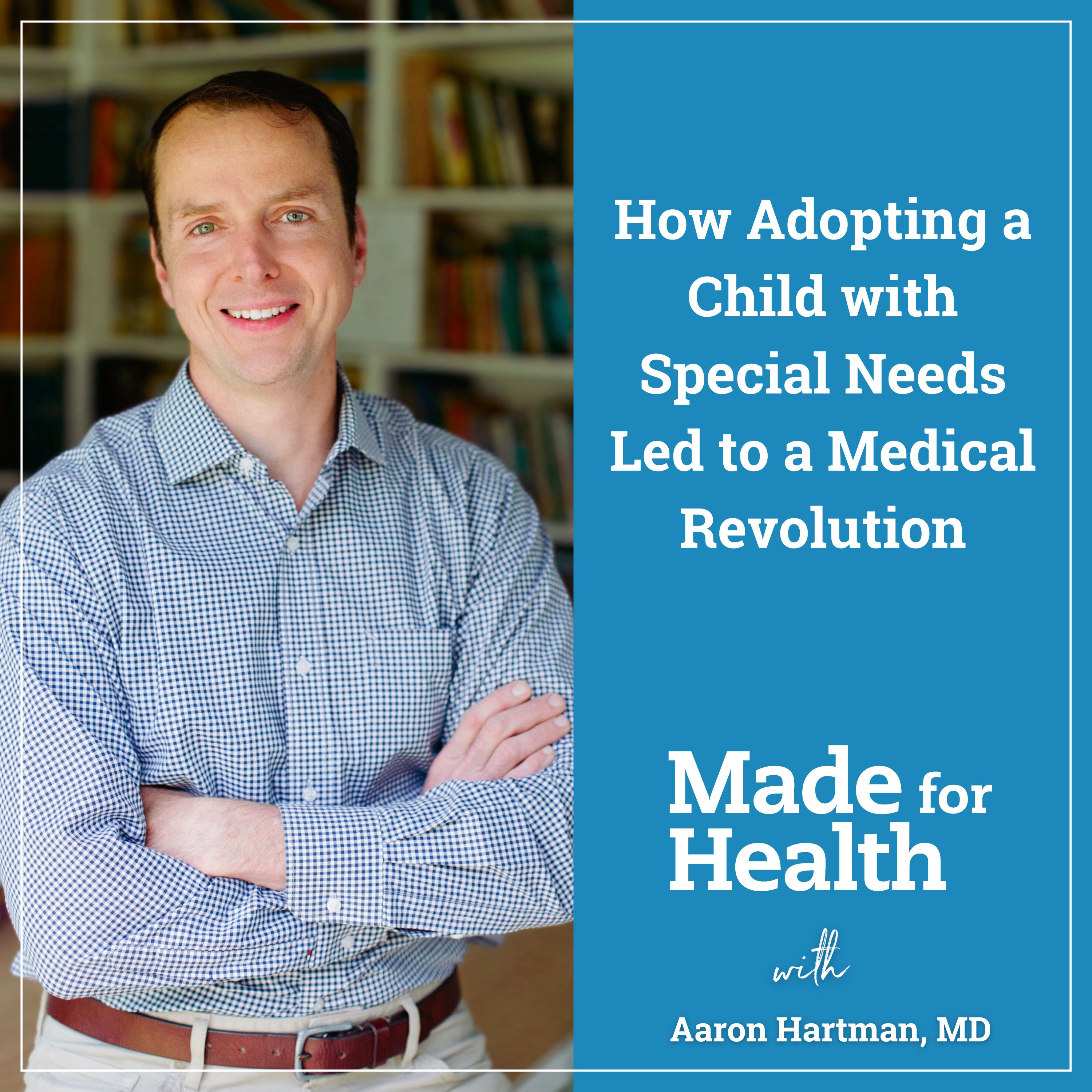
In this special episode of Made for Health, Dr. Aaron Hartman shares the deeply personal story behind his journey from conventional family medicine into integrative and functional medicine—and why Richmond Integrative & Functional Medicine exists today.
The turning point began with his daughter, Anna.
When Dr. Hartman and his wife began caring for Anna, who had cerebral palsy and significant medical needs, they quickly found themselves questioning recommendations from specialists. One of the earliest moments involved a recommendation for a feeding tube because Anna was considered extremely small on a standard growth chart. Dr. Hartman and his wife declined, believing there might be another path. Months later, they discovered a growth chart specifically for children with cerebral palsy—and Anna was right in the middle of the expected range. Pasted text
That experience fundamentally changed how Dr. Hartman viewed expertise, medical decision-making, and the importance of looking at the right frame of reference for the individual patient.
From there, his family continued exploring alternatives when standard medicine seemed to offer only procedures, medications, or surgery. Their search took them into nutrition, genetics, advanced gut testing, functional neurology, rehabilitation technologies, neuromodulation, and other approaches that were often being used elsewhere long before they became familiar in mainstream American medicine. Pasted text
Today, Anna continues to make progress far beyond what her family was originally told to expect. Dr. Hartman shares how that experience shaped not only his life as a father but also his identity as a physician, researcher, and lifelong student of medicine. Pasted text
Key Topics Covered
- How Dr. Hartman originally entered medicine
- The difference between learning medicine and truly learning how to heal
- How adopting Anna changed his personal and professional life
- Raising a child with cerebral palsy and significant medical needs
- Why his family began questioning specialist recommendations
- Anna’s feeding-tube recommendation and the importance of the correct clinical reference point
- Why medical experts can sometimes be wrong
- Medical gaslighting and families with special-needs children
- Looking beyond one-size-fits-all treatment
- Why function mattered more than appearance in Anna’s care
- Exploring nutrition, genetics, gut health, and functional neurology
- Technologies and therapies used in neurological rehabilitation
- Why Dr. Hartman became increasingly interested in root-cause medicine
- His transition from traditional family medicine into functional medicine
- The role of clinical research in shaping his thinking
- IFM, integrative medicine, functional medicine, and advanced training
- Learning about mold, CIRS, mast-cell activation, and hypermobility
- How his understanding of chronic illness evolved over time
- Why short conventional appointments were not enough for complex patients
- The creation of Richmond Integrative & Functional Medicine
- Why complex patients need time, curiosity, and individualized care
- Moving the practice to a fully functional-medicine model
- The role of faith, family, persistence, and continuing education
- Dr. Hartman’s vision for the future of personalized medicine
In This Episode, You Will Learn
✅ Why caring for his daughter became the biggest turning point in Dr. Hartman’s medical career
✅ How using the wrong clinical reference point almost led Anna toward an unnecessary feeding tube
✅ Why Dr. Hartman began questioning the idea that specialists always have the complete answer
✅ How parenting children with complex health needs pushed him to investigate nutrition, genetics, neurology, and rehabilitation more deeply
✅ Why functional medicine appealed to him as a way of asking “Why?” rather than only treating the diagnosis
✅ How research helped him recognize that many “new” therapies are often built on decades of previous science
✅ Why conditions such as mold illness, mast-cell activation, hypermobility, and complex chronic illness required him to keep expanding his training
✅ Why he eventually realized complex patients needed much more than a 10- or 12-minute appointment
✅ How Richmond Integrative & Functional Medicine grew from a personal family journey into a practice serving patients with complex chronic conditions
Resources & Links:
🌐 Dr. Aaron Hartman – Richmond Functional Medicine:richmondfunctionalmedicine.com
🌐 LinkedIn – Dr. Aaron Hartman:Connect Here
📺 YouTube – Richmond Functional Medicine:Watch Here
🎒 Back-to-School 2026:Back-to-School Bundle
Mentioned in this episode:
25% Off Back to School Support for Parents
Back to school asks a lot of parents, too. Support your body through the season with three physician-reviewed, foundation-first essentials: Twice Daily Multi, Quercetin + Nettles, and NAC.
For a limited time, save 25% on the Back to School Support Bundle.
Visit the link below ⬇️ Shop the Back to School Sale
Back to School Support for Parents
25% Off Back to School Support for Parents
Back to school asks a lot of parents, too. Support your body through the season with three physician-reviewed, foundation-first essentials: Twice Daily Multi, Quercetin + Nettles, and NAC.
For a limited time, save 25% on the Back to School Support Bundle.
Visit the link below ⬇️ Shop the Back to School Sale
Disclaimer
This podcast’s information is provided for general reference and was obtained from publicly accessible sources. The Podcast Collaborative neither produces nor verifies the content, accuracy, or suitability of this podcast. Views and opinions belong solely to the podcast creators and guests.
For a complete disclaimer, please see our Full Disclaimer on the archive page. The Podcast Collaborative bears no responsibility for the podcast’s themes, language, or overall content. Listener discretion is advised. Read our Terms of Use and Privacy Policy for more details.