To-The-Trade with Interior Design Community

To-The-Trade with Interior Design Community
Podcast Description
Introducing "To-The-Trade," the ultimate podcast for interior designers. Our mission: to provide business and productivity hacks for better work/life balance.
Join industry leaders and experts as we explore trends, strategies, and practical advice. Elevate your design business, manage clients, build your brand, and stay ahead with technology. Achieve success and fulfillment in your career. Listen to "To-The-Trade" now!
Podcast Insights
Content Themes
The podcast covers various topics pertinent to interior design professionals, such as business strategies, client management, and technology integration. Specific episodes focus on navigating construction and design with Elizabeth Scruggs, sustainable practices in design with Megan Thompson, and embracing digital marketing strategies with Renee Leighann, ensuring a well-rounded approach to improving design business practices.
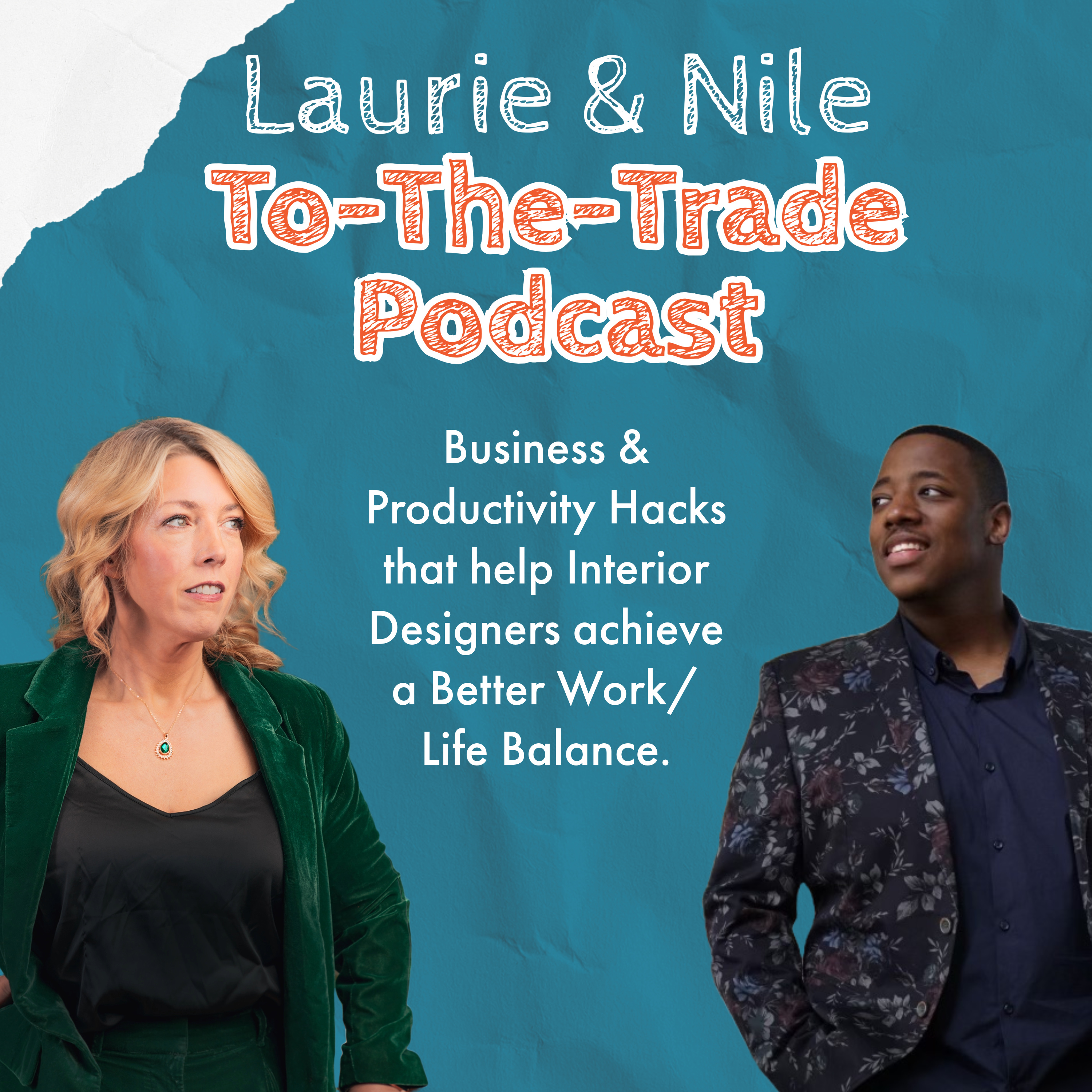
Introducing “To-The-Trade,” the ultimate podcast for interior designers. Our mission: to provide business and productivity hacks for better work/life balance. Join industry leaders and experts as we explore trends, strategies, and practical advice. Elevate your design business, manage clients, build your brand, and stay ahead with technology. Achieve success and fulfillment in your career. Listen to “To-The-Trade” now!
Megan Reilly, co-founder and owner of West Edge Design Fair, joins Laurie Laizure and Nile Johnson to talk about building an “anti-trade show” in Los Angeles and how designers can get more out of every show they attend.
Megan previously led marketing for NeoCon and the Architectural Digest Design Show in New York. She launched West Edge in 2013 after exhibitors pushed for a West Coast event. LA’s spread-out, car-driven market made that a challenge, so West Edge leans into experience: an airplane hangar at the Santa Monica Barker Hangar with the doors open, familiar trade brands, and undiscovered makers creating bespoke, collectible pieces.
The fair is about 70% design trade, with a consumer audience that West Edge sees as part of the process. After the 2025 wildfires, it partnered with Team Palisades to host a Rebuild Connect Lounge that drew about 500 homeowners. Builders, architects, and landscape architects are attending in growing numbers, too.
Laurie urges designers to stop shopping smaller shows and start building relationships there, since brand owners and senior leadership are actually accessible. Megan adds that designers should do their homework and reach out to exhibitors ahead of time. West Edge supports that with a trade preview tour, pre-show education and boot camps, and a Friday “Meet Your Mentor” event with three newer industry groups.
The hosts also take on brand follow-up. Generic “great seeing you at market” emails are not working. Laurie suggests personal DMs and real engagement when designers tag a brand on social, noting that a designer’s post can outperform a local magazine placement. Megan points to West Edge’s cloud-based lead scanning, which lets exhibitors follow up the same day.
Megan introduces Rising Design, a new competition and 10-episode series featuring six designers with fewer than five years of practice, each building a 10×10 vignette with shop-the-look QR codes. She also speaks candidly about production pressure, including two Canadian exhibitors who withdrew because of tariffs.
West Edge runs October 29 to 31. Trade pros and design students get complimentary Friday and Saturday access when they register by October 23.
Disclaimer
This podcast’s information is provided for general reference and was obtained from publicly accessible sources. The Podcast Collaborative neither produces nor verifies the content, accuracy, or suitability of this podcast. Views and opinions belong solely to the podcast creators and guests.
For a complete disclaimer, please see our Full Disclaimer on the archive page. The Podcast Collaborative bears no responsibility for the podcast’s themes, language, or overall content. Listener discretion is advised. Read our Terms of Use and Privacy Policy for more details.