Everything AI in Travel

Everything AI in Travel
Podcast Description
In this companion podcast to the Everything AI in Travel weekly newsletter, we speak to the makers, shapers and buyers of AI technology in the travel inustry.
Podcast Insights
Content Themes
The podcast focuses on themes such as AI applications in travel, sustainability, and data-driven decision making, with episodes exploring topics like overtourism solutions, AI's impact on SEO in the travel sector, and personalized travel experiences. Specific examples include discussions on Equator AI's use of big data for sustainable travel and the rise of AI trip planners.
In this companion podcast to the Everything AI in Travel weekly newsletter, we speak to the makers, shapers and buyers of AI technology in the travel inustry.
Watch the full video episode on YouTube: https://www.youtube.com/watch?v=_NaQ0ESczQM
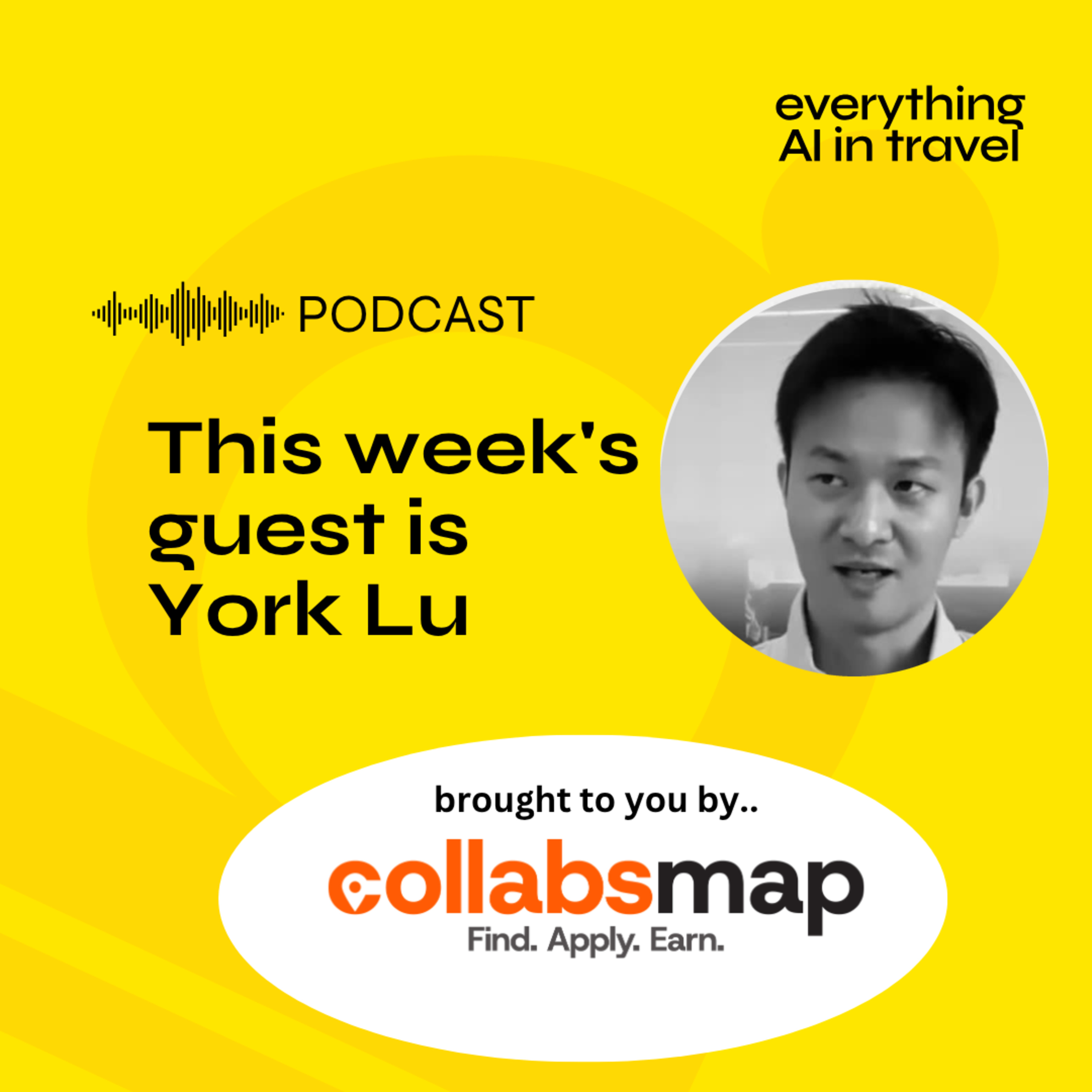
In this episode of the Everything AI in Travel podcast, I speak with York Lu, Head of AI Partnership at Dida and co-founder of RollingGo. York was one of the first three people in Trip.com’s US office, spent three years as a VC investment manager in Shanghai, and is now building what he calls B2A – business to AI agents – on top of one of the biggest hotel supply businesses most people in the West have never heard of.
Connect with York on LinkedIn: https://www.linkedin.com/in/york-lu-5b419b116
Got a travel problem AI might solve? Find the AI you need: tell me what’s frustrating you and I’ll personally introduce you to someone who can help. https://docs.google.com/forms/d/e/1FAIpQLSdVYizRw_UgfX9CpvkeUmkpOeRGFj_iiF0W2KmX_EECIqSUsA/viewform
Dida is a B2B travel platform that York says is already the third-largest in the world – bigger than the listed player TBO on GMV, by his numbers – with over 2,000 staff, 19 offices across 40-plus countries and around 100,000 directly contracted hotels. RollingGo is the new Dida-invested entity taking that supply and packaging it for machines: net rates through an API, product interfaces designed for agents rather than humans.
We dig into:
– Why Dida’s own AI journey started with building agents for hotels – and why they walked away from it (efficiency gains, but no new bookings)
– The moment the board sent York and one colleague to Hangzhou, home of DeepSeek and Kimi, with no plan and no office: “find your way”
– What B2A actually means: selling hotels and flights to personal AI agents, not to people
– Why RollingGo stayed deliberately quiet while signing up most of China’s top AI companies – and why 1 November changes that
– York’s story of a Google closed-loop booking announcement that knocked 10-20% off Booking.com, Expedia and Trip.com shares in a day – and the reversal a month later
– The Hyatt contract that landed because York’s professor happened to be the VP of Revenue – and what that says about travel as a relationships business
– How net rates through the API leave room for the agent platforms to take their margin – the “toll booth” model
– Why he thinks OTAs and travel agencies gradually get replaced, and what that means for anyone selling travel
One of the most interesting ideas from this conversation is that the AI platforms and the supply owners need each other more than either admits. The AI companies are trying to close the loop inside their own apps and hardware, while the big B2C players fight to keep the customer. Meanwhile Dida quietly contracted 100,000 hotels directly, the hard way, on the ground.
If York is right, the winners on the supply side are the ones whose inventory an agent can actually read, price and book – and that is a plumbing question, not a marketing one.
The battle for who owns the booking is starting now, and it is being fought in the APIs.
Enjoyed it? Subscribe so you don’t miss the next one, and share this with someone in travel who’d get something from it.
Want the weekly version? The Everything AI in Travel newsletter: https://everythingaiintravel.beehiiv.com/
#AIinTravel #B2A #HotelDistribution
Disclaimer
This podcast’s information is provided for general reference and was obtained from publicly accessible sources. The Podcast Collaborative neither produces nor verifies the content, accuracy, or suitability of this podcast. Views and opinions belong solely to the podcast creators and guests.
For a complete disclaimer, please see our Full Disclaimer on the archive page. The Podcast Collaborative bears no responsibility for the podcast’s themes, language, or overall content. Listener discretion is advised. Read our Terms of Use and Privacy Policy for more details.