ReTuneIn

ReTuneIn
Podcast Description
Welcome to ReTuneIn, the scientific podcast all about movement disorders! We bring together reknown researchers and experienced experts to engange in some exciting discussions about innovative treatments and groundbreaking research in neurology.
In each episode, we dive deep into the mechanisms that influence motor disorders, exploring how we can improve patients' lives through science.
More information: www.sfb-retune.de/en
Podcast Insights
Content Themes
The podcast focuses on the mechanisms of movement disorders, innovative treatment methods, and groundbreaking research in neurology. Specific topics include cortico-striatal plasticity, neuronal population dynamics, and the implications of these studies on patient care, with episodes like the inaugural discussion featuring Dr. Lisa Harder and Dr. Yangfan Peng.
Welcome to ReTuneIn, the scientific podcast all about movement disorders! We bring together reknown researchers and experienced experts to engange in some exciting discussions about innovative treatments and groundbreaking research in neurology.
In each episode, we dive deep into the mechanisms that influence motor disorders, exploring how we can improve patients’ lives through science.
More information: www.sfb-retune.de/en
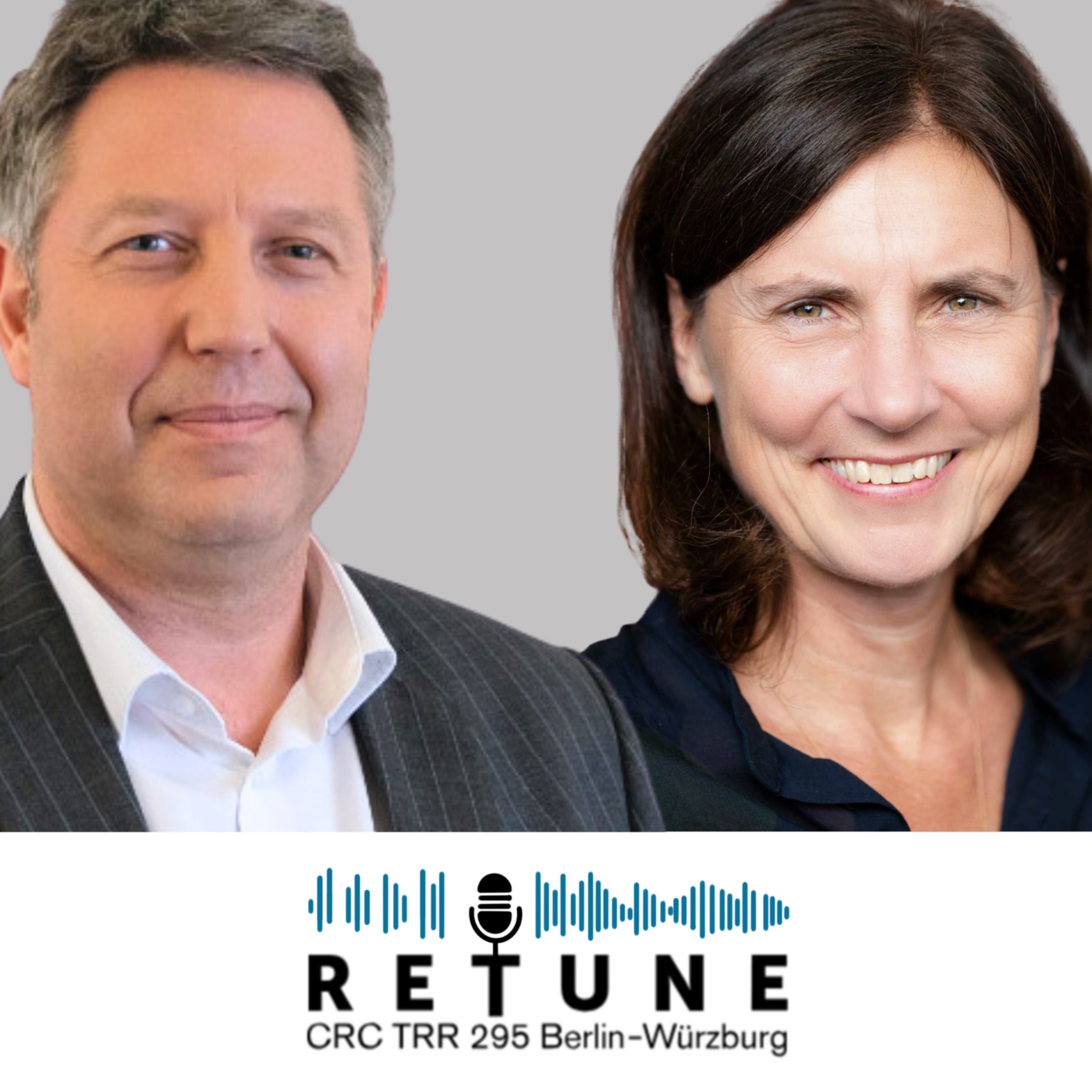
Today at ReTuneIn, we welcome Prof. Andrea Kühn and Prof. Jens Volkmann, who share their perspectives on the future of adaptive deep brain stimulation and the evolving landscape of neuromodulation.
Andrea Kühn, Professor of Neurology at Charité Berlin, offers insights into state-dependent stimulation, emerging biomarkers such as gamma activity, and the clinical experience with adaptive DBS in Parkinson’s disease.
Jens Volkmann, Professor of Neurology at the University Hospital Würzburg, reflects on the challenges of translating technological innovation into meaningful patient outcomes, highlighting the role of large-scale data, AI, and personalized stimulation strategies.
Together, they discuss the need to move beyond single-signal approaches, explore dynamic brain states, and rethink how stimulation can better mimic physiological processes—pointing toward the next generation of intelligent, patient-centered neuromodulation therapies.
Disclaimer
This podcast’s information is provided for general reference and was obtained from publicly accessible sources. The Podcast Collaborative neither produces nor verifies the content, accuracy, or suitability of this podcast. Views and opinions belong solely to the podcast creators and guests.
For a complete disclaimer, please see our Full Disclaimer on the archive page. The Podcast Collaborative bears no responsibility for the podcast’s themes, language, or overall content. Listener discretion is advised. Read our Terms of Use and Privacy Policy for more details.