Clojure in Product. Would you do it again?
Clojure in Product. Would you do it again?
Podcast Description
Real-life product stories and insights from top Clojure leaders.We launched this podcast because we're fascinated by a paradox: Clojure is an exceptional language with a powerful philosophy behind it, yet it remains relatively niche in the industry. By talking to teams who've actually implemented Clojure in production, we're trying to understand this disconnect.Is there something fundamental limiting Clojure's adoption, or is it just circumstantial?Through conversations with people, who've taken the leap and built real systems with Clojure, we're exploring whether they would "do it again" — and more importantly, why or why not. We're hoping these real-world stories can help understand Clojure's place in the industry and perhaps shed light on its future potential.Visit our podcast page: freshcodeit.com/podcast
Podcast Insights
Content Themes
Focuses on the adoption and implementation of Clojure in production environments, discussing its benefits and challenges. Specific themes include software development processes, hiring practices, and team culture, with episodes like 'You need boundaries to do a meaningful work' and 'ClojureScript is a Clojure killer app' providing tangible insights for software teams.
Real-life product stories and insights from top Clojure leaders.
We launched this podcast because we’re fascinated by a paradox: Clojure is an exceptional language with a powerful philosophy behind it, yet it remains relatively niche in the industry. By talking to teams who’ve actually implemented Clojure in production, we’re trying to understand this disconnect.
Is there something fundamental limiting Clojure’s adoption, or is it just circumstantial?
Through conversations with people, who’ve taken the leap and built real systems with Clojure, we’re exploring whether they would “do it again” — and more importantly, why or why not.
We’re hoping these real-world stories can help understand Clojure’s place in the industry and perhaps shed light on its future potential.
Visit our podcast page: freshcodeit.com/podcast
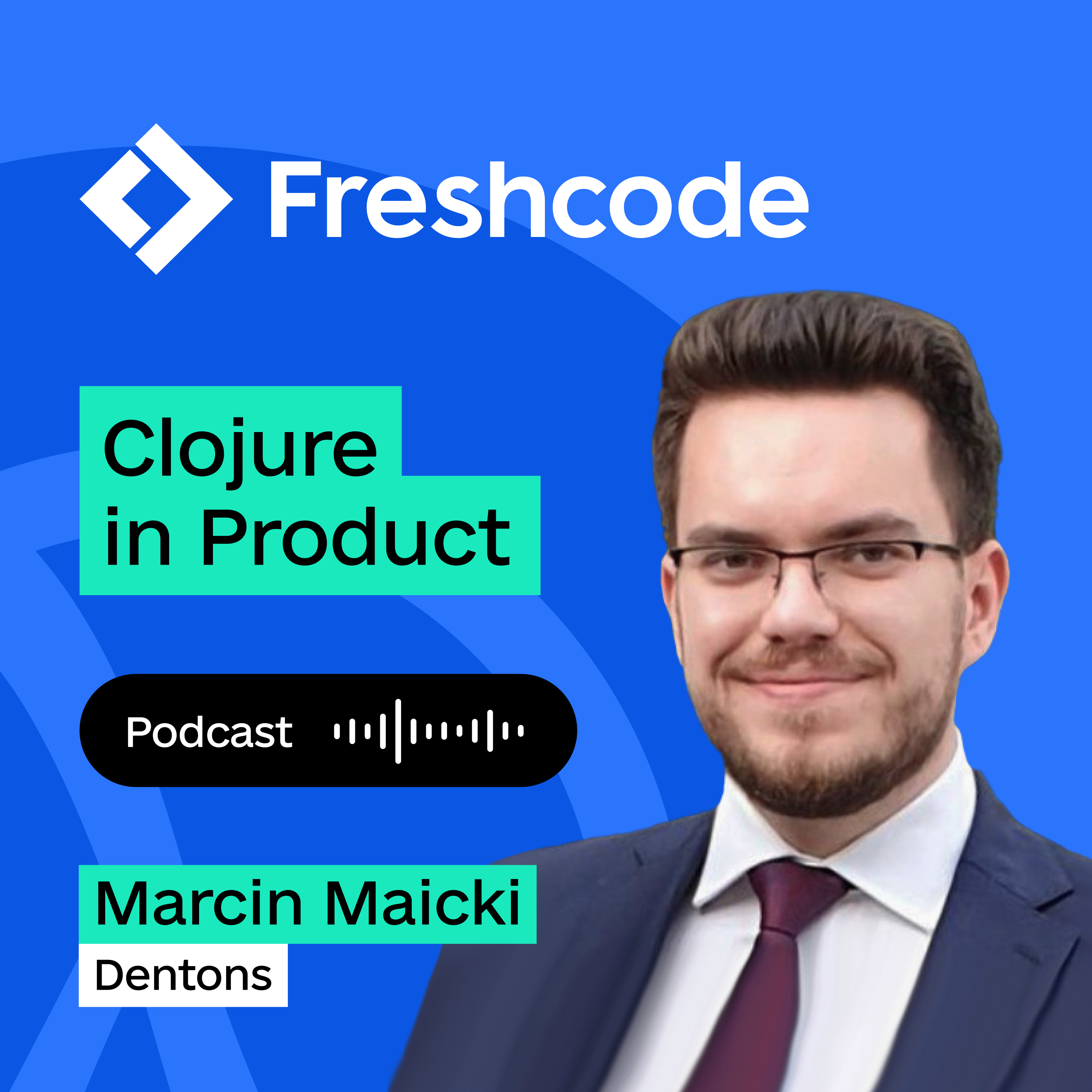
Episode 12 of “Clojure in product. Would you do it again?” is live — Marcin Maicki, Global Data Developer & Lead Developer at Dentons, joins Artem Barmin and Vadym Kostiuk to talk about running Clojure inside a large, decentralized enterprise.
Highlights:
– Marcin’s Clojure origin story: started with ClojureScript, moved into Clojure, and found the functional mindset a natural fit coming from React.
– How Clojure landed at Dentons: a conscious choice for a focused referral‑network venture that valued expressiveness and small teams.
– Practical stack and ops: Postgres, Elasticsearch, Reagent/Re‑frame + Material UI, Metabase; Marcin also works on PySpark/Databricks in his global data role.
– Maintenance and risk: why they’re migrating away from old, unmaintained libs; regular security scans and external testing make dependency health a real concern.
– Team, onboarding, and hiring: a small Clojure pod (Marcin + one dev, testers, DevOps); knowledge sharing, docs, and close pairing are the onboarding tools — hiring remains the main practical blocker.
– Enterprise realities: polycentric org structure, integration friction with firm standards (Power BI, Azure), and the tradeoffs that make Clojure a strong fit in some contexts but a harder sell in others.
Watch Episode 12 to hear the full conversation and the nuances of keeping a nine‑year Clojure codebase healthy in a corporate setting.
Disclaimer
This podcast’s information is provided for general reference and was obtained from publicly accessible sources. The Podcast Collaborative neither produces nor verifies the content, accuracy, or suitability of this podcast. Views and opinions belong solely to the podcast creators and guests.
For a complete disclaimer, please see our Full Disclaimer on the archive page. The Podcast Collaborative bears no responsibility for the podcast’s themes, language, or overall content. Listener discretion is advised. Read our Terms of Use and Privacy Policy for more details.