Leading Change
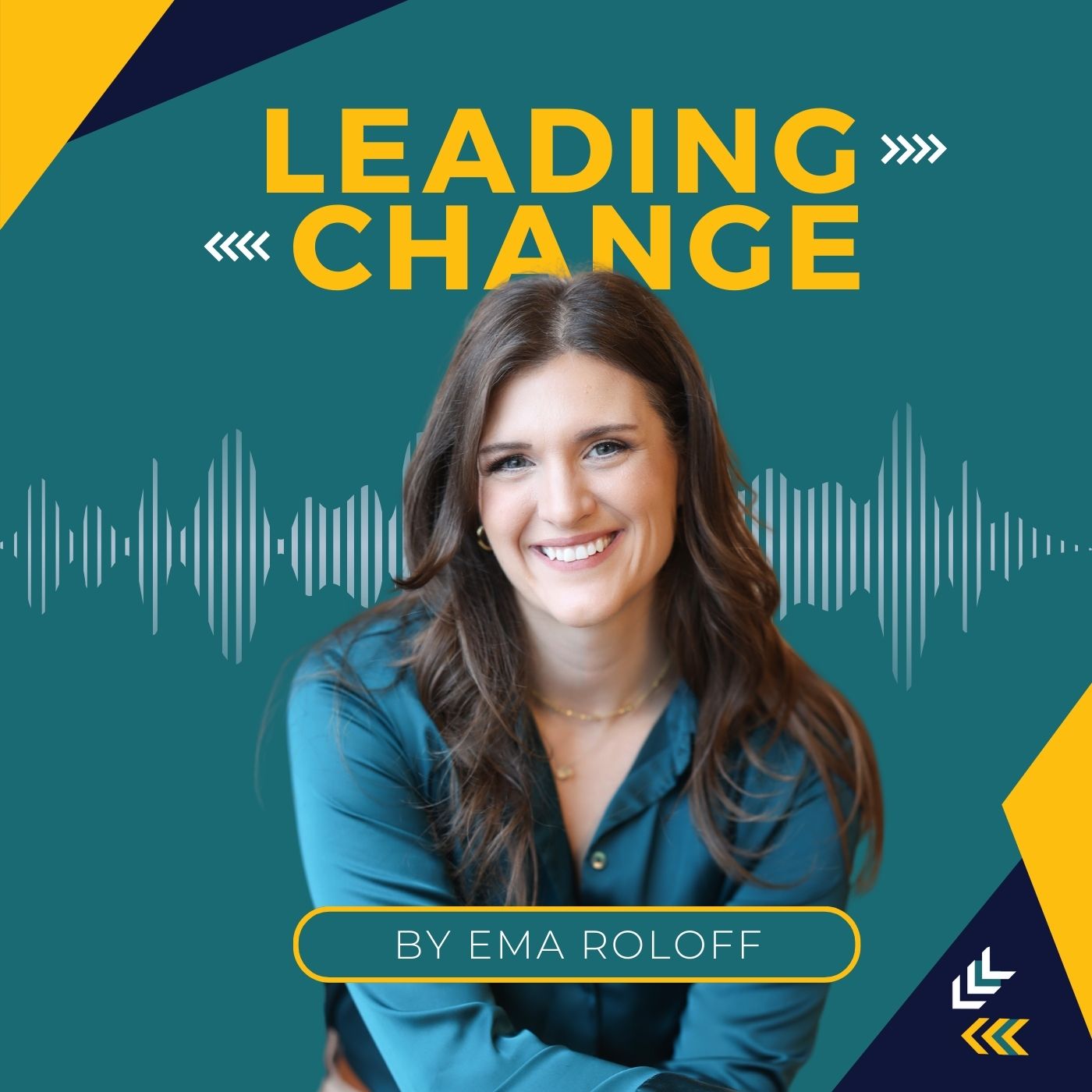
Leading Change
Podcast Description
Welcome to Leading Change, where we dive into the real conversations shaping the future of work. Hosted by Ema Roloff, this series brings together business leaders, change-makers, and innovators to explore the intersection of technology, change management, and leadership in today’s evolving workplace.
Each episode is packed with actionable insights, candid stories, and fresh perspectives on navigating transformation—whether it’s leveraging emerging tech, leading through disruption, or building resilient teams.
If you’re passionate about creating meaningful change and thriving in the digital era, this is the podcast for you. Let’s redefine what it means to lead in a world where change is the only constant.
Podcast Insights
Content Themes
The podcast explores themes such as innovation in branding, the psychology of workplace dynamics, and the critical role of change management for business success. Episodes feature discussions like brand-building through innovation with Laura Dinan, the impact of cyber psychology with Tori Paulman, and strategies for overcoming corporate burnout with Meg McKean, showcasing practical approaches to navigating transformation in various sectors.
Welcome to Leading Change, where we dive into the real conversations shaping the future of work. Hosted by Ema Roloff, this series brings together business leaders, change-makers, and innovators to explore the intersection of technology, change management, and leadership in today’s evolving workplace.
Each episode is packed with actionable insights, candid stories, and fresh perspectives on navigating transformation—whether it’s leveraging emerging tech, leading through disruption, or building resilient teams.
If you’re passionate about creating meaningful change and thriving in the digital era, this is the podcast for you. Let’s redefine what it means to lead in a world where change is the only constant.
Companies are investing in AI, launching pilots, and telling employees to experiment. But too often, leaders expect transformational outcomes without actively participating in the transformation itself.
In this episode of Leading Change in the Wild, I unpack why so many AI initiatives are getting stuck in the messy middle and what you can actually do when the leader sponsoring your project doesn’t seem to care.
Here’s what I unpack:
- Why the “go experiment with AI” approach isn’t delivering the transformational outcomes companies expected
- The invisible work employees are taking on as organizations roll out AI
- Why leadership participation matters just as much as the technology itself
- How to connect an AI initiative to the outcomes your leader already cares about
- Why you should stop asking leaders to “get more engaged” and start giving them specific actions and decisions
- How to make the cost of executive inaction visible
- What to do when you may simply have the wrong sponsor
- When it might be time to let an AI pilot die instead of forcing it into production
The technology isn’t enough.
If leaders want AI transformation, they have to actively participate in leading the change. That means setting direction, supporting the people doing the work, making decisions, and creating the conditions for an initiative to move beyond experimentation.
And if you’re the person trying to move that initiative forward without an engaged leader?
Sometimes you might need a few Jedi mind tricks.
👇 Let’s discuss:
- What do you do when a leader isn’t engaged in an initiative they’re supposed to sponsor?
- Have you seen an AI pilot stall because leadership wasn’t actively involved?
- What has actually worked for you when trying to get leaders more engaged?
🔔 Subscribe for weekly insights on digital transformation, change management, leadership, and emerging technologies.
Disclaimer
This podcast’s information is provided for general reference and was obtained from publicly accessible sources. The Podcast Collaborative neither produces nor verifies the content, accuracy, or suitability of this podcast. Views and opinions belong solely to the podcast creators and guests.
For a complete disclaimer, please see our Full Disclaimer on the archive page. The Podcast Collaborative bears no responsibility for the podcast’s themes, language, or overall content. Listener discretion is advised. Read our Terms of Use and Privacy Policy for more details.