Baubo: The Podcast

Baubo: The Podcast
Podcast Description
Baubo: The Podcast is hosted by Mathilde. The podcast sheds light on vulvodynia and vaginismus, two conditions that affect many women but remain shrouded in taboo, under-researched and under-funded. Mathilde invites top experts across multiple fields to deliver up to date and relevant information to help people experiencing these conditions, whilst sharing her own experience with vulvodynia.
Podcast Insights
Content Themes
The podcast focuses on women's health issues, specifically vulvodynia and vaginismus, with episodes featuring expert insights into the neuroscience of pelvic pain, the anatomy and importance of pelvic floor health, and the common medical misconceptions surrounding these conditions, such as the episode with Dr. Tania Adib discussing the root causes of vulvar pain.

Chronic pelvic pain doesn’t have great PR. Vulvodynia, vaginismus, painful sex, pelvic floor dysfunction – conditions that affect 1 in 4 women and still get treated like a secret. This podcast is trying to change that.
The World’s Tightest Community is a weekly podcast hosted by Mathilde – a patient-turned-advocate who built this space out of her own experience with vulvodynia and vaginismus. Each episode goes deep into the conditions that millions of women live with but few feel safe naming: vulvodynia, vaginismus, vestibulodynia, pudendal neuralgia, and the wider landscape of chronic pelvic pain and painful sex.
Mathilde speaks with gynecologists, pelvic floor physiotherapists, sex therapists, psychologists, and researchers working at the front edge of women’s sexual health – translating clinical knowledge into something actually usable, alongside honest conversations about diagnostic delays, medical gaslighting, and what it really costs to navigate these conditions.
You’ll leave each episode with more language for your experience, clearer questions to bring to your next appointment, and the specific relief of knowing someone has thought carefully about this.
New episodes every week. Follow wherever you listen, and find the community on Instagram. <3
Why do the tissue changes we link to menopause also show up in women on the pill, breastfeeding, or in their twenties?
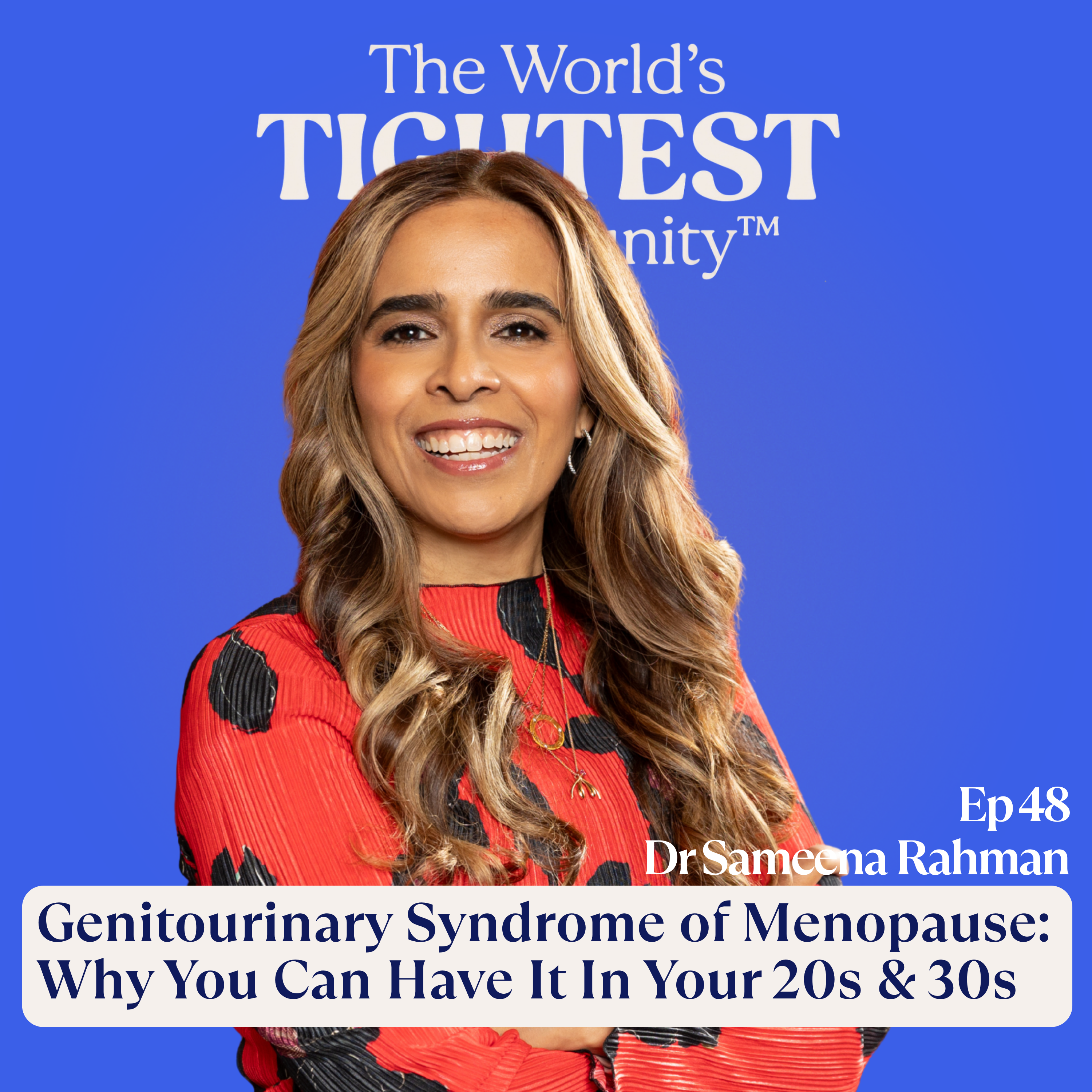
I’m joined by Dr. Sameena Rahman, OB-GYN and sexual medicine specialist, founder of the GSM Collective in Chicago and ISSWSH scientific committee chair.
We unpack genitourinary syndrome of menopause (GSM), why the same hormonal mechanism drives vestibulodynia in younger women on birth control or spironolactone, and how vaginal estrogen, vaginal DHEA and estradiol-testosterone cream are used. We also cover the removed boxed warning on estrogen, why under 5% of women are offered a treatment linked to fewer UTIs and deaths, blood work, mast cells, and medical gaslighting.
For anyone told their hormones are “normal” when something clearly isn’t – and the clinicians who treat them.
Sponsors:
– The Pelvic People, makers of the Ohnut and the Kiwi. 15% off with code TWTC15 at thepelvicpeople.com/twtc
– Origin, in-network pelvic floor PT. Get your first month of On Track free with code TWTC at theoriginway.com/twtc
Dr. Sameena Rahman:
- Instagram: @gynogirl
- Website: thegsmcollective.com
- Book: “Brown Girls’ Disease”? coming out October 6
- Resources: isswsh.org, prosayla.com
Connect with Mathilde:
- Instagram: @theworldstightestcommunity
- Website: theworldstightestcommunity.com
- Newsletter: https://tinyurl.com/4h4snzzd
- Support the podcast: https://tinyurl.com/mtxnzhsd
Timestamps
00:00:00 Introduction, Dr. Sameena Rahman
00:01:28 GSM, Terminology
00:03:12 Vaginal pH, Thinning Tissue
00:04:37 Recurrent UTIs, Sepsis
00:05:12 Vestibule, Pain with Sex
00:05:52 Lactation, Cancer, Fertility
00:06:36 Birth Control, Androgens
00:07:24 GSM in Younger Women
00:08:37 Dryness Misread, Q-Tip Test
00:09:40 GSM Prevalence, Prevention
00:11:15 Chronic Progressive Condition
00:11:48 Nerve Proliferation, Mast Cells
00:14:31 Birth Control and Vestibular Pain
00:15:43 Anti-Androgen Pills, Spironolactone
00:17:13 Drospirenone, Yaz, Yasmin
00:18:13 Tool: Flagging Side Effects
00:18:50 Genetic Testing, Pelvic Floor PT
00:20:09 Weighing the Pill
00:20:54 Local Hormone Therapy
00:22:22 Vaginal DHEA, Formulations
00:23:01 UTI Risk Reduction
00:23:47 Tool: Coming Off the Pill, IUD
00:24:22 Estradiol-Testosterone Cream
00:25:36 Choosing Treatment, DHEA vs Estrogen
00:27:26 Breast Cancer Fears, WHI
00:28:10 Boxed Warning Removed
00:29:16 No Systemic Increase
00:30:01 Undertreatment, UTI and Sepsis Data
00:32:11 Tool: Treating After a First UTI
00:32:48 AUA Guidelines, Premenopausal Gap
00:33:42 ISSWSH Vestibulodynia Algorithm
00:35:04 Tool: Reactions, Switching Products
00:37:26 Blood Work, SHBG, Testosterone
00:40:26 Mast Cell Staining, Pain as Trauma
00:41:26 Pelvic Floor Botox
00:42:19 Medical Gaslighting, Team Care
00:43:55 Reasons for Hope, New Treatments
00:45:46 Hypermobility, Connected Conditions
00:46:43 Book: Brown Girls’ Disease?
00:49:42 Where to Find Dr. Rahman
Disclaimer
This podcast’s information is provided for general reference and was obtained from publicly accessible sources. The Podcast Collaborative neither produces nor verifies the content, accuracy, or suitability of this podcast. Views and opinions belong solely to the podcast creators and guests.
For a complete disclaimer, please see our Full Disclaimer on the archive page. The Podcast Collaborative bears no responsibility for the podcast’s themes, language, or overall content. Listener discretion is advised. Read our Terms of Use and Privacy Policy for more details.