A Heartful of History

A Heartful of History
Podcast Description
This weekly show invites listeners into the process of producing compelling historical literature for young readers. Host Selene Castrovilla speaks with creators about everything from concept to publication. Episodes drop on Wednesdays.
Podcast Insights
Content Themes
The show focuses on various aspects of creating kidlit history books, such as the writing process, the importance of research, and collaboration between authors and illustrators. Episodes cover unique topics like the role of Walt Whitman during the Civil War, the true nature of George Washington through picture books, and historical events like the 1979 farmers' protest and the Supreme Court case about tomatoes, all designed to inspire young readers.
If you care about how history is told to children, this is a podcast about the work behind the work.
A Heartful of History is a biweekly podcast hosted by author Selene Castrovilla that explores the creative process behind writing and illustrating historical literature for young readers. New episodes drop every other Friday and take listeners inside the making of nonfiction picture books, biographies, and narrative history for kids.
Through candid conversations with authors, illustrators, and publishing professionals—including creators such as Sarah Aronson, Sarah Albee, and E.B. Lewis—the show traces the journey from first spark of an idea to finished book. Episodes dig into research methods, archival discoveries, artistic interpretation, editorial challenges, and the ethical responsibility of bringing real people and real events to life with accuracy and empathy.
From the American Revolution to the Civil War and beyond, A Heartful of History examines how complex moments in American history can be transformed into compelling, age-appropriate storytelling. The podcast is designed for educators, parents, librarians, writers, illustrators, and anyone invested in how we teach the past to the next generation.
If you’ve ever wondered how historical truth becomes a book—or how creators balance authenticity, craft, and heart—this show pulls back the curtain.
Episodes drop every other Friday.
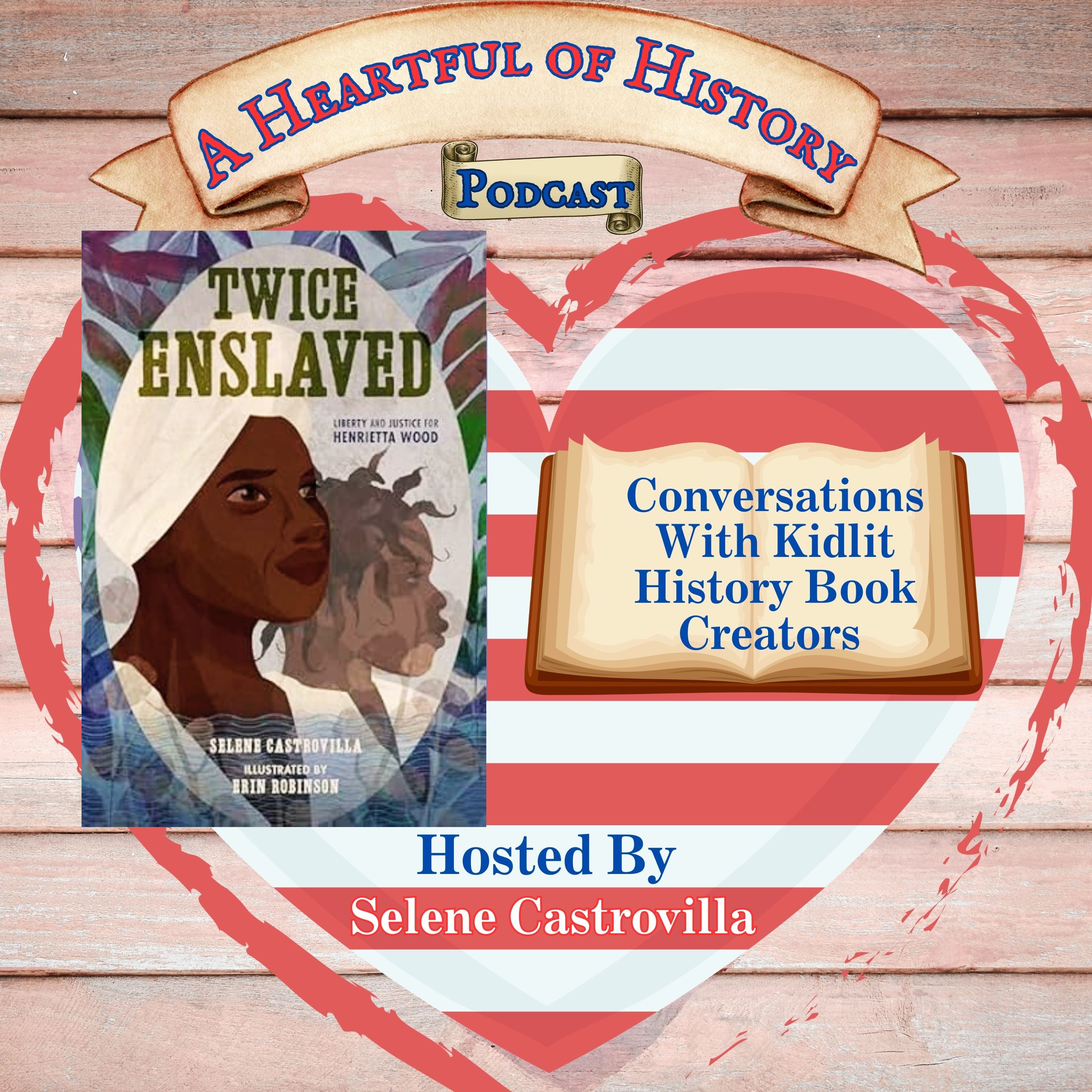
This episode introduces listeners to Henrietta Wood, a woman who was enslaved twice and later secured the largest reparations award in U.S. history. Essential for Black History Month and Juneteenth, this conversation affirms that middle school readers deserve the full truth about American history.
In this powerful conversation, author Selene Castrovilla and illustrator Erin Robinson discuss the making of Twice Enslaved: Liberty and Justice for Henrietta Wood, their nonfiction book for middle school readers that tells the extraordinary true story of Henrietta Wood—a woman born into slavery, freed, kidnapped back into bondage, and ultimately won a landmark court case against the man who abducted her.
Largely unknown until recent historical research brought her story to light, Henrietta Wood’s life challenges the way we teach slavery, freedom, and justice. This episode explores how her story moved from archival obscurity to the page, and why it matters now more than ever.
Selene shares how the writing process unfolded over more than two years, including the decision to write in free verse and the emotional weight of shaping a narrative centered on injustice and resilience. Erin Robinson discusses the year-long illustration process and the responsibility of visually representing heavy historical truths for young readers with honesty and care.
Listeners will hear how the metaphor of the Ohio River became a structural and emotional current in the book—symbolizing both division and possibility—and how the pandemic period unexpectedly fueled the urgency to tell stories that had been silenced.
This episode examines:
– Henrietta Wood’s life and legal fight for justice
– The creative and ethical challenges of writing children’s history books about slavery
– The role of art in navigating trauma and hope
– Why Twice Enslaved belongs in every middle grade classroom
– How storytelling fosters empathy, historical accuracy, and resilience
For educators building Black History Month curricula, for families discussing Juneteenth, and for writers interested in the craft of historical nonfiction, this episode offers insight into how research, storytelling, and illustration work together to transform overlooked history into literature that informs and endures.
Because some stories were buried. And some are powerful enough to reshape how the next generation understands justice.
Disclaimer
This podcast’s information is provided for general reference and was obtained from publicly accessible sources. The Podcast Collaborative neither produces nor verifies the content, accuracy, or suitability of this podcast. Views and opinions belong solely to the podcast creators and guests.
For a complete disclaimer, please see our Full Disclaimer on the archive page. The Podcast Collaborative bears no responsibility for the podcast’s themes, language, or overall content. Listener discretion is advised. Read our Terms of Use and Privacy Policy for more details.