Empowered Wellness with Dr. Lwanga

Empowered Wellness with Dr. Lwanga
Podcast Description
Discover how to live with vitality as Dr. Anita Lwanga and industry experts discuss practical strategies for achieving optimal health.
Podcast Insights
Content Themes
The podcast centers on topics like nutrition, fitness strategies, weight management, and holistic health, with episodes covering diverse areas such as mindful running techniques, sustainable weight loss, and evidence-based weight management strategies, ensuring that listeners gain practical, actionable insights for enhancing their vitality.
Discover how to live with vitality as Dr. Anita Lwanga and industry experts discuss practical strategies for achieving optimal health.
Does exercise have to be complicated to make a difference?
What if just a few minutes of movement each day could help you build consistency, feel better, and become more present in your everyday life?
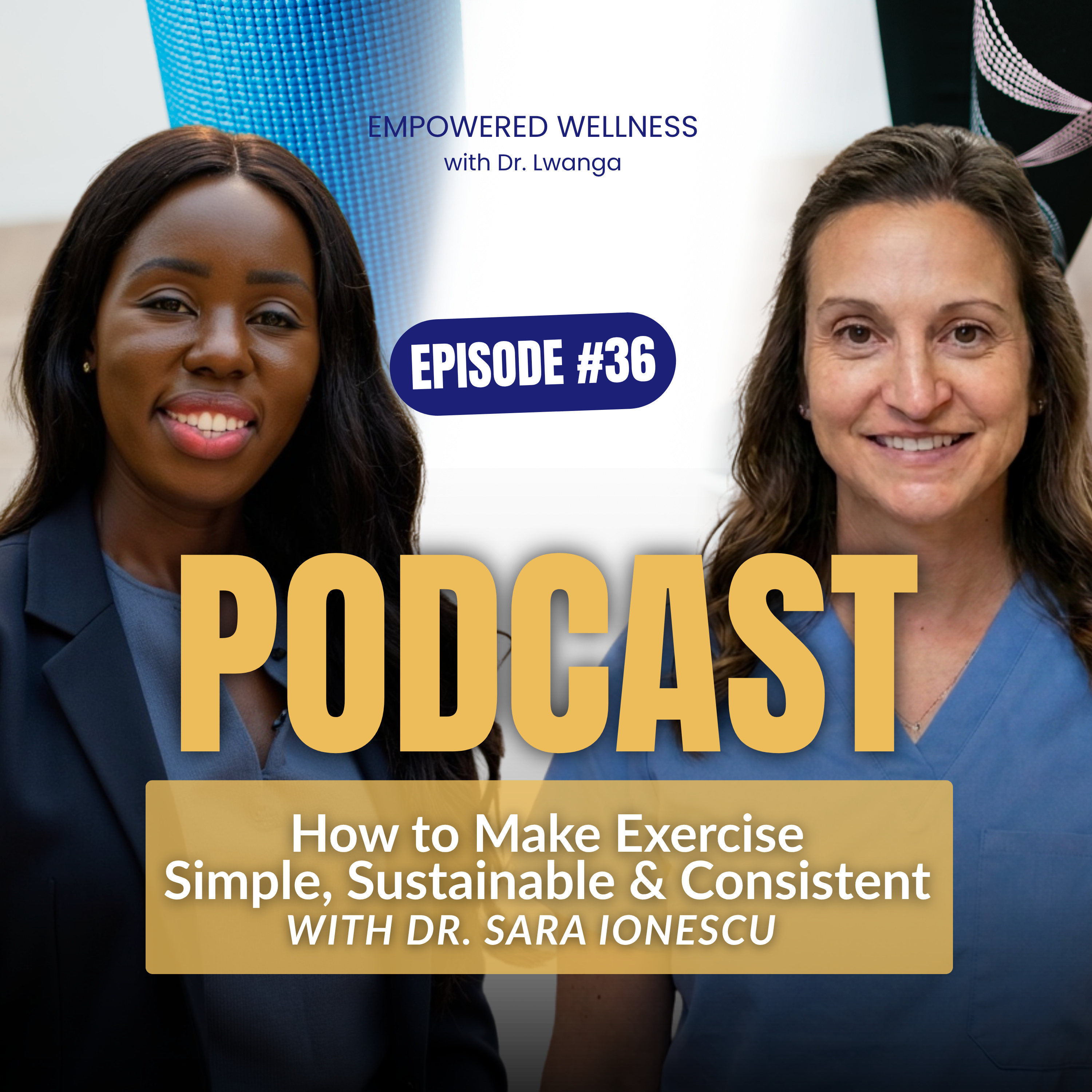
In this episode of Empowered Wellness with Dr. Anita Lwanga, I sit down with Dr. Sara Ionescu, a board-certified Family Medicine physician, movement coach, wife, mom of five, and former competitive swimmer, to discuss how we can make movement and exercise simple, realistic, and sustainable.
Dr. Sara shares her personal journey from competitive swimming to navigating exercise through medical school, residency, motherhood, postpartum recovery, and life as a busy physician and mom. She explains how changing her mindset around exercise helped her move away from an all-or-nothing approach and create consistency in a way that works with her life.
We also discuss the physical and mental health benefits of movement, how exercise can be incorporated into everyday activities, and why starting with just one minute may be more effective than setting an overwhelming goal.
Whether you're a busy parent, healthcare professional, or simply someone who struggles to stay consistent with exercise, this conversation offers practical and approachable strategies to help you get moving.
What You'll Learn:
Why even one or five minutes of movement can count
How to overcome the all-or-nothing mindset around exercise
Practical ways to incorporate movement into your everyday routine
How to stay active during residency, motherhood, and other busy seasons of life
The mental health benefits of regular movement
How movement and stretching may help with chronic pain
Why exercises can and should be modified to meet your current abilities
How setting smaller goals can help you build consistency
Why celebrating small wins can keep you motivated
How movement can help you feel more present and engaged with your family
Dr. Sara's journey from physician and athlete to movement coach
How movement coaching can help busy women overcome barriers to exercise
About Our Guest
Dr. Sara Ionescu is a board-certified Family Medicine physician, movement coach, wife, mom of five, and former competitive swimmer.
She is passionate about wellness, preventative care, and helping people incorporate movement into their lives in a practical and sustainable way. Through her movement coaching, Dr. Sara helps busy individuals, including physician moms and other women with demanding schedules, overcome barriers to exercise and build consistency.
Her approach focuses on making movement approachable and helping people understand that exercise doesn't have to be perfect, intense, or time-consuming to be valuable.
Connect with Dr. Sara Ionescu
🌐 Website: drsaraionescu.com
📱 Instagram: Dr. Sara Ionescu
📘 Facebook: Dr. Sara Ionescu
▶️ YouTube: Dr. Sara Ionescu
About Dr. Anita Lwanga & South End Medical
I’m Dr. Anita Lwanga, an Internal Medicine specialist at South End Medical in Regina, Saskatchewan. I provide specialist care for adults with complex medical conditions, including diabetes with complications, hypertension with related complications, heart failure, COPD, chronic kidney disease, and follow-up care after hospital admissions.
My practice is referral-only. If your family doctor or nurse practitioner believes you would benefit from specialist care, they can send a referral by fax to 306-565-3929.
Healthcare providers can find referral information at:
🌐 www.drlwanga.com
Through Empowered Wellness with Dr. Lwanga, I share conversations with physicians, researchers, and health experts to help people better understand their health, make informed medical decisions, and build healthier lives through evidence-based education.
If you enjoyed this episode, please subscribe, leave a review, and share it with someone who may benefit from this conversation.
Disclaimer
This podcast’s information is provided for general reference and was obtained from publicly accessible sources. The Podcast Collaborative neither produces nor verifies the content, accuracy, or suitability of this podcast. Views and opinions belong solely to the podcast creators and guests.
For a complete disclaimer, please see our Full Disclaimer on the archive page. The Podcast Collaborative bears no responsibility for the podcast’s themes, language, or overall content. Listener discretion is advised. Read our Terms of Use and Privacy Policy for more details.