The Staging Insider

The Staging Insider
Podcast Description
The Staging Insider is a RESA®-backed podcast that dives deep into the personal journeys and professional milestones of home stagers and industry influencers, hosted by RESA Creative Director Felicia Pulley.Our mission is to provide the real estate staging community with authentic stories, inspiration, and insights, connecting stagers and elevating the business of staging.
Podcast Insights
Content Themes
The podcast primarily focuses on the journeys and professional growth of home stagers and industry influencers, with specific episodes highlighting topics such as transitioning from corporate to creative careers, financial strategies for growing a business, and navigating brand partnerships. Examples include Amber Guyton's transition into design and Leslie Anderson's evolution in the industry.
The Staging Insider is a RESA®-backed podcast that dives deep into the personal journeys and professional milestones of home stagers and industry influencers, hosted by RESA Creative Director Felicia Pulley.
Our mission is to provide the real estate staging community with authentic stories, inspiration, and insights, connecting stagers and elevating the business of staging.
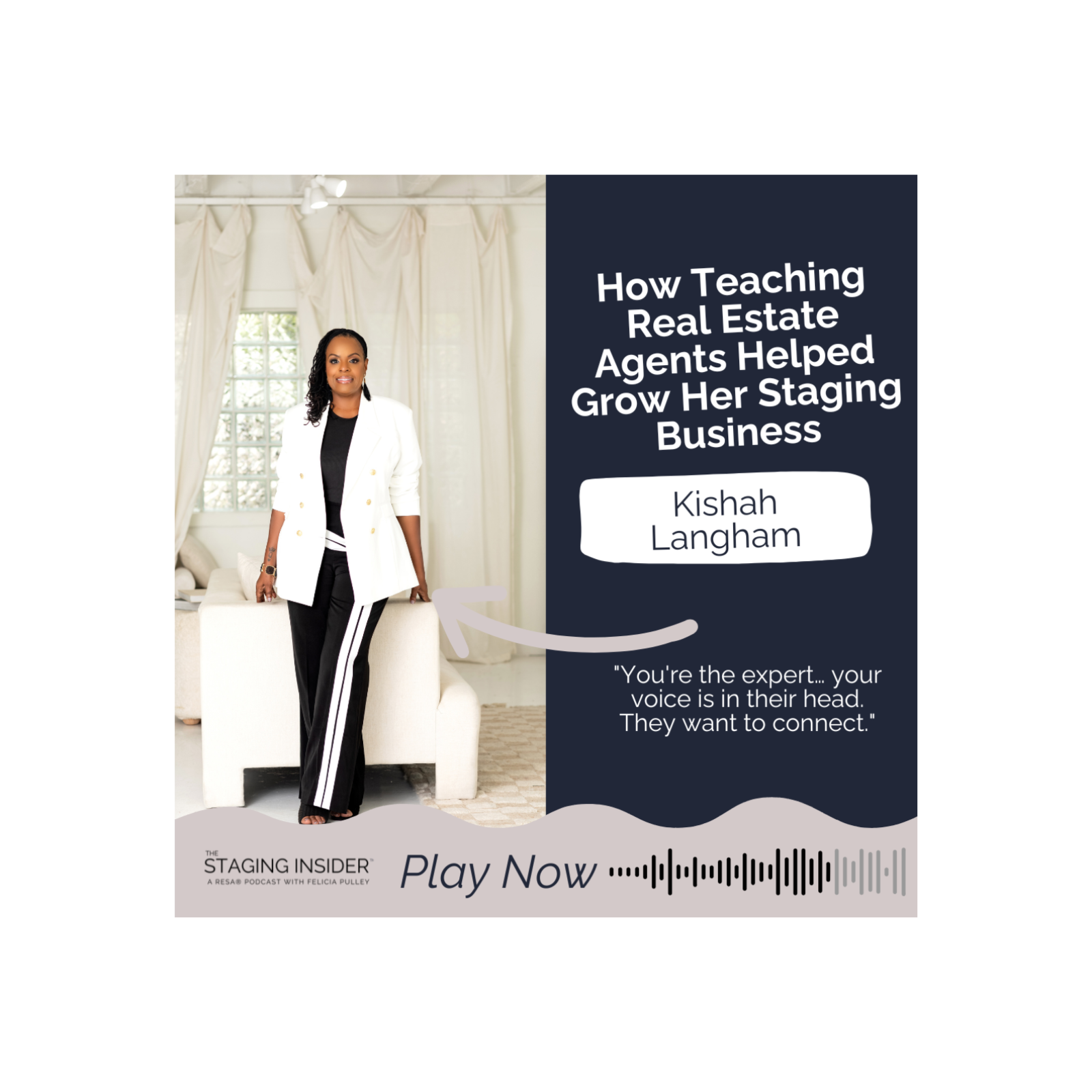
If you are building a home staging business, struggling with pricing your staging services, or wondering how to move from “doing it all yourself” to leading a real company, this episode is for you. In this conversation, host Felicia Pulley talks with Kishah Langham, RESA Texas State President and 2025 RESA Approved Instructor of the Year for Staging to Sell, What Every Agent Should Know. Kishah breaks down exactly how she built and scaled her staging company, how teaching agents has grown her business, and why understanding the business side of staging is non negotiable. You will hear how she went from: Real estate agent and bed and breakfast owner To interior styling and design To running a fast growing vacant staging business with warehouse space, staff, and multistate projects Kishah shares clear insight on stager training, mentorship, pricing, storage, inventory management, and warehouse decisions, along with her perspective on virtual staging and AI tools for consultations and reports. Key topics in this episode include: Why staging education for real estate agents grows your client base How to fill your Staging to Sell, What Every Agent Should Know CE classes Turning CE students into ongoing staging and consultation clients Structuring your services: consultations, occupied staging, vacant staging, and design Moving from garage storage and units to shared space and a dedicated warehouse Working with movers as your staging assistants Shifting to Zoom consultations and using AI to streamline reports How to price your staging work for profit instead of copying competitors The real cost of inventory, racks, warehouse overhead, and taxes Why mentorship, RESA® chapters, and community matter for long term success Kishah’s advice is direct and practical for anyone serious about running a profitable home staging business. As she says, “If you don’t know how to run a business, you’re not going to be here long.” If you are a: New home stager looking for guidance on pricing and setup Established staging company owner ready to scale with a warehouse and a team Real estate agent who wants to understand professional staging better Stager interested in RESA, leadership, or becoming an approved instructor you will take away concrete ideas you can apply to your own business. Subscribe for more conversations on staging systems, business models, pricing, leadership, and RESA® education and resources.
Disclaimer
This podcast’s information is provided for general reference and was obtained from publicly accessible sources. The Podcast Collaborative neither produces nor verifies the content, accuracy, or suitability of this podcast. Views and opinions belong solely to the podcast creators and guests.
For a complete disclaimer, please see our Full Disclaimer on the archive page. The Podcast Collaborative bears no responsibility for the podcast’s themes, language, or overall content. Listener discretion is advised. Read our Terms of Use and Privacy Policy for more details.